John Updike was, like Martin Amis, one of those writers whose criticism gave me vastly more pleasure than his fiction. As with Amis, I could pull just about any sentence from any page of any novel and marvel at its intricacies. And, as with Amis, after a couple of novels I had zero desire to bother with another.
To continue with the Amis strain, it has always read to me as if the younger Martin wanted desperately to be adopted by Updike. When Updike committed his critical attention to the lad, and concluded with a sniff of disdain, Amis had a go at returning the favor. Not surprisingly, I think both authors were right in their final evaluation of the other.
To my mind they both did a better job at training their attention on the things that matter -- what makes for compelling fiction -- when they read someone else. Chalk it down to a deficient temperament and call me a literary heretic, but here's the truth: George Pelecanos commits himself to "no less than one page per day" (link -- two fewer than Updike) and I have no trouble finishing anything he gets published.
Link-love: Updike's Reviewing Rules; An intimate look at Updike's marginalia; my favorite Martin Amis book; and finally one such from John Updike. UPDATE: Slate has one of the better round-ups of notables weighing in on Updike. It includes responses from Tom Perrotta and Donald Fagen.
Wednesday, January 28, 2009
Sunday, January 25, 2009
What The Academy Got Right About The Dark Knight
First of all, for the three of you who haven't yet seen Batman: The Dark Knight, I shall be SPOILing everything.
It would be foolish to accord moral and aesthetic seriousness to the Academy's gassy pomp, just as it would be a mistake to give much consideration to a movie that even Batman fans aren't keen to see a second time. But, speaking as one such Batman fan, I've gotta say: one nomination for Best Supporting Actor (Heath Ledger as The Joker), and a total snub for Best Picture, Director or Screenplay, is a spot-on fate for The Dark Knight.
My wife and I saved our moviegoing coupons for The Dark Knight. Like most of the kids in attendance, we'd seen and loved the earlier picture, and we had great expectations for this next installation. When the lights finally came up again and the exit doors were opened, I thought the first act had been entertaining, but I stopped caring after the big truck flipped over. That topsy-turvy semi-truck (which truly was a spectacular stunt) could serve as a useful metaphor for the movie, but I think I'll switch to trains: that movie went off the rails in so many different and unpleasant directions, it's hard to know where to start or stop with the kvetching.
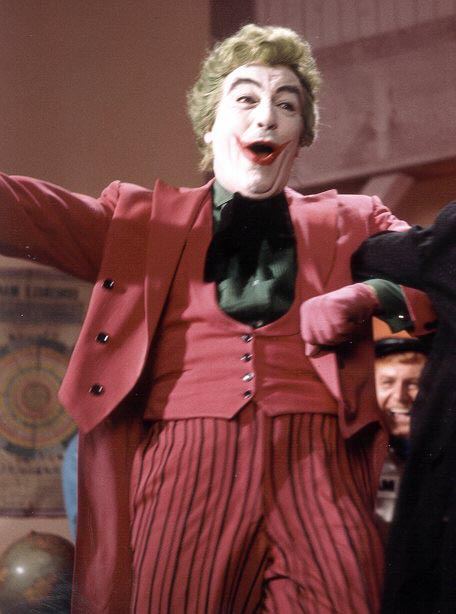
First of all, let me say the obvious: what a shame Heath Ledger will probably be rewarded and remembered for playing a scary clown. He should have been given the statue for the emotional depth and vulnerability he brought to Brokeback Mountain, but so it goes. Ten minutes into the movie there was no doubt his Joker was a rivetingly unpleasant creep, but his witless goons bore a striking resemblance to the paunchy extras that hung off Cesar Romero's every cackle.
But then nearly everything in this movie has a complicated and unwelcome relationship to the real world that intrudes on its fictive dream. Consider:
What happened to Gotham City? In the earlier movie it was a surrealistic world unto itself. In this movie it was unmistakably Chicago. Unfortunate inconsistency, that — very much in step with the mindset that insists Al Pacino cover his face with five pounds of latex as Big Boy Caprice while Warren Beatty only has to wear a yellow raincoat to be the supposedly granite-chinned Dick Tracy.
TDK as an extended Bush-Cheney apologia. As I watched I wondered if I was the only one inclined to see this movie through this particularly dismal lens. In the conversation that followed the movie I was told that FOX News' Sean Hannity was of the same mind, too. In the closing words of Commissioner Gordon, “He's the hero the United States of America deserves, but not the one it needs right now. So we'll ridicule him for his easy malapropisms, and chase him from office — because he can take it. Because he's not our hero. He's a silent guardian, a watchful protector. A dark knight.” Or something to that effect. For TDK to seriously consider the larger ramifications of Cheyney-Batman's choices, Frank Miller had it right: the obvious moral foil is that liberal tight-ass Superman — not the emotionally and facially scarred Harvey Dent. Speaking of whom:
What, exactly, did Rachel Dawes have that got Harvey Dent and Batman so twitterpated? As portrayed by Maggie Gyllenhall she was delightfully perky arm-candy and certainly an improvement on Mrs. Tom Cruise. But her conflicting emotions over these two lunks, along with their all-consuming desire for her, were inexplicable, existing merely as a plot-contrivance for Dent's transformation into Two-Face. Whether she lived or died didn't much matter to me (an unfortunate contrast to Kirsten Dunst's Mary Jane Watson). When Rachel went up in flames, I was consulting my watch.
Alas, the movie still had another hour to go before it expired. By then Ledger cemented his performance as the only character TDK viewers would remember. Some have speculated on the toll this character might have taken on Ledger, but the people closest to him seem to agree he had a gas doing the movie, while his recent divorce and his separation from his daughter were the very real emotional burdens the young man was struggling to bear. As sad as that is, and as tragic as his accidental death was, it is also quite ordinary. All the more reason, I think, to get this award over with, and to return to the roles Heath Ledger ought to be remembered for.
It would be foolish to accord moral and aesthetic seriousness to the Academy's gassy pomp, just as it would be a mistake to give much consideration to a movie that even Batman fans aren't keen to see a second time. But, speaking as one such Batman fan, I've gotta say: one nomination for Best Supporting Actor (Heath Ledger as The Joker), and a total snub for Best Picture, Director or Screenplay, is a spot-on fate for The Dark Knight.
My wife and I saved our moviegoing coupons for The Dark Knight. Like most of the kids in attendance, we'd seen and loved the earlier picture, and we had great expectations for this next installation. When the lights finally came up again and the exit doors were opened, I thought the first act had been entertaining, but I stopped caring after the big truck flipped over. That topsy-turvy semi-truck (which truly was a spectacular stunt) could serve as a useful metaphor for the movie, but I think I'll switch to trains: that movie went off the rails in so many different and unpleasant directions, it's hard to know where to start or stop with the kvetching.
First of all, let me say the obvious: what a shame Heath Ledger will probably be rewarded and remembered for playing a scary clown. He should have been given the statue for the emotional depth and vulnerability he brought to Brokeback Mountain, but so it goes. Ten minutes into the movie there was no doubt his Joker was a rivetingly unpleasant creep, but his witless goons bore a striking resemblance to the paunchy extras that hung off Cesar Romero's every cackle.
But then nearly everything in this movie has a complicated and unwelcome relationship to the real world that intrudes on its fictive dream. Consider:
What happened to Gotham City? In the earlier movie it was a surrealistic world unto itself. In this movie it was unmistakably Chicago. Unfortunate inconsistency, that — very much in step with the mindset that insists Al Pacino cover his face with five pounds of latex as Big Boy Caprice while Warren Beatty only has to wear a yellow raincoat to be the supposedly granite-chinned Dick Tracy.

TDK as an extended Bush-Cheney apologia. As I watched I wondered if I was the only one inclined to see this movie through this particularly dismal lens. In the conversation that followed the movie I was told that FOX News' Sean Hannity was of the same mind, too. In the closing words of Commissioner Gordon, “He's the hero the United States of America deserves, but not the one it needs right now. So we'll ridicule him for his easy malapropisms, and chase him from office — because he can take it. Because he's not our hero. He's a silent guardian, a watchful protector. A dark knight.” Or something to that effect. For TDK to seriously consider the larger ramifications of Cheyney-Batman's choices, Frank Miller had it right: the obvious moral foil is that liberal tight-ass Superman — not the emotionally and facially scarred Harvey Dent. Speaking of whom:
What, exactly, did Rachel Dawes have that got Harvey Dent and Batman so twitterpated? As portrayed by Maggie Gyllenhall she was delightfully perky arm-candy and certainly an improvement on Mrs. Tom Cruise. But her conflicting emotions over these two lunks, along with their all-consuming desire for her, were inexplicable, existing merely as a plot-contrivance for Dent's transformation into Two-Face. Whether she lived or died didn't much matter to me (an unfortunate contrast to Kirsten Dunst's Mary Jane Watson). When Rachel went up in flames, I was consulting my watch.


Alas, the movie still had another hour to go before it expired. By then Ledger cemented his performance as the only character TDK viewers would remember. Some have speculated on the toll this character might have taken on Ledger, but the people closest to him seem to agree he had a gas doing the movie, while his recent divorce and his separation from his daughter were the very real emotional burdens the young man was struggling to bear. As sad as that is, and as tragic as his accidental death was, it is also quite ordinary. All the more reason, I think, to get this award over with, and to return to the roles Heath Ledger ought to be remembered for.
Monday, January 19, 2009
Five Years of Sky-Writing
I nearly missed it, but my blogular salute to the late Patrick McGoohan and Ricardo Montalban marked the close of Whisky Prajer's fifth year in the blogosphere.
Right from the get-go I considered blogging to be little more than a form of sky-writing. I expected technological glitches to occur, and figured my words would likely disappear in some unanticipated internet shift. I did not expect the record to remain chiefly intact for five years and counting. How nice to still be alive and occasionally taken with thoughts that prompt expression. And how very nice to have the platform for it.
I still view it all as sky-writing, however. It certainly ain't painting on the walls of our cave. The apocalyptic in me expects to wake up some day and discover the slate wiped clean, without notice. With that in mind, this summer I collected a bunch of my favorite posts and started formatting them for print publication.
What I discovered -- what caught me off-guard -- was a marked difference in style and content that, for the most part, did not translate well to the page. All those links to other websites, articles, illustrations remained firmly embedded in the internet, refusing to budge when introduced to the page. These links didn't merely inform the content but were frequently used to justify the content. Precious few of them work as footnotes. In other words, even a cheerful Luddite like yours truly is changed when engaging the new media.
So it goes, and so it likely should be. Every essayist wants their words to become a permanent fixture in the public record; every college kid wants to be the next Matthew Arnold. There's no reason why seriousness shouldn't be an element in the blogosphere, just as it is in Zen gardens -- and perhaps even sky-writing. And there's no reason why most of these expressions shouldn't evaporate with the waning of attention.
Thanks for dropping by and reading. And a sweeping tip o' the hat to Michael Blowhard, whose early words on the 2Blowhards persuaded me to give this medium a go. Here's hoping we all get another five years of this!
Right from the get-go I considered blogging to be little more than a form of sky-writing. I expected technological glitches to occur, and figured my words would likely disappear in some unanticipated internet shift. I did not expect the record to remain chiefly intact for five years and counting. How nice to still be alive and occasionally taken with thoughts that prompt expression. And how very nice to have the platform for it.
I still view it all as sky-writing, however. It certainly ain't painting on the walls of our cave. The apocalyptic in me expects to wake up some day and discover the slate wiped clean, without notice. With that in mind, this summer I collected a bunch of my favorite posts and started formatting them for print publication.
What I discovered -- what caught me off-guard -- was a marked difference in style and content that, for the most part, did not translate well to the page. All those links to other websites, articles, illustrations remained firmly embedded in the internet, refusing to budge when introduced to the page. These links didn't merely inform the content but were frequently used to justify the content. Precious few of them work as footnotes. In other words, even a cheerful Luddite like yours truly is changed when engaging the new media.
So it goes, and so it likely should be. Every essayist wants their words to become a permanent fixture in the public record; every college kid wants to be the next Matthew Arnold. There's no reason why seriousness shouldn't be an element in the blogosphere, just as it is in Zen gardens -- and perhaps even sky-writing. And there's no reason why most of these expressions shouldn't evaporate with the waning of attention.
Thanks for dropping by and reading. And a sweeping tip o' the hat to Michael Blowhard, whose early words on the 2Blowhards persuaded me to give this medium a go. Here's hoping we all get another five years of this!
Wednesday, January 14, 2009
"Khan" is gone too?!

"The question I'm always asked is, 'Is that Ricardo Montalban's real chest?' And yes, that is his real chest." Star Trek II director Nicholas Meyer. I'm pretty sure the accent was genuine, too. Time to cue up "Fine Corinthian Leather" (e).
Patrick McGoohan, 1928-2009
I had no idea this cat was 80 years young!

There was a year in the mid-90s when I could wake up bleary-eyed on a Sunday morning, turn on the telly and enjoy an episode of The Prisoner. I dreaded the final episode, which I knew nothing about. When the conclusion was over I realized my dread had been well-founded, but for entirely unexpected reasons. At least McGoohan and company had the balls to disappoint this fan with psychedelic art-house nonsense, and not some lame dream-sequence. Nicely done!

There was a year in the mid-90s when I could wake up bleary-eyed on a Sunday morning, turn on the telly and enjoy an episode of The Prisoner. I dreaded the final episode, which I knew nothing about. When the conclusion was over I realized my dread had been well-founded, but for entirely unexpected reasons. At least McGoohan and company had the balls to disappoint this fan with psychedelic art-house nonsense, and not some lame dream-sequence. Nicely done!
The Bully Of Barkham Street by Mary Stolz

I've been retrieving fictional treasures from my youth and reading them to our daughters at bedtime. I always hold my breath when I page to the first chapter. My adult tendency is to view my childhood memories with some suspicion, particularly in the daily confrontation of my children's shifting memories. I have found, however, that most of the books I loved as a child hold up very very well to adult scrutiny.
The kids, who are never shy with their negative opinions, are also fond of the books. Ian Fleming's Chitty-Chitty Bang-Bang (1964, A) was among last year's favorites: so long as at least one child is still in the single-digit age-range, the entire family can listen to this short novel and feel confirmed in the mutual suspicion that, yes, their nutty family is the only one in the world that is universally and comically underestimated.
The Bully Of Barkham Street by Mary Stolz (also 1964, A) is cut from different cloth. Martin Hastings is the title character, and it should be said at the outset that he is not one of those feral creatures who dominates a pack and torments the weak and wounded. He is a loner, but not by choice. Martin has a vivid imagination, and is prone to eager overcompensation whenever someone offers him friendship. This usually concludes in a comic mishap that squelches the earlier promise.
His older sister is fussing over potential boyfriends, both his parents work — his father until late, his mother right up to the brink of supper-time — and every afternoon he arrives home to a house that seems cavernously empty now that his dog has been taken back to the farm. He feels compelled to take out his frustrations on someone or something, and who better than Edward Frost, the mouthy kid next door?
Martin's feelings of alienation and his impulse to feign indifference on the one hand, or to eagerly, desperately reach out on the other are brought vividly to life by Stolz. Late in the book, after yet another school day when Martin's best intentions collapse in ruin, he stares out his bedroom window and into the Frost's back yard.
Edward and his uncle Josh were sitting on the grass together, talking, looking up now and then at the wren house. Argess [Josh's dog] was lying next to Edward her head on his leg.
Watching them, so peaceful, so friendly, with a dog like Argess theirs to pet and call to and be with, Martin was almost engulfed in pain. There was that terrible sensation of half strangling to keep back childish tears, and another feeling — that of being someone completely alone. It reminded him of the way he felt whenever he went in a place where people already were — a classroom, dancing school, even a public place like a drugstore. It always seemed to him that the people who were already there sort of owned the place, belonged there, and that he was an outsider pushing his way in and not welcomed. After a while, of course, he'd get over it, and when other people came in, it was as if he belonged and they didn't. But he hated that feeling of being outside, unwanted, not part.Who cannot relate to feelings like Martin's? That Martin comes to understand how he can change — how he is changing — for the better, and that he is justified in feeling some measure of triumph by the novel's end, is a testimony to Stolz's patient labor as a story teller. This is a magnificent work of empathy, perfect for 10-year-old listeners — and adult readers.
Tuesday, January 13, 2009
Zeroville by Steve Erickson
Houdini was related to one of the Three Stooges by marriage. I'll bet I'm the only one in this Heretic City who knows that.
 The word “heretic” carries a heap of freight in this context. It’s the summer of 1969. A 24-year-old kid has just fled his studies in religion and architecture — a field of study he seems to have chosen in response to his father’s heretical, and potentially filicidal, theology. The young man is in Los Angeles, fresh off the bus. Laurel Canyon is beset by hordes of hippie kids his age who, unfortunately for him, are more interested in sex and drugs and rock ‘n’ roll than they are in movies — his newfound (heretic) religion. Doubly unfortunate: impeding his ability to blend in with the crowd is his personal aesthetic statement — a shaved scalp, tattooed with a still of Montgomery Clift and Elizabeth Taylor, from A Place In The Sun. Also: he’s just about to be picked up by the cops on suspicion of the Manson Family murders.
Thus begins the journey of Vikar Jerome — fiction’s latest, most memorable idiot to witness and generate the key upheavals of our culture. To my considerable surprise, I thought novelist Steve Erickson's entire trip was a gas.
I hesitated to pick it up, though. Sure, I'm a sucker for literate film reviews, film history narratives, and innocent bystander accounts of Hollywood debauchery. And I'm an especially easy mark for Schraderean accounts of religious students who flee the faith of their fathers to embrace instead the religion of film. Reviewers like Charles Taylor assured me that this novel delivered all of that with a dream-like power that persuades.
Unfortunately, Taylor and his company waxed on at length in a fashion reminiscent of Tarantino, and anyone who's listened to Tarantino enthuse knows there is no accounting for that guy's taste. He's excited, brainy, persuasive. But when viewers finally hit "play" they're well-advised to brace themselves for a dud.
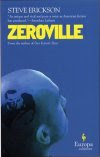
I hit “add to cart.” When the book arrived I took one look at the cover (“Europa editions” — hmph), left it closed and dropped it on the “I might want to read this” pile. And there it lay, like a punk on the sidewalk, defying me to spare my loose change.
At some point during this eggnog-saturated Christmas I grabbed the book on my way to bed. I cracked open the cover, took fleeting notice of the extremely short chapters, and tucked in. Before I knew it, I’d read 40 chapters. That's 40 chapters in 35 pages, but still: I wanted to read more.
Now I sit, searching through its pages for amusing bits to share, completely undone by the wealth in front of me. There is good reason why this novel's reviewers sound like gibbering geeks. The book is loaded with movie arcana and convincing portraits of notorious, overindulgent yahoos (the same ones who never quite came alive in the pages of Biskind's Easy Riders, Raging Bulls). One glance reveals it to be a stylized work, but there's nothing “experimental” about Erickson's approach because it works. It is an immediately addictive, and narcotically compulsive read.
One thing it is not is "demanding." Certainly, if the reader desires to get über-geeky with the novel they can chart this particular idiot's quixotic voyage and contrast it with others; they can invert the narrative Moebius Strip and tease apart the gnostic mystery that ties the beginning to the end; they can even puzzle over what the 554 chapters — the latter half of which descend back down to zero — signify. But that stuff is the window dressing of what is finally an enticing, rich and (perhaps) deceptively easy read.
Good grief: I’m monologuing — like Tarantino! Let me leave it at this: if in the last 40 years you've ever fallen in love with the movies, pick this book up and crack it open. Give it an hour of your time, and see if you don't start to gibber a bit, too.
 The word “heretic” carries a heap of freight in this context. It’s the summer of 1969. A 24-year-old kid has just fled his studies in religion and architecture — a field of study he seems to have chosen in response to his father’s heretical, and potentially filicidal, theology. The young man is in Los Angeles, fresh off the bus. Laurel Canyon is beset by hordes of hippie kids his age who, unfortunately for him, are more interested in sex and drugs and rock ‘n’ roll than they are in movies — his newfound (heretic) religion. Doubly unfortunate: impeding his ability to blend in with the crowd is his personal aesthetic statement — a shaved scalp, tattooed with a still of Montgomery Clift and Elizabeth Taylor, from A Place In The Sun. Also: he’s just about to be picked up by the cops on suspicion of the Manson Family murders.
Thus begins the journey of Vikar Jerome — fiction’s latest, most memorable idiot to witness and generate the key upheavals of our culture. To my considerable surprise, I thought novelist Steve Erickson's entire trip was a gas.
I hesitated to pick it up, though. Sure, I'm a sucker for literate film reviews, film history narratives, and innocent bystander accounts of Hollywood debauchery. And I'm an especially easy mark for Schraderean accounts of religious students who flee the faith of their fathers to embrace instead the religion of film. Reviewers like Charles Taylor assured me that this novel delivered all of that with a dream-like power that persuades.
Unfortunately, Taylor and his company waxed on at length in a fashion reminiscent of Tarantino, and anyone who's listened to Tarantino enthuse knows there is no accounting for that guy's taste. He's excited, brainy, persuasive. But when viewers finally hit "play" they're well-advised to brace themselves for a dud.
I hit “add to cart.” When the book arrived I took one look at the cover (“Europa editions” — hmph), left it closed and dropped it on the “I might want to read this” pile. And there it lay, like a punk on the sidewalk, defying me to spare my loose change.
At some point during this eggnog-saturated Christmas I grabbed the book on my way to bed. I cracked open the cover, took fleeting notice of the extremely short chapters, and tucked in. Before I knew it, I’d read 40 chapters. That's 40 chapters in 35 pages, but still: I wanted to read more.
Now I sit, searching through its pages for amusing bits to share, completely undone by the wealth in front of me. There is good reason why this novel's reviewers sound like gibbering geeks. The book is loaded with movie arcana and convincing portraits of notorious, overindulgent yahoos (the same ones who never quite came alive in the pages of Biskind's Easy Riders, Raging Bulls). One glance reveals it to be a stylized work, but there's nothing “experimental” about Erickson's approach because it works. It is an immediately addictive, and narcotically compulsive read.
One thing it is not is "demanding." Certainly, if the reader desires to get über-geeky with the novel they can chart this particular idiot's quixotic voyage and contrast it with others; they can invert the narrative Moebius Strip and tease apart the gnostic mystery that ties the beginning to the end; they can even puzzle over what the 554 chapters — the latter half of which descend back down to zero — signify. But that stuff is the window dressing of what is finally an enticing, rich and (perhaps) deceptively easy read.
Good grief: I’m monologuing — like Tarantino! Let me leave it at this: if in the last 40 years you've ever fallen in love with the movies, pick this book up and crack it open. Give it an hour of your time, and see if you don't start to gibber a bit, too.
Subscribe to:
Posts (Atom)