Thursday, September 14, 2006

All Too Credible Violence

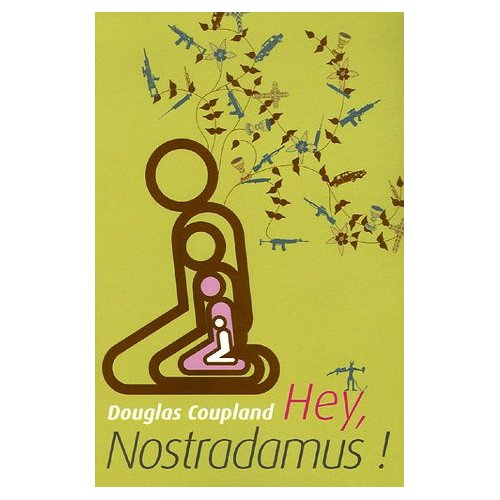
Douglas Coupland published Hey Nostradamus!, a novel set in Vancouver with roots in the high-school massacre at Columbine, Colorado, and a British reporter who interviewed him wrote that murder of the kind he described was just not credible in Canada, putting Canadians in the untenable position of having to say, Hold on, man, what about Clifford Olson, Karla and Paul -- or, just down the road, Robert Picton and his gruesome pig farm? Noah Richler, This Is My Country, What's Yours?

Yes, and now Montreal -- twice.

Wednesday, September 13, 2006

Small "L" Liberalism & The Novel

And I started thinking, What if this guy is right? I mean, if I'm really a liberal, shouldn't I be questioning eeeeeeeeeeverything? Spalding Gray, Swimming To Cambodia.

Gideon Strauss asks me if I think the novel is an inherently liberal medium. Rather than admit I didn't know what he meant, I formed a hazy, media-infused impression of what (picture Jimmy Swaggart in Full-Contempt-Mode) “liiiii-bruuull” embodied. Then I retreated to my bookshelves to see if there weren't novels that epitomized its opposite. Mystery novels, I thought, were probably as conservative in nature as you could hope to find: seeking and singling out the individualist transgressor, and momentarily returning society to its functioning, collective ideal.

Then I considered the novelists who have made headlines in the last five years. Tom Wolfe, Martin Amis – even Michel Houllebeqc, with his pornographic ravings – seem to be begging for some restraining order that might return Western Civilization (or maybe just the poor, tormented author) back to the loving fold of the Great Chain of Being.

Of those three, I have to admit Wolfe is a guilty pleasure. His public posturing irks me to no end, and I love it when James Wood tears a strip off him. But I gobble up his novels – sorry! And even though I long ago wearied of Amis's fiction (sorry, again!), his criticism is among the clearest, most insightful and delightfully written (highly recommended). And I'd rather read about Houllebecq than force myself through another of his novels – tedious adolescent stuff, that.

When I considered how guarded I was in declaring the merits of those fiddlers three, and my impulse toward silence when it comes to hefty discussions surrounding the pleasures of the mystery novel, I thought, “Maybe I'm a liberal?” I recalled the above moment of self-doubt in Spalding Gray's monologue, which occurs after he's endured a conversational barrage from a psychotic coke-head who claims he's in charge of a nuclear silo, then proceeds to outline how a nuclear exchange could be won, and what an improvement that would be on life in general. Everything Gray would like to believe about humanity is turned inside out like a frog in a bio-lab, and he momentarily wonders if this guy's hideous take on things is accurate. Of course, he gives his head a shake and declares, no: this is wrong, wrong, wrong.

And this brought to mind a passage from John Gardner's The Art of Fiction:

No ignoramus – no writer who has kept himself innocent of education – has ever produced great art. One trouble with having read nothing worth reading is that one never fully understands the other side of one's argument, never understands that the argument is an old one (all great arguments are), never understands the dignity and worth of the people one has cast as enemies. Witness John Steinbeck's failure in
The Grapes of Wrath. It should have been one of America's great books. But while Steinbeck knew all there was to know about Okies and the countless sorrows of their move to California to find work, he knew nothing about the California ranchers who employed and exploited them; he had no clue to, or interest in, their reasons for behaving as they did; and the result is that Steinbeck wrote not a great and firm novel but a disappointing melodrama in which complex good is pitted against unmitigated, unbelievable evil.

For the moment, let's just tiptoe around Steinbeck's “failure” and focus on Gardner's creative imperative: walk two moons in your chosen enemy's moccasins before you commit his portrait to paper. Hey, if that's “liberal” I'd like to call myself one! In fact, I hope that's what I am when faced with argument: someone willing to accord worth to my adversary, and weigh the persuasive merits of their perspective.

Alas, it seems I'm somewhat off the mark when it comes to Gideon's question regarding liberalism and the novel. He wonders, “Is the novel in origin and essence liberal – that is, committed to the expression and exploration of freedom above all else?”

Oh.

Um ... maybe? If you frame it that way, I have to wonder how the novel sets itself apart from narrative, or the printed word in general. The answer would probably be in the scale of its imaginative invitation. If so, the question is one of degree, and not overall effect: Augustine's account of stealing apples is as trenchantly evocative of our humanity as Rose of Sharon's perverse act of self-sacrifice.

But I'm also deeply skeptical when faced with any individualistic claim.

Perhaps the best thing for me to do at this point is concede that this is an Important Question, but one I will leave to the school of philosophy and literary theory. Theirs is a path I eschewed in my late-20s after wearying of the po-mo wonks who crowded the Halls of Academia. Does Reader Response Theory still turn the academic crank? Don't know, don't care – I've consciously chosen not to lose any more sleep over that bleak and charmless take on things, opting instead to exercise caution, ask for wisdom and proceed on intuition.

Hey, whattaya know: I just might be a liberal after all!

Tangential note: it gives me a cussed pleasure to see The Globe & Mail adhering to its short-sighted, skinflint on-line policy. They've removed their review of Noah Richler's This Is My Country, What's Yours?, and it's just as well. I appreciated reviewer Aritha van Herk's enthusiasm for the book, but wished she had run her piece through the word-processor one more time. Here is Brian Bethune's (more adroit) review for Maclean's.

Monday, September 11, 2006

Vocation

In my penultimate year of high school, our class was required to fill out one of those computer-generated “tests” that helped determine your propensity for certain vocations. It was a lengthy and arcane bit of business, and when the results were in the two most highly recommended vocations for yours truly were: #1) Floral Artistry, and #2) The Military.

Both options presented some serious drawbacks for this all-too-hetero all-too-Mennonite ploughboy. Fortunately(?), the test required an appointment with our school guidance counsellor, so I shuffled to his office with these results in hand, very much intent on getting genuine guidance.

He was a genial, relaxed man with a handlebar mustache. As we talked, he propped his feet on his desk and smiled at me. The first thing he said about my test results was, “These things aren't definitive in any way. At their best, they might provide some unusual possibilities you might not have considered before.” He looked at me, his smile very much fixed in place and growing creepier with each passing second.

“I dunno, man,” I said. “I mean, florist or soldier – either one seems like a stretch.”

That creepy smile. The feet on the desk, hands folded across his belly – and silence. “Your father's a pastor,” he finally said. “Have you given any consideration to the ministry?”

I stammered and said, No, not really.

“Well,” he said, his smile sinking deeper, taking on a knowing quality, “maybe you just haven't received The Call yet.”

This was a Mennonite high school I attended, and my father was a known entity. Even so, I was gobsmacked. A quarter-century later, I'm still non-plussed by his assertion. Of course, it could simply be a matter of my not receiving The Call ... yet.

Here's where I currently work:


Also here:


At Cafe Rhythm & Books I cook and serve the weekend breakfast menu (chiefly baked french toast, and an assortment of crepes). I do some organizing of the book selection. I'm hoping to launch my own book here, next month.

I'll leave it at that, for now. Lately I've been thinking a lot about vocation, so I'll try to hash out some of what I've considered, particularly as it relates to genealogy and social expectations (subjects with which I have more than a passing familiarity). And today, the fifth-year anniversary of when so many of our citizens were killed at their place of work, seems like an appropriate time to start.

Friday, September 08, 2006

Creaky Franchises, Take 2

Just before the summer got underway, the George Lucas Empire announced that due to public outcry it would condescend to releasing the original (as opposed to the digitally fiddled-with) Star Wars movies. Here was our chance "to see the pioneering, if dated, motion control model work!" -- the actual words from the Lucasfilm press release.

Gee, is it me, or does the punch taste funny?

Despite my hallowed estimation of this film, I haven't bothered to reach for my credit card. Original or remake, the truth is, I don't really care. I've seen the messed-with versions a couple of times. Some of the changes are, I have to admit, improvements (the dogfight over the Death Star now has narrative sequencing that doesn't rely on the audience's instinctual "filling in"); some of it is egregious (I belong to the "Han shoots first" camp); most of it is banal. Whatever. Over the years I've seen both "versions" so many times, it no longer matters which one is playing.
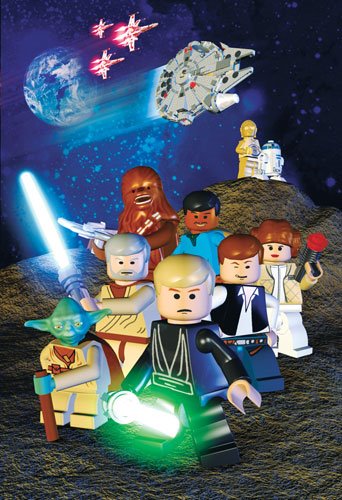
Now this, on the other hand, is exciting news! The original Lego Star Wars game had more excitement, more surprises, more thrills, more humour and more emotional content than the movies it was based on. Graphically speaking, it represented the best that a video game can be by coming up with a wholly unique aesthetic (everything is Lego!) and not trying to ape "reality". Its playability walked a fine line between being a quick study, while still representing enough of a challenge to retain interest. This was one of those rare games I played from beginning to end, figuring out all the puzzles and seeking out all the surprises and bonuses (something I don't usually have patience for). It's been a year, and the girls are still playing the game.

So, yes, once again I've dropped plastic for Lucas. I'm looking forward to features like swapping heads with bodies, building my own landspeeder, etc. Typical Lego stuff, in other words, the nature of which gets me wondering: why doesn't Lucas just make Star Wars public domain? In the case of the movies, this might allow a guy like me the choice to keep the tidied-up dogfight, but switch back to Han shoots first.

And why stop there? Why not make up your own aliens, or swap heads and bodies? Why not (gasp!) mess with the storyline? We might finally get a Star Wars product that does better than trade on creaky nostalgia, something that generates actual interest and excitement. Something, in other words, that recaptures the spirit of the original.


Other gaming news:
WIRED has an uncharacteristically dire piece on Playstation 3 and the future of Sony, here.

Thursday, September 07, 2006

Canada & The Literature of Landscape

If you're a Canadian, it's almost certain you've committed yourself to a long-distance relationship at some point in your life. You can't be a Canadian and escape this fate, because you can't be a Canadian and escape the fact of its enormous distances. In my Winnipeg high school, I had a friend who fell hard for a girl in Thompson. Two cities in the same province, connected by a single, uninterrupted highway – pretty straightforward, right? Now go to Google Maps and take a look at what they encountered whenever they got itchy for a little face-time.

I once fiddled with a short story about a guy from Toronto in love with a girl from Calgary. They squeeze sugar from the phone for a couple of months, until he can't take it anymore. He quits his job and climbs into the car, but not before one final phone call to his sweetheart. He begs her to put on exactly the same outfit she was wearing the last time they were together; he'll do likewise, in an effort to meet at the common ground of shared memory.

So he drives through the Canadian Shield, and the Prairie Grasslands, and finally into the Alberta Foothills, thinking all the time of this woman, her complexities, her beauty, her foibles, the conversations that connected and the ones that didn't. When he finally arrives in Calagary, she opens the apartment door, dressed in the agreed-upon outfit. But she's had a hair-cut, and that's change enough to puncture his fantasy life and end the relationship.

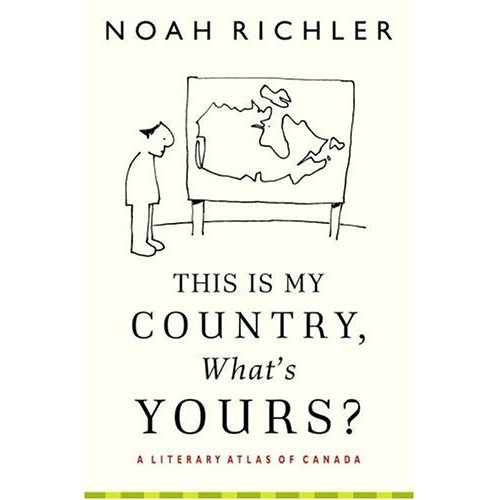
Distance accounts for just about everything in Canada. And that is the chief reason why I can't wait to tuck into Noah Richler's This Is My Country, What's Yours? A Literary Atlas Of Canada. I caught precious few snippets of the CBC radio series that laid the groundwork for the book (and until I can claim it in my taxes, I can't quite justify the $$ for the CDs, available here (scroll down to A Literary Atlas Of Canada ($100 for all 10 shows))), but what I heard was immediately engaging, entirely entertaining and filled with worthy insights. There hasn't been an honest attempt at coming to terms with the scattershot CanLit scene, or The National Consciousness(es), since the tweed-and-patchouli days of Frye & Atwood. Those days are long gone, and if the early reviews are correct this effort by fils Richler is more than a rip-off "update". It has legs and intelligence, and it couldn't come at a better time.

Wednesday, September 06, 2006

Do The Duties of Fall Include Blogging?


The girls are back in school. For the next week or so, their sleep-time will be marked by passionate but inarticulate chatter, and (in the case of the youngest) grinding teeth. I'm not sure what marks my sleep-time; my wife couldn't tell you, either, because I fall asleep last and wake up first.

I've been mulling over several possible topics, including commentary on two DVDs: Metal: A Headbanger's Journey and Why Should The Devil Have All The Good Music. Both were provocative, amusing and unsettling documentaries looking at what sort of purposes extreme music serves. There's plenty to comment on, but at this moment I find I don't much care to. In fact, I think I got turned off.

For both movies, the subject quickly gains theological import. But instead of training the camera on a bunch of pious propeller-heads with vandyke beards who jump at the chance to pontificate at length, we're subjected to a bunch of pierced, tattooed and edgily-coiffed personalities who jump at the chance to pontificate at length. I know that's what I paid for, but the overall effect gets to be pretty dreary, particularly when said pontificators have difficulty mustering up a sense of humour. I'd say of the two, Why Should The Devil is more amusing -- both intentionally, and otherwise. Why's material also opens itself up to some genuine surprises, while the world of Metal is quite predictable (nice to see, though, that Ronnie James Dio has a penchant for collecting cute ceramic froggies). Perhaps if Metal's Sam Dunn is up for another round with the material, he might consider contrasting Wacken with Cornerstone, and his reactions to the two. That would certainly be of anthropological interest, I would think.

But, whatever. Back to the tasks of fall. Canning tomatoes. Draining, cleaning and putting away the pool. Sealing the house against winter-dazed flies and bees. Killing the hamsters.


That's right: killing the hamsters. The girls' dwarf hamsters have passed the two-year mark, and they are in sad, sad shape. Neither of them runs on the wheel anymore. One of them has probably suffered a stroke: it is verifiably blind, and can't seem to use the left side of its body. Combine this with the fact that it's been months since either of my daughters has played with the little blighters, and I think we're dealing with some genuinely miserable creatures. Time for humanity to assert some control over its lesser charges.

And so it is with heavy heart that I leave my computer and head for the back yard, where the end for these creatures awaits...

Friday, September 01, 2006

Choosing One's Seal

Tsk - DV lured me to this site, and now I can't decide which seal I like best - Sub-Genius:


Not "whisky", but still:


Of course, there's always Star Trek: