Friday, September 01, 2006

Ed Benedict, 1912-2006

"It's amazing to me that a guy with such a crusty exterior can make drawings this cute!" - John Kricfalusi


Hanna Barbera Flintstones stylist Ed Benedict passed away August 28, and Ren & Stimpy creator John Kricfalusi gives him a sweet and very touching send-off, here. (H/T: Drawn!)

"Me code pretty one day."

(With apologies to David Sedaris and my brother.)

Word-processing software came into its own just as I was figuring out how to construct an undergraduate essay (or a short story, for that matter). I can clearly recall the night my friend and his fancy-pants PC introduced me to WordStar 2.0. Kids these days, with their text-messaging and the Google and whatnot, have no idea what was required for undergraduate essay writing a mere (*cough*) 20 years ago.

First, there was the research: shlepping to the library and digging out the half-dozen available books on your subject matter, the contents of which your prof had no doubt committed to memory. There followed notes, and an outline (I'm sure the kids and I are on the same page, here – right?). When that was done, you wrote out your entire essay by hand. Once you had a suitably impressive sheaf of scrawled paper (scarred with pen-strokes, blots and revisions), you breathed a quick prayer that you'd met the word-count. Then you brewed up a fresh pot of coffee, unpacked the half-tonne "portable typewriter" your father used for his thesis, and got to work. Typing. Carefully. Retracing your steps and whiting out your errors, one freakin' letter at a time. Then typing over that, taking a deep breath, and proceeding with the rest of the paper in the absurd hope this never happened again. And that was just for the little mistakes. If you somehow missed a significant, last-minute revision (not an uncommon occurrence for me), you had to discard all the pages affected by the omitted text, and re-start from where you'd screwed up.

Now here was WordStar. With a feature called Spell-Check (sure, it was American english – but still). "Also," said my friend, "you can erase entire words just by hitting Control/Backspace, or Control/Delete." Entire words! "Or blocks of text, by highlighting, then hitting Delete." Blocks of text!! "There's also a cut-and-paste option..."

You've seen those kids who show up and play with your kids, then when it's time to go home, they don't want to leave your house without their favourite toy? Well...

I was still living at home, and attending the local university. My father had expressed interest in getting a home computer, so he and I hit the road and inspected one fly-by-night-PC-clone-outfit after another, until we were satisfied that Outfit X was the one for our purposes. He signed the cheque for it, we brought it home and I set it up.

The idea was, of course, that I would teach him how to use it. This was very much pre-Windows – the day of the DOS-line. Using the word-processor to type was no problem, but command lines were another matter. I can't remember just what we were trying to get the printer to do, but the image that sticks in my head is of my frustrated father, standing over the printer and pressing the "print" button, applying an ever-increasing amount of pressure on that one crummy button with every failed operation.

That image stays top-of-mind whenever I call my brother to bail me out of some mess I've made with Linux. So long as he's chuckling to himself after hanging up the phone, I'm sure I'm safe. But this leads me to...

Whisky Prajer: Corporate Shill

After some tweaking, I'm back on eMusic. From first-hand experience, I can confidently say to Linux users everywhere that the eMusic tar.gz patch is crap. Months ago – the salad days, when eMusic was offering 50 free downloads to new members – I screwed up every last free download figuring out how (not) to use it. So do not waste your time with it, go here instead and install this Java-based application. (But really: if you're a Linux user and you've come here for my expertise ... well, that's pretty sad.)

I still have extreme reservations about installing third-party software, so let's call this a “trial marriage”. All the same, eMusic's selection is keeping me on their side of the threshold. To name just a few examples of artists whose CDs are typically a costly affair (at least for Canuckle-heads like myself): Townes Van Zandt, Josh Ritter, Steve Forbert, The Drive-By Truckers, Joe Henry, Peter Case, Stacey Earle, Pierce Pettis, Kate Campbell, John Hiatt, The Be Good Tanyas, The Waiffs, Neko Case, (Stacey's lesser-known older brother) Steve Earle, The Legendary Shack-Shakers, Reverend Horton Heat, The Cramps, Moxy Fruvous .... (get me a paper bag, I'm hyperventilating!)

There's also some early Medeski, Martin & Wood (including this incredible song, from Friday Afternoon In The Universe) and a heap of jazz to be had (though I have to admit, I'm still a hold-out for the CD when it comes to jazz or classical – MP3 sound compression does not serve these genres well. I should also mention, eMusic's "Metal" selection leaves a lot to be desired (but perhaps that's just because metalheads are used to getting their music for free)).

Finally, they stock two artists whose work I promote out of a sense of mission: my man, Jason Ringenberg (whom I've written about here and here; it'd sure be nice to see the entire Scorchers' back catalogue made available, but that's beyond his control so I'm not holding my breath), and Mark Heard, whose Mosaics I somehow missed the first time around (more on that later, I suspect, considering my earlier recollection, here).

In the meantime, perhaps my brother has some thoughts re: Linux and the MP3 market?

Wednesday, August 30, 2006

"The kid in high school who should have been reading books but was doodling band logos in his notebook? That was me."


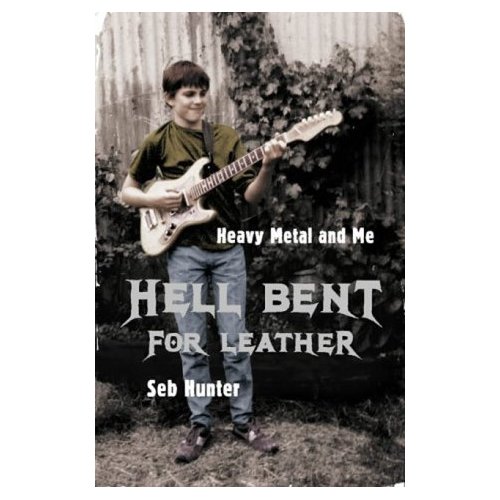
"At last we had conquered Basingstoke." Seb Hunter lays down these words just past the half-way mark of his metal-memoir, Hell Bent For Leather. It is a hard-won sentiment, but no reader will be caught off-gaurd when, 10 pages later, they follow Hunter into his first day on the job at McDonald's. Nor will the reader be too surprised to learn that Hunter's greatest challenge is remembering which fryer to use for apple pies, and which to use for fish. It seems all of Hunter's wisdom is of the hard-won variety.

Most readers of a certain age will quickly recognize Hunter – he's that guy you remember from grade 10 who was mostly sweet, probably smart, but couldn't seem to focus on anything that didn't involve a guitar. He also didn't show up for grade 11.

Hunter gallops through the expected trials and tribulations of a kid taken over by the rock & roll dream. He pisses away his life listening to Led Zep and figuring out Jimmy Page solos, one note at a time. He falls into a number of bands, none of which make it as far as "Puppet Show ... and Spinal Tap." He possesses analytical facilities that weave together some beguiling sense regarding the metal of the late-80s and early 90s. And he ill-advisedly follows his whims when it comes to recreational drug use. After months of clouding his brain with mary-jane, he drops acid. His first experience is such a catastrophic disaster, he drops it again a few days later, just to make sure it's as bad as all that. Conclusion from trip #2: it's much, much worse.

I'm an easy mark for a memoir like Hunter's, but even so I was surprised at the accolades it's received. Q, Blender and Maxim give it their unanimous endorsement – perhaps the British setting makes the difference, I thought. But then the very American Publisher's Weekly awarded it a starred review.

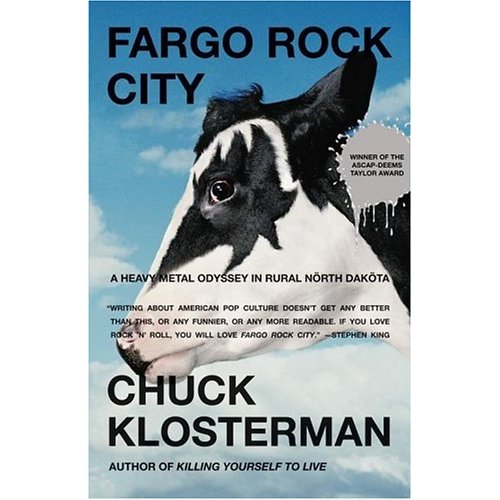
I can't get quite that excited about this book. I've been ruined, because I've already read Fargo Rock City by Chuck Klosterman, which neatly sews up the musicologist analysis of said musical era. But more significantly, I've read Cheese Chronicles: The True Story Of A Rock n Roll Band You've Never Heard Of, by Tommy Womack.

Why Womack's book remains a sub-underground classic is a mystery to me. He's got Klosterman's articulate and witty self-awareness, but he's also got band experience and a particular insight that comes with possessing genuine musical chops. Womack, like Klosterman, knows that guys my age from rural North America all share precisely the same formative rock & roll experience: the first time we saw that 30-second TV ad for the local KISS concert (on a b&w set, no less). This is sure to set a guy on ironic footing, but irony can take you only so far as a rocker; Womack hears Jim Carroll's “People Who Died” at exactly the right moment, and Government Cheese is born. They share the stage and tips jar with REM, drive that beat-up van from Bowling Green to NYC to play at CBGB (OMFUG), make videos and air them on the all-new, all-powerful MTV, and otherwise complete their natural ascendancy to ....

Well, Government Cheese might be just a hazy memory in a select few minds, but Womack, I'm happy to say, is still the man. He's busy doing the solo gig, and throwing his cheery, musical heft behind Todd Snider (has Tommy recovered from Leno and Letterman? You be the judge). As for Cheese Chronicles, you can get your very own copy at Amazon for a mere $35, or you can buy it directly from the man himself, at the more reasonable price of $16 (US, of course).

Tuesday, August 29, 2006

Injecting "New" Blood Into Creaky Franchises

I wondered how long the Star Trek franchise would be allowed to stay in suspended animation. The answer appears to be two more years, tops. Two years can feel like a long time to a guy who likes to wear a velour tunic on his day off, but for those of us who (out of desperation, perhaps) turned to Star Trek for imaginative and ideological stimulus, that might seem like a rather short fallow period.

Or not. It depends whether you think J.J. Abrams -- now heralded as the forthcoming producer and possible director of Star Trek XI -- is a television wunderkind, or just another lucky guy in La-La Land who plays well with others. I lean toward the latter view, but my bias comes from admittedly limited exposure to his product. I remember Felicity as being the first TV series to feature a haircut that jumped the shark; Alias was a by-the-numbers comic book melodrama that rested capably on Jennifer Garner's gorgeous shoulders (and the occasional appearance of Lena Olin); and as for Lost, the jury is still out -- what began promisingly as television's only post-9/11 drama has become larded, obtuse and indeed "lost", much the way Twin Peaks did years earlier.

I think Lost is telling, because the past season shows signs of network meddling. Tightly controlled story-telling has given way to a looser, even sloppier, episodic format -- an indication that people in the boardroom have looked at their swelling bank accounts and figured it was time to adopt a longer view. The creators, Abrams included, originally declared their intent on keeping the enterprise limited to four seasons. I thought this showed remarkable wisdom, and I'm hoping the folks at Battlestar: Galactica have taken note -- there's a definite shelf-life for storylines that allude (even falsely) to a natural conclusion in the opening episode. That "best before" date is usually at season four, and it never ever exceeds season six.

Of course, it could be that Abrams is just the man to resurrect the Star Trek franchise. Franchises typically don't take huge risks. They'll bring in someone who agrees to stay within strict creative guidelines and (more often than not) a very strict budget. Abrams, like Wrath of Khan director Nicholas Meyer before him, has demonstrated remarkable facility in this regard. He's also been a very busy man, and it's likely he ceded control to Lost somewhere around the time Tom Cruise tapped him on the shoulder for M:I:III. The consensus seems to be that Abrams' disciplined Mission: Impossible was the best of the three. It also seems to have highlighted what thin gruel that franchise has amounted to. Here's hoping his Star Trek can escape that fate.

Other franchise news:
this interview with Grant Morrison certainly makes the latest attempted rejuvenation of the Batman ("hairy-chested Neal Adams love-god") franchise sound like fun -- albeit safe fun. I think Morrison's approach to craft is pleasantly common-sensical, if not particularly memorable. Hat-tip to Bookslut.

Friday, August 25, 2006

Tacit Knowledge/Before I Wake

Michael Blowhard adds another trenchant observation to his occasional “Let's stop and take an unblinkered look at the publishing industry” efforts, here. This earlier post is what originally turned me on to the Blowhards. I'm not resorting to hyperbole when I say it changed my life for the better.

In June, 2003 I'd just finished the first draft of a novel. I had other boxes of paper I'd typed out, but this one was different: I'd spent four years on it, waking up at 4:00 in the morning to type for two uninterrupted hours before my daughters (one an infant, the other a toddler – originally, of course) woke up. After that, it was time for me to change diapers, warm bottles, tend to the household. In June, I had achieved the singular feat of concluding a manuscript that ran to 763 single-spaced pages. My wife asked if she could take a peak; she promised to be generous but honest in her appraisal, so I pushed the heap of paper in her direction. I was kinda-sorta pleased with myself, but mostly looking forward to taking a break from the insanely early mornings.

Days later, a friend e-mailed me the link to the Blowhards, with the words, “Wondered what you might make of this.” I read it. I feverishly hammered out a lengthy comment, and hovered over the “post” button for a bit. Then I went back and read all the other comments for the first time. I finally shut off the computer without saving my comment and stared out the window.

Then my wife walked in, holding a page from my manuscript and tapping a pencil to her lips. “I think I've just found your first sentence,” she announced.

I snatched the sheet from her hands and looked at it. Page 145.

I determined then and there that waking up at 4:00 was strictly for the birds, that I was no longer going to be the bleary-eyed droop who slouched around impervious to my daughters' glorious impromptu song-craft (among other delights), and that I was going to renegotiate a more realistic personal contract with my dreams.

I was grumpy for a stretch. The kicker was this really had been “tacit knowledge”: I'd been a buyer for a successful independent bookstore in Toronto, and I had friends in the publishing industry, including a high-profile editor of high-profile fiction – I witnessed first-hand how it all worked. Early in the game, my editor friend encouraged my efforts at fiction, but also made a point of sitting me down and explaining what I needed to do to get published and sold. Without getting into specifics, we were talking about a hell of a lot of work, the likes of which made my 4:00 a.m. type-fests look like an idyllic pastime. (For the record, I did give the advice a try, and there followed some literary misadventures which I'll save for another post or two.)

I finally took up Michael B's self-publishing (i.e., "blogging") suggestion, which had the pleasant effect of quickly extracting me from the Slough of Despond (note the starting date in the Archives). I re-engaged, but still kept writing, mostly shorter stuff that didn't require an undue amount of my time. I'm editing and formatting a selection of it, and will be going the Lulu route – with a little luck we'll have something ready by the end of September (working title: “Youthful Desires”).

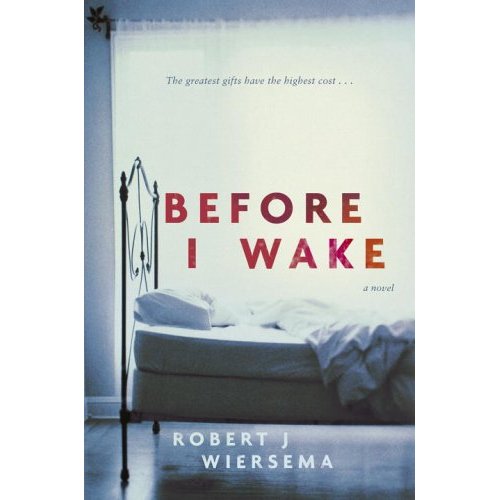
In the meantime, it's been a privilege and a treat to acquaint myself with Robert J. Wiersema and follow his progress as newly-published novelist. This cat's living the dream, but aye carumba – the work he's done and continues to do! In 2005, as Wiersema was making the final changes to his soon-to-be-published novel Before I Wake, he:
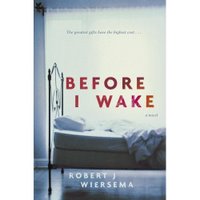
- worked as buyer/seller for Victoria's pre-eminent independent bookstore;
- worked as contributor/organizer for that city's literary festival;
- reviewed over 100 books for various newspapers and trade journals;
- hit the road and did promo work for Before I Wake at Toronto's Book Expo;
- obligingly started work on his next novel.

If you need any further proof of Michael's “authors sell themselves” thesis, here's what RJW's currently up to. I understand he also remains happily married and has taught his son how to play chess. Excelsior, dude! (Whew – I think it's time I brewed my second pot of coffee!)

Before I Wake
has received excellent advance reviews (here is one such with spoilers), and can be found in nearly every bookstore in Canada, or purchased on-line here.

Wednesday, August 23, 2006

Justice Served

The last "Superhero Personality Test" I took registered me as The Flash ("fast, athletic, flirtatious" -- and just plain creepy). I'm obviously happier with my results in this test. Apparently I'm Spider-Man: "intelligent, witty, a bit geeky with great power and responsibility."

Spider-Man is my number one fave (has been since adolescence). The essence of his appeal is spelled out in bold letters on the masthead: "Peter Parker Is: The Amazing Spider-Man!" And vice-versa, of course. Spider-Man swings from a thread and frets over the domestic tedium he's supposedly left behind with one quick costume change. I think he qualifies as the only superhero who doesn't have an alter-ego.

It also looks like The Green Lantern was very much in the running. I'm not sure what tipped the scales (probably my enthusiastic response re: red-heads), but I'm fine with him, too -- especially as he was rendered in the 70s by Denny O'Neill and Neal Adams: socially conscious to the point of camp. C'est moi, mes amis. C'est moi.