Since I'm confessing to my geek tendencies, I'll direct readers to The Guardian's list of the 20 Best Geek Novels Written in English Since 1932 (via 2Blowhards). To my amusement/horror, I've picked up 19 of the 20 and completed (at least once) 11. Would that this made me a competent programmer...
Here is the list (an asterisk indicates I've cracked the covers; an "R" means I've read it):
1. The HitchHiker's Guide to the Galaxy -- Douglas Adams (*)
2. Nineteen Eighty-Four -- George Orwell (R)
3. Brave New World -- Aldous Huxley (*)
4. Do Androids Dream of Electric Sheep? -- Philip Dick (*)
5. Neuromancer -- William Gibson (R)
6. Dune -- Frank Herbert (R)
7. I, Robot -- Isaac Asimov (R)
8. Foundation -- Isaac Asimov (R)
9. The Colour of Magic -- Terry Pratchett (*)
10. Microserfs -- Douglas Coupland (R)
11. Snow Crash -- Neal Stephenson (R)
12. Watchmen -- Alan Moore & Dave Gibbons (R)
13. Cryptonomicon -- Neal Stephenson (*)
14. Consider Phlebas -- Iain M Banks
15. Stranger in a Strange Land -- Robert Heinlein (R)
16. The Man in the High Castle -- Philip K Dick (*)
17. American Gods -- Neil Gaiman (*)
18. The Diamond Age -- Neal Stephenson (R)
19. The Illuminatus! Trilogy -- Robert Shea & Robert Anton Wilson (R)
20. Trouble with Lichen - John Wyndham
In my original post, I said I'd read 15 of these titles. I lied. I silently did a sleight-of-hand, substituting titles of authors I'd read. For instance, I've read Wyndham's The Chrysalids, and Dick's Ubik and Valis, and Pratchett's Discworld. Surely these books represent their authors' best prose as ably as the ones listed? I've read enough of the two Dick books mentioned to realize this assumption of mine is faulty. The truth does count for something, so judge me by the amended results (while I'm in full disclosure mode: I haven't read the entire Illuminatus! Trilogy, either, but I did read the first book, The Eye In The Pyramid, and it left me with the unshakeable certainty that not only would other two books would be just as pointlessly crazy as the first, but that I'd be unable to tell which "episode" occurred in what book once I was finished them all).
If I could go back in time, there are books on this list I'd encourage my younger self to drop in favor of a good comic. Asimov's Foundation is a tedious slog, but qualifies as a light-hearted, entertaining lark next to Dune. I had declared myself a sci-fi geek, however, and read both out of a bounden sense of duty. Ditto, Stranger In A Strange Land, which I think actually marks an unfortunate turning point in Heinlein's work.
Liar or no, I still believe I'm qualified to make a little informed forecasting, so here goes: in the next ten years the list will have to include China Miéville (probably by giving Mr. Wyndham the heave-ho).
Post-Script: Here's a nifty defense of what I've typically considered "dystopian" literature (which definitely includes Philip K. Dick. Link from ALD.
Thursday, November 24, 2005
Wednesday, November 23, 2005
Virtual Reality: Too Much Is Not Enough
Microsoft releases its new X-Box 360 today. I, for one, could not be more underwhelmed. But then, I'm not the target demographic. I'm too old, too impatient, and a foul-weather gamer at best - if there's even so much as a book to be dusted or a half-decent TV commercial to be watched, I'll choose that over the gaming experience.
 Nevertheless, I am a gamer. And when all the elements are in place I have terrific fun at it, too. But that is an astonishing rarity, for a very simple reason: game developers show so little imagination. This surprises me, given the sort of hardware that's been developed in the last 15 years. The average game pad has a minimum of eight buttons within immediate reach of your thumbs and fingers. Most games respond not just to a singular button being pressed, but to combinations being pressed in sequence. I'll let someone else figure out the mathematics (is that eight squared? Eight cubed?! More?!?). The long and short of it is we're dealing with an incredible variable that should conceivably result in a fertile breadth of interactive entertainment.
Alas, what we typically have is "Run + Jump + Kick + FIRE!" or "Accelerate + Turn + Brake + Turn" etc. The evolution from Pong to Castle Wolfenstein was indeed a remarkable one, chronicled in a pre-Cambrian bit-torrent sludge of quarter-plugging video games, but everything we've seen since shows no development whatsoever. The challenge, as currently framed by programmers, is how to make the familiar more interesting. To my mind, that's a bloody boring challenge.
 The only people who can respond to this challenge are the CGI folks. The tack usually taken is to provide ever more "realistic" graphics. A lot of what we see as a result is very impressive, but this too seems to me to be a limiting and stagnant approach to gaming entertainment. Invariably, the graphics will look stiff and disappointing when compared to what you see outside your window (or, to use a more pertinent example that makes me shudder, outside your car's windshield. I can't help wondering if today's 16-year-old (exceptions allowed for) isn't a touch more prone to recklessness after playing a game like Need For Speed: Most Wanted).
If "realistic" is the predominant school of CGI rendering, the secondary school is "arcade". The former strives for exactly that; the latter bends the rules. Both work with laws of physics that relate to the ones we experience in life, but arcade CGI people will fudge and flex what we know - though very rarely, if ever, actually breaking our physical expectations on screen.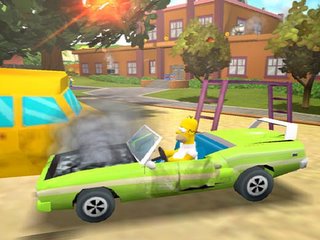 Thus, Need For Speed will give you a Porsche physically responding to its surroundings - a rain-slick street, a brick restraining wall - the way you'd expect a Porsche to respond, while The Simpsons Hit & Run gives you a pink sedan that takes an incredible beating before bursting into flames and ejecting Bart Simpson, the driver, unscathed.
I tend to favor the latter, for several reasons. Playing with expectations is fun, and The Simpsons Hit & Run plays with a host of them. Kids drive cars, run over pedestrians who say things like "Spines don't bend that way!" or "This is a bad day for generic characters everywhere!" They jump incredible heights, fall off multi-storied buildings and land on their toes - all in aid of the sort of narrative hijinx you expect from Matt Groening's stable of writers. The action still takes place in a framework of limited expectations, but it exceeds those modest expectations and gets full marks from me.
 It also looks unreal - it's 3-D rendering, but of the sort that is post-Toy Story, pre-The Incredibles. That is, it looks "animated", not "real".
"Animated" is another preference of mine. If something looks stiff, well - the viewer just assumes it's supposed to. Conversely, when "reality" is brought into play, it immediately distances the viewer with its discordant references: a game like LEGO Star Wars can be quite charming, where the other Star Wars offerings leave me cold.
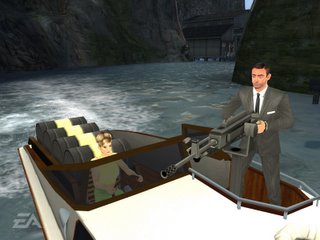
Similarly, I'm curious to give the latest James Bond game (From Russia With Love) a spin. I'll admit I'm not expecting great things, even though the premise - Sean Connery! 1963!!! - is so very promising. The screen-shots alone are a disappointment. That looks like a boat, alright; that looks a lot like Connery; she almost looks like Tatiana; but that doesn't look anything like water.
 The usual resort for Reality CGI programmers is "cover of darkness". So Wolfenstein looked absurd with its pastel blue flooring and bright red walls? Put it all in shadows and nightfall, and call it "Doom". As Walt Kelly's character Pogo self-consciously noted, "These silouhettes sure save a mess of drawin'." I'm sure most of From Russia With Love takes place at night.
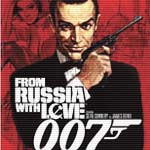
  But I look at the terrific cover art for the game (borrowed from the movie posters of the time) and wonder why they didn't go the animated route, instead? Something like, say, XIII is the perfect example of how entrancing that technique can be. Drawing within the lines can provide surprisingly smart drama for the viewer/player - why not give it a shot?
But these are the minor kvetchings of a nearly-indifferent consumer. I won't pay the full $60 for a half-baked First-Person Shooter, or even a thrillingly engineered Race-and-Chase. I'll bide my time for the next year or two and get them used - if I'm still curious. In the meantime, I might just peruse some of the Open Source games available. My brother tells me the recent Castle Wolfenstein engine has been released to the public, to some amusing results. Allied Troops could be fighting the Nazis in North Africa, only to see the Millennium Falcon fly off overhead. One minute you might be fighting monsters, the next you might be firing a salvo at an angry George Jetson. It's still a First-Person Shooter, but at least you're a shooter in a world that's more akin to something imagined by Philip Jose Farmer - or stranger. And that's a step in the right direction.
 Nevertheless, I am a gamer. And when all the elements are in place I have terrific fun at it, too. But that is an astonishing rarity, for a very simple reason: game developers show so little imagination. This surprises me, given the sort of hardware that's been developed in the last 15 years. The average game pad has a minimum of eight buttons within immediate reach of your thumbs and fingers. Most games respond not just to a singular button being pressed, but to combinations being pressed in sequence. I'll let someone else figure out the mathematics (is that eight squared? Eight cubed?! More?!?). The long and short of it is we're dealing with an incredible variable that should conceivably result in a fertile breadth of interactive entertainment.
Alas, what we typically have is "Run + Jump + Kick + FIRE!" or "Accelerate + Turn + Brake + Turn" etc. The evolution from Pong to Castle Wolfenstein was indeed a remarkable one, chronicled in a pre-Cambrian bit-torrent sludge of quarter-plugging video games, but everything we've seen since shows no development whatsoever. The challenge, as currently framed by programmers, is how to make the familiar more interesting. To my mind, that's a bloody boring challenge.
 The only people who can respond to this challenge are the CGI folks. The tack usually taken is to provide ever more "realistic" graphics. A lot of what we see as a result is very impressive, but this too seems to me to be a limiting and stagnant approach to gaming entertainment. Invariably, the graphics will look stiff and disappointing when compared to what you see outside your window (or, to use a more pertinent example that makes me shudder, outside your car's windshield. I can't help wondering if today's 16-year-old (exceptions allowed for) isn't a touch more prone to recklessness after playing a game like Need For Speed: Most Wanted).
If "realistic" is the predominant school of CGI rendering, the secondary school is "arcade". The former strives for exactly that; the latter bends the rules. Both work with laws of physics that relate to the ones we experience in life, but arcade CGI people will fudge and flex what we know - though very rarely, if ever, actually breaking our physical expectations on screen.
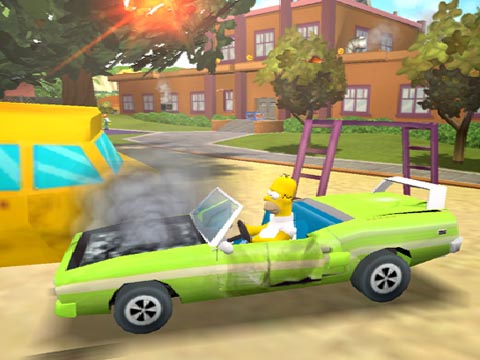 Thus, Need For Speed will give you a Porsche physically responding to its surroundings - a rain-slick street, a brick restraining wall - the way you'd expect a Porsche to respond, while The Simpsons Hit & Run gives you a pink sedan that takes an incredible beating before bursting into flames and ejecting Bart Simpson, the driver, unscathed.
I tend to favor the latter, for several reasons. Playing with expectations is fun, and The Simpsons Hit & Run plays with a host of them. Kids drive cars, run over pedestrians who say things like "Spines don't bend that way!" or "This is a bad day for generic characters everywhere!" They jump incredible heights, fall off multi-storied buildings and land on their toes - all in aid of the sort of narrative hijinx you expect from Matt Groening's stable of writers. The action still takes place in a framework of limited expectations, but it exceeds those modest expectations and gets full marks from me.
 It also looks unreal - it's 3-D rendering, but of the sort that is post-Toy Story, pre-The Incredibles. That is, it looks "animated", not "real".
"Animated" is another preference of mine. If something looks stiff, well - the viewer just assumes it's supposed to. Conversely, when "reality" is brought into play, it immediately distances the viewer with its discordant references: a game like LEGO Star Wars can be quite charming, where the other Star Wars offerings leave me cold.
Similarly, I'm curious to give the latest James Bond game (From Russia With Love) a spin. I'll admit I'm not expecting great things, even though the premise - Sean Connery! 1963!!! - is so very promising. The screen-shots alone are a disappointment. That looks like a boat, alright; that looks a lot like Connery; she almost looks like Tatiana; but that doesn't look anything like water.
 The usual resort for Reality CGI programmers is "cover of darkness". So Wolfenstein looked absurd with its pastel blue flooring and bright red walls? Put it all in shadows and nightfall, and call it "Doom". As Walt Kelly's character Pogo self-consciously noted, "These silouhettes sure save a mess of drawin'." I'm sure most of From Russia With Love takes place at night.
 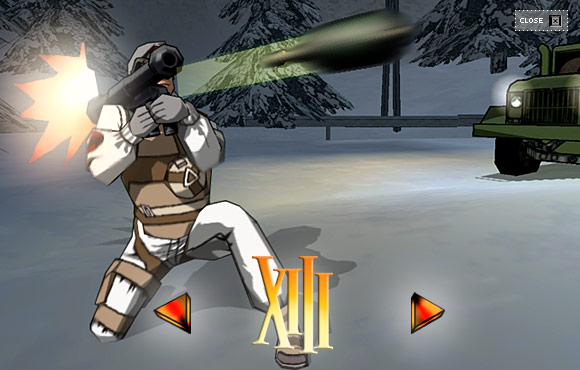 But I look at the terrific cover art for the game (borrowed from the movie posters of the time) and wonder why they didn't go the animated route, instead? Something like, say, XIII is the perfect example of how entrancing that technique can be. Drawing within the lines can provide surprisingly smart drama for the viewer/player - why not give it a shot?
But these are the minor kvetchings of a nearly-indifferent consumer. I won't pay the full $60 for a half-baked First-Person Shooter, or even a thrillingly engineered Race-and-Chase. I'll bide my time for the next year or two and get them used - if I'm still curious. In the meantime, I might just peruse some of the Open Source games available. My brother tells me the recent Castle Wolfenstein engine has been released to the public, to some amusing results. Allied Troops could be fighting the Nazis in North Africa, only to see the Millennium Falcon fly off overhead. One minute you might be fighting monsters, the next you might be firing a salvo at an angry George Jetson. It's still a First-Person Shooter, but at least you're a shooter in a world that's more akin to something imagined by Philip Jose Farmer - or stranger. And that's a step in the right direction.
Tuesday, November 22, 2005
"Country Boy", Take 2
Question: What do you get when you play country music backwards?
Answer: You get your dog back, your truck back, your wife back...
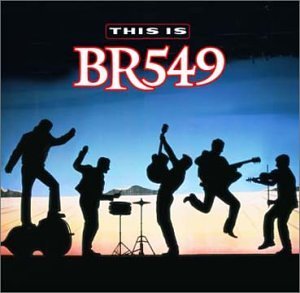 Of course, the pleasures of country needn't all be relegated to the fields of gloom and doom (erm ... right). Some of the most bumptuous, infectious music I enjoy falls within the country format, most notably the rock-a-hillbilly stylings of BR5-49. These guys are capable of "wistful", but mostly they're intent on keeping the honky-tonk hoppin'.
BR5-49 ("Junior Samples'ever-flubbed phone number on Hee-Haw", according to the website) got its start playing in the window of Nashville's bar/bootery Robert’s Western World. The band payment at the time was to take home whatever fell into the "Tips" pickle jar, and BR5-49 did well for themselves.
If you give their first album (my personal fave) a spin, you'll quickly figure out why. The solos and fills aren't the most technically demanding in the genre, but they're clean and rambunctious. You don't have to see the band to actually see the band having fun: you might not know who Gary Bennett, Don Herron, Chuck Mead, Smilin' Jay McDowell and "Hawk" Shaw Wilson are, but you know their heads are bobbing along as they pull one terrific riff after another out of their instruments.
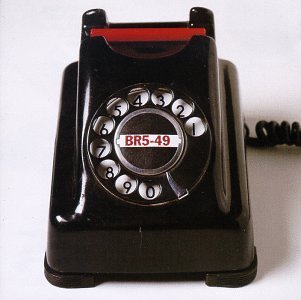
Just the tonic for chasing away the blues. Pick up that phone, and dial now...
Answer: You get your dog back, your truck back, your wife back...
 Of course, the pleasures of country needn't all be relegated to the fields of gloom and doom (erm ... right). Some of the most bumptuous, infectious music I enjoy falls within the country format, most notably the rock-a-hillbilly stylings of BR5-49. These guys are capable of "wistful", but mostly they're intent on keeping the honky-tonk hoppin'.
BR5-49 ("Junior Samples'ever-flubbed phone number on Hee-Haw", according to the website) got its start playing in the window of Nashville's bar/bootery Robert’s Western World. The band payment at the time was to take home whatever fell into the "Tips" pickle jar, and BR5-49 did well for themselves.
If you give their first album (my personal fave) a spin, you'll quickly figure out why. The solos and fills aren't the most technically demanding in the genre, but they're clean and rambunctious. You don't have to see the band to actually see the band having fun: you might not know who Gary Bennett, Don Herron, Chuck Mead, Smilin' Jay McDowell and "Hawk" Shaw Wilson are, but you know their heads are bobbing along as they pull one terrific riff after another out of their instruments.
Just the tonic for chasing away the blues. Pick up that phone, and dial now...

Confessions of a Sometime "Country Boy"
Here's the thing about country music: Like most categories of popular culture, it resembles a dumpster filled 98 percent with brightly wrapped, completely empty boxes. But if you dive the dumpster, and if you have the right kind of sensibility, you can find touchingly sincere, clever, unpretentious, and readily accessible simple pleasures scattered among the wretched refuse.
 So says Daniel Menaker at Slate, and for the most part, I agree with him. I would rather the broken knob on my car radio be tuned to a crappy pop radio station than to a crappy country music station. And yet, and yet ... when a country song works, I think it is so much more direct and immediate than when a pop song works.
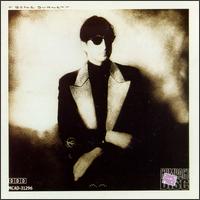
I suppose great country music has its complexities, as well. But it's all delivered in a straight-forward 4/4, three-chord, three-minute approach that only allows for so much variance before it sheds "country" and becomes something else. The country music that haunts me is bafflingly simple stuff. T-Bone Burnett's best album to date was an accoustic country effort that curbed his allegorical impulse in favor of quiet meditations on those lifelines his divorce-wounded heart couldn't relinquish: love, guilt, forgiveness and the safety of his daughters. I shared it with a musical friend, who later told me, "There's an intimacy evoked that makes you feel uncomfortable after a while."
Emmylou Harris is masterful at that, especially when she's working with Daniel Lanois. Lyle Lovett can evoke that sort of thing to a lesser degree, with his spare, essay-length songs on physical space and emotional isolation - but his artistic sensibility is too calculated to truly entice the listener. And should the listener be foolish enough to bite, Lovett is quick to deliver a well-placed nudge in the ribs with "Stand By Your Man", or "She's Leavin' Me (Because She Really Wants To)". Those are fine jokes, in fact (I'm smiling as I type), but they won't carry you to the end of the line.
 I'm thinking these days of Johnny Cash. How can I not, with all the hooplah surrounding his bio-pic? I think everyone was alternately cheered and unsettled by his death following so closely on the heels of June Carter's. The big man could be as jokey as your local grocer (think, "One Piece At A Time"), but when it came right down to it, he was a terrifically disturbed and disturbing person. I honestly can't see why any popular religious group would care to claim him. Listen to "The Man Comes Around" before you go to bed tonight, and tell me you slept well - tell me you slept at all. Is Cash's religion really yours? Is it really? Because if it is, I honestly don't know how you find the wherewithal to dress up, climb into the van and sing choruses come Sunday morning.
The movie will give us a manageable Johnny Cash, much the way Ray Charles was tamed for public consumption in his posthumus flick. It's the music, though, that slips under the skin and alternately discomfits and encourages. Discomfit and encourage - you don't typically find those qualities working in tandem in pop music. You don't typically find them working in tandem on country radio, either. And perhaps it's just as well, or we'd have to pull our cars over to the side, just to get a grip.
 So says Daniel Menaker at Slate, and for the most part, I agree with him. I would rather the broken knob on my car radio be tuned to a crappy pop radio station than to a crappy country music station. And yet, and yet ... when a country song works, I think it is so much more direct and immediate than when a pop song works.
I suppose great country music has its complexities, as well. But it's all delivered in a straight-forward 4/4, three-chord, three-minute approach that only allows for so much variance before it sheds "country" and becomes something else. The country music that haunts me is bafflingly simple stuff. T-Bone Burnett's best album to date was an accoustic country effort that curbed his allegorical impulse in favor of quiet meditations on those lifelines his divorce-wounded heart couldn't relinquish: love, guilt, forgiveness and the safety of his daughters. I shared it with a musical friend, who later told me, "There's an intimacy evoked that makes you feel uncomfortable after a while."
Emmylou Harris is masterful at that, especially when she's working with Daniel Lanois. Lyle Lovett can evoke that sort of thing to a lesser degree, with his spare, essay-length songs on physical space and emotional isolation - but his artistic sensibility is too calculated to truly entice the listener. And should the listener be foolish enough to bite, Lovett is quick to deliver a well-placed nudge in the ribs with "Stand By Your Man", or "She's Leavin' Me (Because She Really Wants To)". Those are fine jokes, in fact (I'm smiling as I type), but they won't carry you to the end of the line.
 I'm thinking these days of Johnny Cash. How can I not, with all the hooplah surrounding his bio-pic? I think everyone was alternately cheered and unsettled by his death following so closely on the heels of June Carter's. The big man could be as jokey as your local grocer (think, "One Piece At A Time"), but when it came right down to it, he was a terrifically disturbed and disturbing person. I honestly can't see why any popular religious group would care to claim him. Listen to "The Man Comes Around" before you go to bed tonight, and tell me you slept well - tell me you slept at all. Is Cash's religion really yours? Is it really? Because if it is, I honestly don't know how you find the wherewithal to dress up, climb into the van and sing choruses come Sunday morning.
The movie will give us a manageable Johnny Cash, much the way Ray Charles was tamed for public consumption in his posthumus flick. It's the music, though, that slips under the skin and alternately discomfits and encourages. Discomfit and encourage - you don't typically find those qualities working in tandem in pop music. You don't typically find them working in tandem on country radio, either. And perhaps it's just as well, or we'd have to pull our cars over to the side, just to get a grip.
Sunday, November 20, 2005
Fiddlin'
It took the examples of several other bloggers for me to figure out how to do this exercise. Whatcha do is, you go to Google, you type in your first name, then you type in "needs", Google it, and watch the fun begin! Apparently, these are the first ten things "Whisky" needs:
1) Whisky needs to work on his tan
2) Whisky needs a cigar
3) Whisky needs to reach out
4) Whisky needs more smaller, adventurous companies to show what's possible
5) Whisky needs a range of ingredients and conditions
6) Whisky needs time and the love of a good cask
7) Whisky needs American ex-bourbon casks for maturation
8) Whisky needs some time to reveal his secrets
9) Whisky needs work
10) Whisky needs a second, or even a third chance
Sure glad I went with a nom de plume!
1) Whisky needs to work on his tan
2) Whisky needs a cigar
3) Whisky needs to reach out
4) Whisky needs more smaller, adventurous companies to show what's possible
5) Whisky needs a range of ingredients and conditions
6) Whisky needs time and the love of a good cask
7) Whisky needs American ex-bourbon casks for maturation
8) Whisky needs some time to reveal his secrets
9) Whisky needs work
10) Whisky needs a second, or even a third chance
Sure glad I went with a nom de plume!
Wednesday, November 16, 2005
Lit Links
Slate is going to College this week. Among the many articles of interest is this survey of "Books that rocked my college world", a list compiled by Slate-appointed "famous people". There are a few titles that recommend themselves to me, most notably Nicholson Baker's choice: Personal Knowledge: Towards a Post-Critical Philosophy by "chemist-epistomologist" (Baker's term) Michael Polanyi. In Baker's telling, Polanyi's analysis seems to be precisely the cheerful sort of head-scratching I can get into. I've had a few items waiting in my Amazon docket: looks like I'll be making my "Free Shipping" points this week.
When I considered the books that rocked my college world, I finally had to tip my hat to a sentiment voiced by Robert Stone, in one of those laborious reconsiderations of American Literary Icons. The subject under scrutiny this time was Jack Kerouac, who was being uncermoniously exhumed in several biographies. Stone has his own history with Kerouac. It seems Stone's mother (a bit of a flake, in his telling) sent him a copy of On The Road while Stone was in the Merchant Marines. Stone went on to hang out with Neal Cassady and Ken Kesey, during their maddest years. He struggles to acknowledge the genuine appeal of Kerouac, and says finally that American writers inevitably fall somewhere on a scale set on either extreme by Kerouac or Hemingway (Stone's preferences tilt toward the latter, he says).
If I acknowledge the masculine hubris of that sentiment and briskly move on, I'll amend it somewhat for my personal needs and say that both writers embodied a romantic recklessness that, for better and for worse, influenced some of my own decision making and nudged me right out of my college world. There's future blog material here, because the older I get, the greater my disenchantment grows with both writers. Those two behaved like absolute shits, but they established their own "eXtreme" schools of writing, so they both receive "Get Out Of Jail Free" cards - for now. You kids out there: I managed to read On The Road without becoming a reckless driver and a sweat-drenched speed-freak; similarly, I finished The Sun Also Rises without turning into a drunken anti-Semite with a passion for the bull-fights. See if you can't do the same.
Getting back to "cheerfulness" for a moment: I think that's the quality to C.S. Lewis's writing that has always appealed to me, even in his flawed and blustery "apologetics". We've been reading The Chronicles of Narnia to the girls, in wary anticipation of the movies. As with The Lord of the Rings, there is an imagery evoked by the words that I will regret losing to the movies, and Adam Gopnik correctly identifies their intrinsic appeal. He occasionally overstays his welcome when it comes to critical commentary - "the futile hope of the mystic", my ass - but many of his observations are acute:
The British, of course, are capable of being embarrassed by anybody, and that they are embarrassed by Lewis does not prove that he is embarrassing. But the double vision of the man creates something of a transatlantic misunderstanding. If in England he is subject to condescension, his admirers here have made him hostage to a cult.
Gopnik works hard at staking out the middle ground, which for the most part makes for a rewarding read - here.
Hey - what were the books that rocked your college world?
When I considered the books that rocked my college world, I finally had to tip my hat to a sentiment voiced by Robert Stone, in one of those laborious reconsiderations of American Literary Icons. The subject under scrutiny this time was Jack Kerouac, who was being uncermoniously exhumed in several biographies. Stone has his own history with Kerouac. It seems Stone's mother (a bit of a flake, in his telling) sent him a copy of On The Road while Stone was in the Merchant Marines. Stone went on to hang out with Neal Cassady and Ken Kesey, during their maddest years. He struggles to acknowledge the genuine appeal of Kerouac, and says finally that American writers inevitably fall somewhere on a scale set on either extreme by Kerouac or Hemingway (Stone's preferences tilt toward the latter, he says).
If I acknowledge the masculine hubris of that sentiment and briskly move on, I'll amend it somewhat for my personal needs and say that both writers embodied a romantic recklessness that, for better and for worse, influenced some of my own decision making and nudged me right out of my college world. There's future blog material here, because the older I get, the greater my disenchantment grows with both writers. Those two behaved like absolute shits, but they established their own "eXtreme" schools of writing, so they both receive "Get Out Of Jail Free" cards - for now. You kids out there: I managed to read On The Road without becoming a reckless driver and a sweat-drenched speed-freak; similarly, I finished The Sun Also Rises without turning into a drunken anti-Semite with a passion for the bull-fights. See if you can't do the same.
Getting back to "cheerfulness" for a moment: I think that's the quality to C.S. Lewis's writing that has always appealed to me, even in his flawed and blustery "apologetics". We've been reading The Chronicles of Narnia to the girls, in wary anticipation of the movies. As with The Lord of the Rings, there is an imagery evoked by the words that I will regret losing to the movies, and Adam Gopnik correctly identifies their intrinsic appeal. He occasionally overstays his welcome when it comes to critical commentary - "the futile hope of the mystic", my ass - but many of his observations are acute:
The British, of course, are capable of being embarrassed by anybody, and that they are embarrassed by Lewis does not prove that he is embarrassing. But the double vision of the man creates something of a transatlantic misunderstanding. If in England he is subject to condescension, his admirers here have made him hostage to a cult.
Gopnik works hard at staking out the middle ground, which for the most part makes for a rewarding read - here.
Hey - what were the books that rocked your college world?
Sunday, November 13, 2005
The Entertainer
Most of the Mennonite churches in my childhood town had a Boy's Brigade program: the Boy Scouts basically, with a few Bible verses thrown in. It's a little ironic that Mennonites embraced the military trappings of this program. The call to order required a Captain and Lieutenants, a Sargeant, Corporals, Lance Corporals and Brigadiers all executing a military drill: stand at attention, stand at ease, stand easy (haven't forgotten any of this stuff — yikes!). I guess the powers that were figured a little marching didn't necessarily lead to taking up arms, and that boys were suckers for uniforms and drills.
We were and we weren't. Most of us wore the shirt — a forest-green polyester work-shirt with a few red badges sloppily sewn onto the sleeve (my mother was so disgusted at the lack of quality, she took it upon herself to re-affix all my badges) — but chafed at the bogus authority structure. We were there for the floor hockey, and put up with the drills by making with the wisecracks.
Campouts were part of the deal, too. Some batallions took their campouts very seriously, insisting on a requisite level of "roughing it", which could involve a lengthy hike with pack, or a canoe trip, or both. Our batallion leaders weren't quite so strident on this issue. The captain figured a fall campout was a worthy enterprise, but couldn't see himself sleeping in a tent with a bunch of rowdy adolescents. He opted instead to park a large trailer at a provincial campground, in which he and the other men could sleep, or watch the football game on his little b&w TV set, while the rest of us froze in our tents — thus fulfilling the "roughing it" requirement.
The experience proved to be rough indeed. A cold drizzle fell the entire weekend, and temperatures dipped to the freezing point at night. In the morning, after we scorched our pancakes on the Coleman stove, we found the Aunt Jemima's syrup was frozen inside the plastic container, where it remained untasted. We pilfered the campground's supply of firewood (paid for by the tax-payer, in those salad days of waning Trudeau-mania) and desperately built the largest campfire we could. We huddled around that campfire for the next 36 hours, moving only when the smoke pitched our way and brought us to tears.
One of the guys, a fellow "corporal", was a born entertainer. He could be a merciless joker with guys, and had an easy, natural charm around girls that was the envy of us all. He took immediate note of the bitter disparity between our situation and that of the men who drove us here, and made frequent, pointed commentary. When it was clear we were in for the long haul, he hunkered down and took it upon himself to entertain the troops.
He had had a bit part in his school's production of Fiddler on the Roof, and like any bit-player, knew the entire score from start-to-finish. In one afternoon he sang and recited every song and every line of dialogue from that show, slipping from basso to falsetto when necessary. I stood and watched this guy, and watched the reaction of the campers to this guy. His performance could have brought the usual adolescent churlishness to the fore — hoots, catcalls, "aww, shut-up already!", etc. Instead, every one of the boys (ages 12-17) silently listened to his performance, never once interrupting, and laughing only when he delivered the scripted punchlines.
So remarkable: all these boys with their weird, adolescent bodies and all the crazed behavior that comes with the tidal wave of hormones, just huddling in the rain and quietly listening to one of their own singing "Matchmaker, Matchmaker Make Me A Match". One of those rare, luminescent moments that takes place precisely when you least expect it.

We were and we weren't. Most of us wore the shirt — a forest-green polyester work-shirt with a few red badges sloppily sewn onto the sleeve (my mother was so disgusted at the lack of quality, she took it upon herself to re-affix all my badges) — but chafed at the bogus authority structure. We were there for the floor hockey, and put up with the drills by making with the wisecracks.
Campouts were part of the deal, too. Some batallions took their campouts very seriously, insisting on a requisite level of "roughing it", which could involve a lengthy hike with pack, or a canoe trip, or both. Our batallion leaders weren't quite so strident on this issue. The captain figured a fall campout was a worthy enterprise, but couldn't see himself sleeping in a tent with a bunch of rowdy adolescents. He opted instead to park a large trailer at a provincial campground, in which he and the other men could sleep, or watch the football game on his little b&w TV set, while the rest of us froze in our tents — thus fulfilling the "roughing it" requirement.
The experience proved to be rough indeed. A cold drizzle fell the entire weekend, and temperatures dipped to the freezing point at night. In the morning, after we scorched our pancakes on the Coleman stove, we found the Aunt Jemima's syrup was frozen inside the plastic container, where it remained untasted. We pilfered the campground's supply of firewood (paid for by the tax-payer, in those salad days of waning Trudeau-mania) and desperately built the largest campfire we could. We huddled around that campfire for the next 36 hours, moving only when the smoke pitched our way and brought us to tears.
One of the guys, a fellow "corporal", was a born entertainer. He could be a merciless joker with guys, and had an easy, natural charm around girls that was the envy of us all. He took immediate note of the bitter disparity between our situation and that of the men who drove us here, and made frequent, pointed commentary. When it was clear we were in for the long haul, he hunkered down and took it upon himself to entertain the troops.
He had had a bit part in his school's production of Fiddler on the Roof, and like any bit-player, knew the entire score from start-to-finish. In one afternoon he sang and recited every song and every line of dialogue from that show, slipping from basso to falsetto when necessary. I stood and watched this guy, and watched the reaction of the campers to this guy. His performance could have brought the usual adolescent churlishness to the fore — hoots, catcalls, "aww, shut-up already!", etc. Instead, every one of the boys (ages 12-17) silently listened to his performance, never once interrupting, and laughing only when he delivered the scripted punchlines.
So remarkable: all these boys with their weird, adolescent bodies and all the crazed behavior that comes with the tidal wave of hormones, just huddling in the rain and quietly listening to one of their own singing "Matchmaker, Matchmaker Make Me A Match". One of those rare, luminescent moments that takes place precisely when you least expect it.

Subscribe to:
Posts (Atom)