Since becoming landed gentry (a house owner) I've surprised myself with my ability to actually do the odd handy-man task. I've installed toilets and dishwashers. I've sanded down, stripped and lacquered a pine floor. I've re-shingled the roof. I've even helped my wife patch up the odd stucco glitch.
My worst nightmare, however, is renovating the bathroom. And it can no longer be post-poned. We have a small bathroom on the main floor, next to the kitchen. The fella that put it in obviously thought keeping the original hardwood intact was a good idea, but I am here to testify it ain't necessarily so. No, in fact let me be plain: hardwood in bathrooms is a bad idea - as bad as shag rug in the kitchen (but not as bad as shag rug over hardwood in the bathroom).
I've watched the bathroom hardwood warp for the past year, and told myself all the lovely lies I had to just to live with my lazy-ass self. Today, for reasons I can't put my finger on, I finally rolled up my sleeves, dismantled the toilet, and took a quick peek at the warp and wobble of the hardwood. It wasn't pretty.
So now I'm looking at the house's original "sub-floor" (what was called, back in the day, tongue-and-groove pine) and wondering just how I'm going to yank out what needs to be yanked out, and replace what needs to be replaced, because I'm too bloody cheap to consult a professional!
Oh, maybe it's not too late to change my ways and pick up the phone. It is a bathroom, after all....(fade to sound of grown man weeping)
Thursday, October 27, 2005
Tuesday, October 25, 2005
"Warriors! Come out to plaaay-yaaaay!"
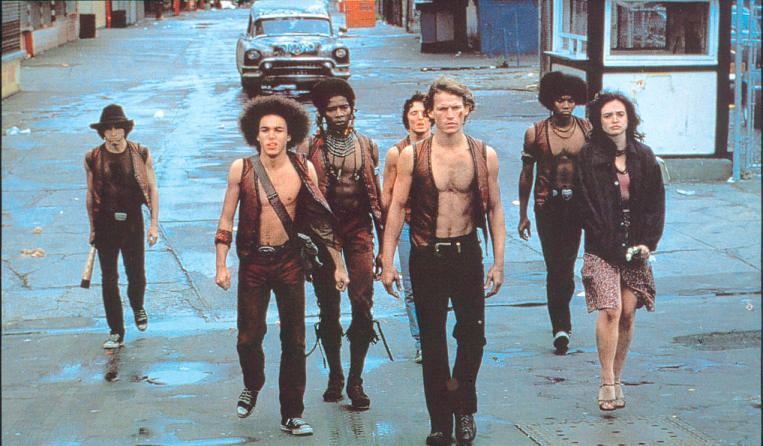
 Last night I watched the newly released "Ultimate Director's Cut!" of Walter Hill's infamous gang-flick, The Warriors (a flick I've talked about before). After fast-forwarding through most of the previews, I finally got to Hill's introduction to the new cut. His initial endorsement of the product I'd just torn the celophane from was not exactly cheering.
Hill glowered and growled something about how he normally disapproved of efforts like this, but that this product sat closer to what he had envisioned. "There may be the argument that some people like the other version better, and that's fine," he said. Then, just as I was reconsidering all the DVDs I'd passed over in favor of this one, his intro finished and faded to: the "Ultimate Director's Cut!"
Unfortunately, Hill's public second-guessing is right on the (misspent) money. Without going into the trouble of a frame-by-frame analysis of the two cuts, I'll just say that the newly added conceit of making the film a living comic book, interspliced with four-color panels and balloons like "The Baseball Furies?! Holy ****!!!", is exactly the sort of overly self-conscious distraction a cheesy thrill-ride like The Warriors does not need. I wondered what possessed Hill and company. Thankfully, a possible answer awaited me in the "bonus material" that came with this edition.
The bonus material amounts to a four-part commemoration of The Warriors, including interviews with Hill and several of the film's principals. Some of the actors in that flick looked very much like they were on the heroin weight-loss program, and I was curious to see who the film's real survivors were. Michael Beck ("Swan") reappears from out of freakin' nowhere, saying the sorts of things guys say when they consider themselves professional actors. Ditto, James Remar ("Ajax"). David Patrick Kelly ("Luther") gives deliberate consideration to his anecdotes, subtly and powerfully suggesting the man has more breadth to him than his usual wound-up psycho roles suggest. Deborah Van Valkenburgh ("Mercy") sits and smiles beatifically, a refreshing and genuine beauty who has steadfastly refused the cosmetic surgeon's blade. I found myself quite taken with this woman's manner of reminiscence; she is the most mindful of the interviews, and makes pointed mention of actors who are no longer with us, for unspecified reasons that lead one to make the obvious guess.
But Hill and his technicians deliver the real information. Not all of it is as interesting as they might think, but the documentary is tightly edited, and the self-indulgent meanderings are mercifully short. Hill marvels at the group synergy that makes a film really work, and comes up with example after example for which he takes no credit. Just one example: he gives sole credit to Kelly for the creepy taunt (see title) set to clacking finger-bottles.
Hill also seems to carry a burden of collected regrets. He casually mentions how the script called for a romance between Fox (Thomas G. Waites) and Mercy, but how it became apparent to everyone on the set that a) there was no chemistry between these actors, and b) the real chemistry was cooking between Van Valkenburgh and Beck. One quick rewrite later, Fox gets thrown in front of a subway train, and the problem is solved. Says Hill, "(Waites) and I weren't communicating very well - I've always felt badly about it - so finally I came up with a way to get rid of him."
Another of Hill's seeming regrets is the public response to The Warriors. I was a paperboy at the time; I followed all the stories related to The Warriors with keen interest. To my adolescent eye, the fights and killings that (we were told) inevitably came with the movie's screenings were of a piece with the pregnant ladies who fainted during Rosemary's Baby, or threw up watching The Exorcist (digression: I actually saw a woman faint during a scene of cinematic brutality, when I attended the opening night of Scorcese's Cape Fear. So much for the urban myth!). That is to say, the news was part of the film's sensation. Hill finds this genuinely troubling, and where someone like Oliver Stone would puff out his chest and claim this all as confirmation of his artistic genius, Hill winces and mutters the protests he's surely voiced countless times over the years.
And so we return to the annoying superimposed comic book format of the "Ultimate Director's Cut!". It seems to me that any viewer with a smidgen of intelligence will quickly identify the film's stylized violence as "comic book". No-one gets walloped with baseball bat to the ribs, then climbs back to their feet five minutes later for a sprint across Central Park - right? It's like watching "Pro" Wrestling: you don't need a disclaimer to know this spectacular stupidity shouldn't be attempted without some supervision.
The Warriors is a peculiar fluke in the zeitgeist - one of those rare B-films that has social ("real life") repercussions. Perhaps Hill is trying to atone for not making his point of view on the matter more obvious at the time. Perhaps he feels particularly compelled to add the superfluous comic book frame now that a new "Warriors" video game has hit the shelves (kids, watch you don't get "bopped" while lining up at EB Games!). But when I look at something like The Warriors, and contrast it to the creaky large-screen fare he's offered of late, I have to wonder if this reticence, this "I'm playin' it safe from now on" attitude, doesn't perhaps explain why Hill can't quite get his groove back.
Seek Mr. Bleak
I try to keep a staid and tidy blog - no links to any "blue" material to be had here, thank you very much. However, I have enough friends who take pleasure in limericks and such that I believe I owe it to them to link to Bleak Mouse, whose Lust: A Cautionary Fable is a well-wrought bawdy and irreverant delight.
Monday, October 24, 2005
MOON PALACE by Paul Auster
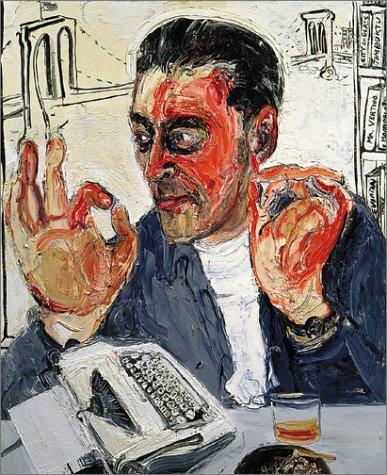
I set up the funeral by telephone, contacted a few of [Uncle] Victor's friends (Howie Dunn, the broken-nosed saxophonist, a number of former students), made a half-hearted attempt to reach Dora (she couldn't be found), and then accompanied the casket back to Chicago. Victor was buried next to my mother, and the sky pelted us with rain as we stood there watching our friend disappear into the earth. Afterward, we drove to the Dunns' house on the North Side, where Mrs. Dunn had prepared a modest spread of cold cuts and hot soup. I had been weeping steadily for the past four hours, and in the house I quickly downed five or six double bourbons along with my food. It brightened my spirits considerably, and after an hour or so I began singing songs in a loud voice. Howie accompanied me on the piano, and for a while the gathering became quite raucous. Then I threw up on the floor, and the spell was broken. At six o'clock, I said my good-byes and lurched out into the rain. I wandered blindly for two or three hours, threw up again on a doorstep, and then found a thin, gray-eyed prostitute named Agnes standing under an umbrella on a neon-lit street. I accompanied her to a room in the Eldorado Hotel, gave her a brief lecture on the poems of Sir Walter Raleigh, and then sang lullabies to her as she took off her clothes and spread her legs. She called me a lunatic, but then I gave her a hundred dollars, and she agreed to spend the night with me. I slept badly, however, and at four a.m. I slipped out of bed, climbed into my wet clothes, and took a taxi to the airport. I was back in New York by ten o'clock.
Paul Auster, Moon Palace
This passage sits on page 18 of my copy of Paul Auster's incomparable Moon Palace. The preceeding 17 pages pulled me along without effort, but when I encountered this paragraph, it was the equivalent of hearing your lover sing, and realizing just how totally you have fallen for her.
I was nursing a broken heart at the time, and thought this paragraph was as sweet an ode to my condition as Patsy Cline's Crazy. The narrator, Marco Fogg, was informed of his Uncle Victor's death two paragraphs earlier. In the first sentence we get an immediate portrait of what a loser Victor was - gifted saxophonists use the entire oral cavity to influence the tone of their instrument, but Victor's bandmate, Howie, is a "broken-nosed saxophonist"; note also the "former students"; Victor's sometime lover, Dora, can't be found; and by second sentence his remains are consigned to lie next to his sister, in a scene accompanied by the pathetic fallacy of pelting rain.
Marco's broken heart plays itself out in devastating understatement. He is in rough shape at the beginning of the scene, and his state of mind further deteriorates with breathtaking speed. His intake of bourbon is ill-advised, if understandable, as is his employment of the prostitute. Between the alcohol and the woman, he flails about, trying to find his emotional footing. There is none to be had, a terrible reality punctuated by the cold factual reportage of the last sentence.
This is page 18. Marco, like so many young men his age, is adrift and this tiny episode of heartbreak launches him on a dizzying journey of loss, discovery, and recovery - an emotional circuit that is as dependable as the lunar cycle. As the novel progresses we get a nuanced picture of how our personal mythologies are forged by historical forces, and tempered by the people we love. We also get intimations of just how deeply our family history influences our actions, whether we are aware of it or not.
This is an incredible novel. I discovered it in 1992, while I was hammering out my own bildungsroman, which I'd set in the 60s. Since my chosen setting occurred some ten-plus years before I had much by way of awareness, I devoured anything written in, about, during the 60s. This novel, like Leviathan after it, encapsulates both the crazy promise and the emotional ruin of that era (certainly much, much better than anything Tom Wolfe ever did with his "New" "Journalism"). It also articulates with clarity and compassion the realizations that every young man has to reach if maturity is to be grasped.
I return to Moon Palace today, after reading this link ("the enjambment of fiction and reality") from Maud Newton. Auster has said that writing is the only thing he can do, that if he could not make a living from it, chances are he wouldn't be alive. It's difficult to ascertain just how much truth these "all or nothing" statements contain, but when read alongside the news of his domestic travails, it invokes no small sadness for the personal toll his literary fame (along with other factors, no doubt) has taken. The words of the critic - "Endurance, survival, reinvention; the trajectory that one does not give up, follows loss, attends to the grieving process" - sound just about right.
Friday, October 21, 2005
"Gentlemen, re-load your fountain pens! Prepare to FIRE!!"
Words, words, words. Is there any sport more enjoyable than a literary pissing match? Yep: a third party (a woman!) hosing 'em both.
"(As) if what we really need, in 2005, is two white male writers fighting over something that can't be circumscribed, much less owned."
Jess Row takes on Ben Marcus and Jonathan Franzen, here.
"(As) if what we really need, in 2005, is two white male writers fighting over something that can't be circumscribed, much less owned."
Jess Row takes on Ben Marcus and Jonathan Franzen, here.
Thursday, October 20, 2005
American Television: Promising Origins and Pathetic Closures
The latest Blowhard, Donald Pittinger, remarks on yet another sign that a television series has "jumped the shark": the Hawaii Episode. It's been a while since I've seen a Hawaii Episode in a television series, but then it's been a while since I've watched a television series. Commercials are an irritation, and I can't be bothered to keep track of the tempermental shifts of TV scheduling - a fate which typically befalls television's most creative efforts (Arrested Development being a current example of this tendency). I'm a trailing-edge tekkie, so TiVo is out of the question. And TiVo at least makes sense; cable and satellite TV most emphatically do not. Why would anyone in their right mind pay over $50 a month for commercial television? I've got one of those quaint old rooftop antennas rigged up to receive the handful of local channels. It does the trick. I'm happy just watching documentaries on CBC and TVOntario, and renting DVDs from my local mom-and-pop shop. If I'm still awake, I might watch the news.
Our DVD rentals are as close to series television as we get, these days. We've watched the usual HBO offerings: some months back we caught up with The Sopranos, and now we're slowly working our way through Six Feet Under. I'm a sucker for profanity set to iambic pentameter, so Deadwood is likely to score big points with me. So far, the HBO formula for not jumping the shark or heading to Hawaii seems to be to keep a tight rein on its parlour dramas.
In a parlour drama, the audience is quickly introduced to the principal characters, and their charms and foibles. The characters are flawed, but loveable. You see at a glance the delicate balance they try to maintain, to keep the peace in the parlour. Then a little chaos gets thrown into the mix, usually via a love interest, a villain, or the Forces of Fate brewing just outside the parlour windows. The Sopranos is as tidy a parlour drama as you could hope to find, with tension being maintained via Carmella's religious strugglings and Tony's efforts at keeping his family empire intact (it was not always thus - their second season remains their best, with the writers and the actors taking genuine risks with the sympathetic limits of their characters).
The parlour drama is about the struggle for equilibrium, and so is one of the least risky genres of drama. The riskiest genre, I think, is the sacred quest. SF (that would be "Sci-Fi" or "Spec-Fic", to you non-geeks out there) lurvs The Quest, which is one reason why most SF shows are so crappy. If you take a big risk like that, you'd better deliver a big pay-off. Most of the time, as with The Matrix, it simply can't be done. The penny drops pretty quickly for most SF TV makers, and they subtly try to withold the finding of the Holy Grail, putting it off indefinitely, if at all possible. Or, if that can't be done, hastily wrapping it all up in an unsatisfactory manner in the last three episodes.
The X-Files is probably the baldest example of how badly awry The Sacred Quest can get. It took a season for it to find its legs, but the concept of sending out a Skeptic and a True Believer to make sense of Weird Occurrences had real appeal to it, and the first three seasons were a hoot to watch. The characters of Skully and Muldaur were developed by delicious increments from episode to episode, until, as a viewer, I reached that jackpot moment every TV producer hopes to hit: I cared more about what the episodes meant to the characters than about what the episodes meant in and of themselves.
When a series fetches that moment of genuine belief, the creators can temporarily get away with bloody murder, because logical gaps will not matter in the least to the viewer. The viewer has made that intuitive leap and joyously anticipates being caught in loving arms at the other side.
Alas, the disappointment that grows with being held in suspended animation for an unforseeable length of time! When the fourth season of The X-Files was "capped" with yet another cliff-hanger, I grew impatient. Fifth season started ambiguously, and I grew bored. I came and went, but made a point of tuning in for the season finale. "Did Muldaur commit suicide?!" Why, yes he did! By shark. In Hawaii.
I felt like I'd been contemptuously toyed with, so I shut off the TV and left the room. I don't know how the series wrapped up some five or six seasons later. I'm told it was an honorable finish, but I don't care. I know when I'm being taken for granted, and unless you're my kid, I don't have enough life in me to indulge you.
These dark thoughts occur to me as I watch Battlestar: Galactica unfold. Because the show isn't yet on network TV, I've dropped 50 bucks on the DVDs, and am looking to drop another 30 on the next half-season. I don't begrudge the initial outlay - yet. The mini-series is fan-bloody-tastic (get your Apocalypse on!), and the first season continues to be both harrowing in its immediacy, and enticing with its foreshadowing. The show's creators are deftly exploring themes of religious claims and the activities they inspire, along with the weaker impulses of humanity and the trouble they can get us in. It's snappy, it's gritty, and it delivers. But, dammit all, they're on a quest! And as of this moment, it's anyone's guess as to whether or not the show's developers have consciously established an emotionally satisfying conclusion.
All of which gets me shouting "amen!" to Michael Blowhard's observation that the miniseries is an underrated TV genre ("A miniseries is long, but it isn't endless. It's finite - and how cool is that?"). The list of TV series that overstayed their welcome is long and depressing; conversely, the list of series that quit and left their audience wanting more is short and sweet (think, Fawlty Towers). Right now I'm in early leap mode, hoping against hope that Galactica is intent on belonging to the latter.
Our DVD rentals are as close to series television as we get, these days. We've watched the usual HBO offerings: some months back we caught up with The Sopranos, and now we're slowly working our way through Six Feet Under. I'm a sucker for profanity set to iambic pentameter, so Deadwood is likely to score big points with me. So far, the HBO formula for not jumping the shark or heading to Hawaii seems to be to keep a tight rein on its parlour dramas.
In a parlour drama, the audience is quickly introduced to the principal characters, and their charms and foibles. The characters are flawed, but loveable. You see at a glance the delicate balance they try to maintain, to keep the peace in the parlour. Then a little chaos gets thrown into the mix, usually via a love interest, a villain, or the Forces of Fate brewing just outside the parlour windows. The Sopranos is as tidy a parlour drama as you could hope to find, with tension being maintained via Carmella's religious strugglings and Tony's efforts at keeping his family empire intact (it was not always thus - their second season remains their best, with the writers and the actors taking genuine risks with the sympathetic limits of their characters).
The parlour drama is about the struggle for equilibrium, and so is one of the least risky genres of drama. The riskiest genre, I think, is the sacred quest. SF (that would be "Sci-Fi" or "Spec-Fic", to you non-geeks out there) lurvs The Quest, which is one reason why most SF shows are so crappy. If you take a big risk like that, you'd better deliver a big pay-off. Most of the time, as with The Matrix, it simply can't be done. The penny drops pretty quickly for most SF TV makers, and they subtly try to withold the finding of the Holy Grail, putting it off indefinitely, if at all possible. Or, if that can't be done, hastily wrapping it all up in an unsatisfactory manner in the last three episodes.
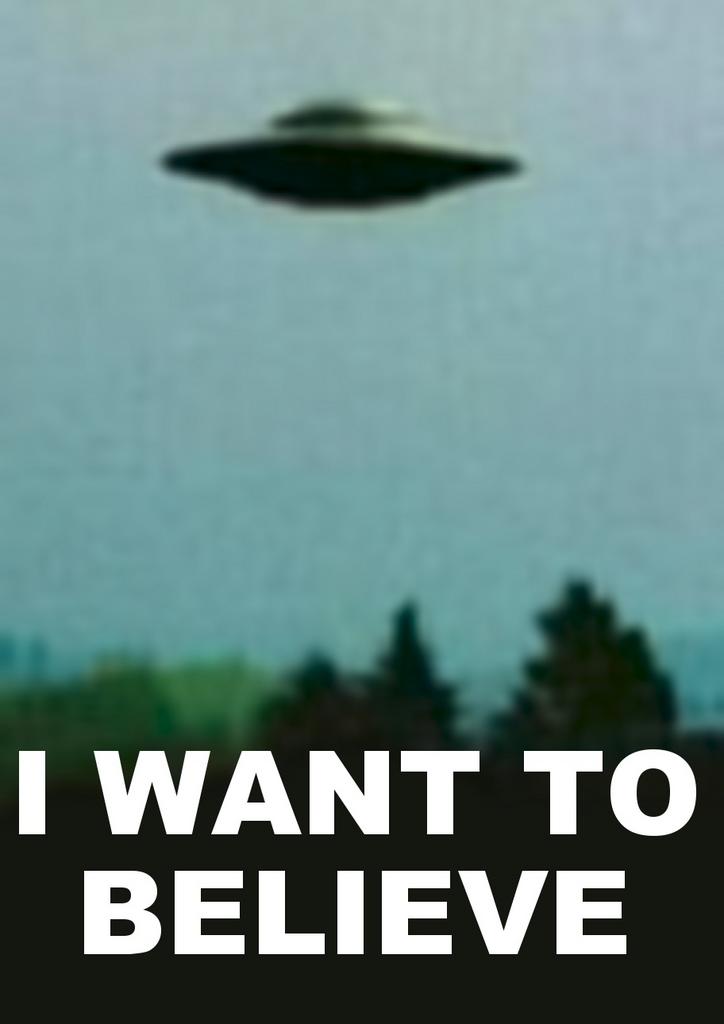
The X-Files is probably the baldest example of how badly awry The Sacred Quest can get. It took a season for it to find its legs, but the concept of sending out a Skeptic and a True Believer to make sense of Weird Occurrences had real appeal to it, and the first three seasons were a hoot to watch. The characters of Skully and Muldaur were developed by delicious increments from episode to episode, until, as a viewer, I reached that jackpot moment every TV producer hopes to hit: I cared more about what the episodes meant to the characters than about what the episodes meant in and of themselves.
When a series fetches that moment of genuine belief, the creators can temporarily get away with bloody murder, because logical gaps will not matter in the least to the viewer. The viewer has made that intuitive leap and joyously anticipates being caught in loving arms at the other side.
Alas, the disappointment that grows with being held in suspended animation for an unforseeable length of time! When the fourth season of The X-Files was "capped" with yet another cliff-hanger, I grew impatient. Fifth season started ambiguously, and I grew bored. I came and went, but made a point of tuning in for the season finale. "Did Muldaur commit suicide?!" Why, yes he did! By shark. In Hawaii.
I felt like I'd been contemptuously toyed with, so I shut off the TV and left the room. I don't know how the series wrapped up some five or six seasons later. I'm told it was an honorable finish, but I don't care. I know when I'm being taken for granted, and unless you're my kid, I don't have enough life in me to indulge you.
These dark thoughts occur to me as I watch Battlestar: Galactica unfold. Because the show isn't yet on network TV, I've dropped 50 bucks on the DVDs, and am looking to drop another 30 on the next half-season. I don't begrudge the initial outlay - yet. The mini-series is fan-bloody-tastic (get your Apocalypse on!), and the first season continues to be both harrowing in its immediacy, and enticing with its foreshadowing. The show's creators are deftly exploring themes of religious claims and the activities they inspire, along with the weaker impulses of humanity and the trouble they can get us in. It's snappy, it's gritty, and it delivers. But, dammit all, they're on a quest! And as of this moment, it's anyone's guess as to whether or not the show's developers have consciously established an emotionally satisfying conclusion.
All of which gets me shouting "amen!" to Michael Blowhard's observation that the miniseries is an underrated TV genre ("A miniseries is long, but it isn't endless. It's finite - and how cool is that?"). The list of TV series that overstayed their welcome is long and depressing; conversely, the list of series that quit and left their audience wanting more is short and sweet (think, Fawlty Towers). Right now I'm in early leap mode, hoping against hope that Galactica is intent on belonging to the latter.
Wednesday, October 19, 2005
Smoker's Fug
It's a rainy day, so I delivered the girls' lunch at the school. On my way back, I stopped to talk with the crossing guard. He's an old union man from Oshawa, and he's always got an opinion he's happy to share. He is also a committed smoker, and I surprised myself to realize how much I actually enjoy a little exposure to smoker's fug.
It's a mustiness that, strangely enough, evokes tremendous nostalgia for me. Strange, because no-one in my family ever smoked. It was considered a bad habit, but so many of our neighbors and their family members were smokers, we just politely endured their fug, and peacefully co-existed.
 Now, I'll be quick to add I don't at all pine for those days when smokers lit up in elevators and airplanes. Genuine smoker's fug gets oppressive pretty quickly. But there's a qualitative difference between that first whiff of freshly-lit cigarette, and the fug that comes with polishing off the entire pack. A friend once told me the one aspect of family travelling he enjoyed was the smell of his father's cigarettes. My friend, just a little duffer in the backseat of the car, too small to see anything but the tree-tops, would hear the clink of his father's lighter, smell that newly lit virginia tobacco, and think, "Mmm - Dad's smoking!" (Don't ask me how my friend escaped the allure of cigarettes.)
It's a little more complicated than that, for me. I think that light-up whiff probably signifies an element of danger - the sheltered preacher's kid, commingling with unsaved society. Cigarette smoke conjurs memories of a crowded town arena, watching the local team of Mennonite farmboys play the French team from five miles down the road (veischa, but the fights!). Or walking with my dad, and dropping in at the local garage so he could chat up the grease-monkeys - smokers all, the kids of parishioners who were "concerned", if not heart-broken. These guys were a deliberately rough bunch, but friendly, and I collected more than a few good jokes and juicy anecdotes from these haphazard meetings.
In the early 70s, there didn't seem to be more than three brands of Canadian cigarette: Players, Export "A", and DuMaurier. No doubt I'm wrong on that score, but those were the ones I noticed when my eyes were roughly belt-level. Of the three, DuMaurier smelt the best, and still does. When first lit, it has a mellow, dusty smell to it - not as pungent and tarry as some of the others.
As a working adult, it was usually the smokers who had the best stories - or maybe they were just different stories from the ones I'd grown up with. At the bookstore, I finally accepted a proffered DuMaurier, and was disappointed. It made me dizzy, and gave me indigestion. Worst of all, it didn't taste anything like it smelled.
Smoking kills you in a million different ways, of course, and my crossing guard friend isn't prone to viewing the habit with my outsider's nostalgia. He'd quit if he could, but he's beyond trying. Still, he's got interesting things to say, and to my mind he and his opinions exist in a sort of romantic ether known as smoker's fug.
It's a mustiness that, strangely enough, evokes tremendous nostalgia for me. Strange, because no-one in my family ever smoked. It was considered a bad habit, but so many of our neighbors and their family members were smokers, we just politely endured their fug, and peacefully co-existed.
 Now, I'll be quick to add I don't at all pine for those days when smokers lit up in elevators and airplanes. Genuine smoker's fug gets oppressive pretty quickly. But there's a qualitative difference between that first whiff of freshly-lit cigarette, and the fug that comes with polishing off the entire pack. A friend once told me the one aspect of family travelling he enjoyed was the smell of his father's cigarettes. My friend, just a little duffer in the backseat of the car, too small to see anything but the tree-tops, would hear the clink of his father's lighter, smell that newly lit virginia tobacco, and think, "Mmm - Dad's smoking!" (Don't ask me how my friend escaped the allure of cigarettes.)
It's a little more complicated than that, for me. I think that light-up whiff probably signifies an element of danger - the sheltered preacher's kid, commingling with unsaved society. Cigarette smoke conjurs memories of a crowded town arena, watching the local team of Mennonite farmboys play the French team from five miles down the road (veischa, but the fights!). Or walking with my dad, and dropping in at the local garage so he could chat up the grease-monkeys - smokers all, the kids of parishioners who were "concerned", if not heart-broken. These guys were a deliberately rough bunch, but friendly, and I collected more than a few good jokes and juicy anecdotes from these haphazard meetings.
In the early 70s, there didn't seem to be more than three brands of Canadian cigarette: Players, Export "A", and DuMaurier. No doubt I'm wrong on that score, but those were the ones I noticed when my eyes were roughly belt-level. Of the three, DuMaurier smelt the best, and still does. When first lit, it has a mellow, dusty smell to it - not as pungent and tarry as some of the others.
As a working adult, it was usually the smokers who had the best stories - or maybe they were just different stories from the ones I'd grown up with. At the bookstore, I finally accepted a proffered DuMaurier, and was disappointed. It made me dizzy, and gave me indigestion. Worst of all, it didn't taste anything like it smelled.
Smoking kills you in a million different ways, of course, and my crossing guard friend isn't prone to viewing the habit with my outsider's nostalgia. He'd quit if he could, but he's beyond trying. Still, he's got interesting things to say, and to my mind he and his opinions exist in a sort of romantic ether known as smoker's fug.
Subscribe to:
Posts (Atom)