“he”/“him” A Canadian Prairie Mennonite from the '70s & '80s, a Preacher’s Kid, slowly recovering from a hemorrhagic stroke. I am not — yet — in a 12-Step Program.
Needless to say, my admiration for Dylan is of the decidedly guarded variety.
Really, there are only two other options on the spectrum -- the unguarded variety, or lifelong dislike. I'm not in the latter camp -- but those unguarded types (like the ones who gave the award), man, I dunno. They're a little unhinged, a little . . .
"JUST the Nobel?! Why, he deserves ... uh, is there something bigger?"
. . . well, let's be frank: one wonders if they're entirely trustworthy.
A little like the object of their devotion.
Good luck trying to capture what makes the man The Man, but I'd say a worthy start is reviewing the 1992 30th Anniversary Concert Celebration in Madison Square Gardens.
That was one weird stew. Sinead O'Connor got booed off the stage, while Johnny Cash and June Carter bounced all over it like a couple of teenagers. Lou Reed sullenly crammed Dylan's 7/8 meter into a 4/4 rendering. Johnny Winter was so cranked it took him less than five minutes to rip through the entirety of Highway 61 -- twice. There were plenty of entrants that weren't nearly so jarring, of course. But the overall effect of the affair? Unsettling.
The proceedings gave all the adulation a big fat question mark, really, until The Man finally picked up his guitar, slouched over to the mic and sang, "It's Alright, Ma (I'm Only Bleeding)."
Now that seems at least somewhat definitive. The music without the man is, almost always, a wannabe effort.
And the words without the music are this close to nonsense.
Cory Doctorow provokes me to cogitate, as is his wont, this time with his enthusiastic (I didn't really need to type that, did I?) blurb for Jack Womack's Flying Saucers Are Real!
The Flying Saucer meme of the '50s to late-'70s was, sez Doctorow, "once a major piece of the public imagination, but has subsequently sunk, almost without a trace."
The assertion is kinda-sorta true, so far as it goes. UFOs do not occupy public discussion to nearly the same degree they did when I was a kid. My theory: The X-Files, followed by the George W. Bush years, pretty much put that meme to bed for a very long nap.
The Truth is in here.
Chris Carter's massive TV success was built on a self-perpetuating suggestion: what if there exists a labyrinthine cover-up of global -- nay, interstellar! -- proportions, which our most dogged citizens can only scratch the surface of?
But then along came 9/11, followed by W's response -- followed by a market collapse generated by what must surely be the planet's craftiest collective brain trust -- and we witnessed precisely just how capable the world's most powerful governing entities are when it comes to "covering up" actual conspiracies. If you want to nudge that into interstellar proportions, the off-world participants won't just have to do the heavy lifting -- they'll have to do all the lifting, period.
I don't think the phenomena have disappeared -- people still see and experience all sorts of strange stuff. But the business of exploring "what it all means" has certainly been pushed to the extreme fringes of public discourse. Doctorow and Womack and William Gibson all seem a bit wistful in the wake of this societal shift -- as am I.
I bristle at the tone to some of this wistfulness, however: "A tour guide to a place lost in history" (Doctorow); "The only physical evidence of the advent of the UFO meme" (Gibson). I'm open to correction on this, but I sense something juuuuust a little self-congratulatory about these declarations, akin to Fukuyama's "The End Of History!!!" hooey: Praise be to Ganesha, today we are all (well, most of us, anyway) beyond such pedestrian but eminently fascinating silliness!
Endnote: in the late '70s, at my adolescent urging, my pop indulged me to a UFOlogist's lecture at the University of Winnipeg. The lecturer worked for the planetarium at the Manitoba Museum of Man and Nature and was pretty much the embodiment of a very particular type: an energetically open-minded skeptic. He had logged an unfathomable number of miles checking out claims and interviewing claimants. Most of these "encounters" had logical/natural explanations, but there were also those exceedingly rare instances which he lived for: the claims that absolutely stymied him. The Falcon Lake UFO (in Manitoba!) was one such.
One of the more peculiar fetishes my generation* developed was a brief enthusiasm for the lounge acts of yore, embodied chiefly (but not exclusively) by The Rat Pack.
"Yeah, I quit smoking. Also drinking and singing. That a big deal?"
Some of this retro-resurgence was ironic. What other option was there? The older sibs had clearly exhausted all venues of shock and awe with their hippie-cum-punk antics. If "today's noise is tomorrow's hootenanny" why not just make yesterday's hootenanny today's noise?
It turned out that yesterday's hootenanny had undeniable flashes of astonishing insight and depth. Throw in the whole business of devoting time, energy and $$$ to putting yourself together for a swell night on the scene, and the intended ironies silently dissipated like a puff of unfiltered cigarette smoke beneath the city's neon lights.
It helped that the Chairman was the only survivor of the pack by the time we "discovered" them. He could oblige the noobs with another album or two of duets -- no-nonsense "that's a wrap" studio sessions that the listener couldn't help but suspect were finagled for bragging rights, not just for hungry up-and-comers, but for the fading legend himself.
It also helped that we were too young and blinkered to notice the moment these guys took a nosedive from being the Reigning Kings of Cool to residing for decades in TV's dumpster bin of mockable celebrity has-beens. Sinatra himself was a seemingly inexhaustible font of reliable cheap laughs for the comic talents of none other than Joe Piscopo.
I still listen to some Sinatra, if the mood strikes -- selections from the Capitol years, the entirety of In The Wee Small Hours Of The Morning. Any given playlist I cobble together inevitably has one or two surprise entries from Dean Martin and Sammy Davis Jr. And while I sure don't mind putting on a suit, you're more likely to find me wearing shorts until the snow starts to fall -- something Dino might appreciate, as he reportedly preferred blue-jeans to tuxes.
All this is brought to mind after reading Donald Liebenson'sVanity Fair account of When Jerry Met Dean -- Again, On Live Television. I can take or leave Liebenson's breathless account of a moment that amounts to little more than a well-played showbiz prank. But watching the footage of it (40 years ago; I was 11, the only Dino I knew was a barking dinosaur) was a revelation. Here it is:
Suddenly, Piscopo makes sense. The more Lewis recovers from the surprise, the more we see a listless reflex to Borscht Belt entertainment tropes taking over, all of it strictly Squaresville. Clean up the language a bit and dress these chummy goofs in felt, and you've got The Muppet Show. (And good Lord -- was there ever a lazier entertainer in Hollywood than Dean Martin?) Give the people what they want, of course -- by this time both the entertainers and the people in attendance were used to being called "square."
Nor, I imagine, were they much bothered by the denigration. If you brought the Boomers into this world, you basically shrugged this sort of thing off, and traded in kind -- or a lot worse. Hence the constant ribbing amongst the boys -- "It shoulda been a Jew" "You're not going Jewish on me" "Am I black? I didn't think I was dark," etc. Your hippie kids huff and roll their eyes at these exchanges, but what do they know?
Now that I think of it, these guys and their audience had all experienced military service -- if not directly, then indirectly. And the military mode -- still** -- is to point out potential personal distinctives in The Other, then, in ridicule, exaggerate them to such heightened levels of absurdity that the canard "truth in every jest" no longer applies.
Needless to say, this is not a mode we encourage as general public discourse in this day and age. There are reasons for that, some of them surely quite valid (it very quickly gets tiresome, for one thing). Still, I can't help but wonder if this rote sort of ribbing didn't deflate some of the very real tensions it simultaneously acknowledged and played with.
Final observation: the physical contact amongst these dudes! Long, tender hugs! Kisses! Soft touches to the other's cheek! My gen is so riveted to the Spectrum, it's all we can do to look up from our shoes and make fleeting eye contact.
One wants to exercise some caution when extolling the virtues of earlier generations. But still and all, a little extolling and, dare I suggest, judicious emulation might not be a bad thing right about now.
*Gen X, for those keeping score. ** Generation Kill, HBO's Iraq War drama, is a tutorial in the method, and makes this on-stage banter look like a Sunday School flannelgraph drama.
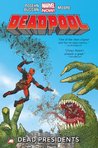
I come to DP via the movie, which I giggled through, but finally thought, "It doesn't matter how meta you get with superhero material -- at the end of the day it's still a superhero story." That isn't necessarily a bad thing -- indeed when the writer and artist possess insight and some capacity to surprise the reader, it makes for a magical experience. Dead Presidents has its moments of amusement, which will strike some readers' funnybones with greater force than others. But insight? Surprise? Nah. DP/DP is just a superhero story.
Man, I wish I was giving this five stars! Story by Gilbert Hernandez and art by the lamentably late Darwyn Cooke -- this is the sort of pairing that can set off fireworks for a reader.
Not so this time, alas. Hernandez' magical realism proceeds with a leaden rote-ness to it, while Cooke's art -- the shiniest eye-candy he produced in his entire life, IMO (kudos also to colorist Dave Stewart) -- is too polished to bring any emotional weight to a narrative that is already threatened by its inherent spritz.
Back when Los Bros Hernandez were the last of the underground masters, they kept sharp and edgy touches in stories and layouts that threatened to slip into Bob Montana/Dan DeCarlo predictability. A little of that edge, or messiness, would have gone a long way in this project.
Not that I regret this purchase or the time spent thereon in any way shape or form. Maybe it didn't work for me, but these guys deserve attention -- particularly Cooke, who made every effort to keep stretching his already formidable capacities as an artist.
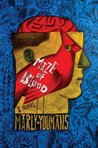
Marly Youmans is a lyrical writer -- a sort of Michael Ondaatje of the Deep South, really. Readers who dig the latter should, I would think, dig her.
Conall Weaver, her fictional portrait of pulp master Robert E. Howard, contains multitudes -- many more than most people do. Her compassionate excavation of his tumultuous inner life makes for a surprisingly welcome immersive experience. You've gotta be in the mood for it, though -- were I in another time and place, I'd likely rate this a "five out of five."
Scott McKenzie'sPower Chordis, I think it's fair to say, a boy's book. The guitar heroes he tracks down and yacks with are all fellas who had their highest hay-day before Grunge appeared. Now they shill for guitar companies, form various iterations of the act that made them famous and rock out smaller venues, or give one-on-one guitar lessons at advanced rates.
McKenzie combs the highways and byways for these dudes, to gather wisdom -- not of the "living life" variety (which is just as well -- the one guy who could legitimately offer it, Warren DeMartini from Ratt (married 20 years and counting), resolutely refuses to discuss family life), but of the "What's it take to really play this thing?" variety. This is advice McKenzie heeds well, so that by the end of the book he is, despite a disastrous Rock 'n' Roll Fantasy Camp experience, a proficient player.
The conversational tone to these exchanges is strictly of the "from one guy to another" variety, including McKenzie's tone as a writer. Is that a bad thing? If you're (cough) a midlife guy who's just picked up his first electric guitar . . . not even remotely. I had a gas.
Here's a video that's got me cogitating in all sorts of directions. Give it a look if you haven't already seen it -- it's only 2 minutes long -- and I'll get to my thoughts after that.
First direction: might as well get the obvious out of the way and admit -- this is all kinds of freakin' weird. Or, to put it more generously, ironies abound. No need for enumeration, I don't think, but if you need to prime the pump, the man being blessed by these African-American religious leaders recently suggested the best way to de-escalate racial tensions might be to ramp up stop-and-frisk tactics.
Second direction: I kinda dig it. Warmed my weak frightened heart, just a touch. I've participated in this variety of prayer -- "receiving a blessing" "the laying on of hands" what-have-you -- and it really can be a "blessing" to all involved.
In fact, I urge you to give it a go. Hey, we've become so bloody fragmented and isolated that our idea of "communication" is tweeting vitriolic zingers past each others' heads. As a species, we have not "evolved" past what we are seeing in this video -- I would argue quite the opposite.
Having said that . . .
Third direction: this particular activity can be the foulest variety of horseshit. To give just one for instance: it is by now uncontested that pedophilia is an issue within religious institutions. So I will go out on a limb and suggest that there are pedophiles who have received exactly this sort of blessing, which further enabled them to feel blessed to keep on doing everything they were doing. I do not mean to suggest this presidential candidate is guilty of said crime -- but I am saying this particular participatory ritual often blinds all the participants to the very worst of transgressions.
Which leads me to . . .
Fourth direction: when asked about satanic imagery in heavy metal music, born-again Christian Alice Cooper snorted. "The Devil isn't some big scary guy with horns on his head. [silky tones] He's your beeeeest frieeeend! He would neeeeeever hurt yooou!"* Whether you think of the devil as strictly a metaphor embodying our worst impulses, or as an actual ethereal being wreaking havoc on humanity, Furnier's observation has significant insight which I believe is easily ignored to our own peril.
Which lands me on . . .
Final direction: Prayer. I pray (still). And because I am Mennonite, Jesus' "Sermon on the Mount" has pretty much been forged into a nail and, while still white-hot, driven through my forehead. The one bit that will haunt me right into the grave, because it did my grandparents, and theirs before them (etc):
"Love your enemies, bless them that curse you, do good to them that hate you, and pray for them which despitefully use you, and persecute you."
My forebears didn't read that and think, "Right: The Son of God is speaking metaphorically."
They read that as a straightforward, no bullshit command.
And as one squeaky Dissenter pleading with the rest of praying Christendom, I say: Please -- go and do likewise.
I've been getting a big kick out of reading Thomas Scott McKenzie's Power Chord: One Man's Ear-Splitting Quest To Find His Guitar Heroes (A).
McKenzie's shtick is so brilliant it almost feels obvious, prompting forehead-slapping and "Why didn't I think of that?" lamentation. He begins his account as a collector of cheap knock-off guitars that decorate his apartment -- strictly for veneration, as he can't play more than a few fumbling notes. He enlists in lessons, and discovers that a startling number of "guitar heroes" from the '80s have shifted from stage to music shop studio -- where they are happy to accept your money and impart wisdom and anecdote for the allotted time.
Given where I'm at, McKenzie's book is hitting the readerly sweet-spot rather satisfyingly.
And thanks to this passage, I am now acquainted with two more guitars I dig: Steve Vai's "Evo" . . .
If you want an axe -- sorry: "shovel" -- like Gillis's, you've probably missed your chance. Vai, on the other hand, is tight with Ibanez, so if you're of the same collecting disposition as Scott McKenzie you, too, can possess your very own Evo -- though you'll have to resort to your own Kleenex stuffing.
A massive culling of mostly-pertinent sound-bites from interviews gone by. The tone drifts into the catty frequently enough to keep the reader turning pages. No major revelations for inexhaustible Trekkies (though I do owe Joel an apology -- Nicholas Meyer does indeed relate an incident where Kim Cattral arranges a racy photo-shoot on the bridge that Leonard Nimoy puts the kybosh on), but the overall readerly experience remains fun. Speed-reading quotient: 60%.