1972
1. The Godfather
2. Chloe in the Afternoon
3. Le Boucher
4. Murmur of the Heart
5. The Green Wall
6. The Sorrow and the Pity
7. The Garden of Finzi-Continis
8. Minnie and Moskowitz
9. Sounder
10. The Great Northfield, Minnesota Raid
The Godfather -- I remember a babysitter reading the book and telling me the movie was the biggest moneymaker ever (I read the book as an adolescent, and wondered what my former babysitter had made of the three-page sex scene). Also in '72, my father came back from playing hockey and said a number of his team-mates had seen the movie the night before. Their favourite scenes? The knife through the hand, the bullet in the head and, of course, Mr. Ed in the bed. You'd think these hosers had tripped across a time machine and watched Robocop. When I finally saw it, I was surprised to see it was such an incomparable improvement on a book that had been (sex scene aside) a truly tedious read.
1973
1. Cries and Whispers
2. Last Tango in Paris
3. The Emigrants/The New Land
4. Blume in Love
5. The Iceman Cometh
6. The Exorcist
7. The Day of the Jackal
8. American Graffiti
9. Fellini's Roma
10. The Friends of Eddie Coyl
Last Tango In Paris seemed a little over-the-top and not particularly erotic when I finally saw it, but then I'd already seen Body Heat which drips with a carnal sweat that LTIP only begins to muster. LTIP paved the way, I suppose, so I'll give it that. And Brando's -- sorry: "Paul's" -- meltdown at his dead wife's viewing is harrowing, visceral stuff.
The Emigrants/The New Land -- I attended a Mennonite high school, and had a grade 11 teacher determined to impress upon his class of horny would-be punk rockers exactly what their ancestors put up with to get us this far. We spent a day watching these films. Wow. Mission accomplished. The scene where a little girl dies after eating dough that hand't yet risen is particularly heart-rending. And that's just the beginning.
The Exorcist -- speaking of harrowing, visceral stuff, this movie still has it in spades. (Hm -- a good year for Max Von Sydow.)
The Day of the Jackal -- we know how the story ends, and yet the movie's tension is strung to a fine pitch. "Intelligent thriller" need not be an oxymoron.
American Graffiti -- it's hard to believe this movie, which kicked off Happy Days and innumerable other Boomer nostalgia-fests, nearly died in post-production. But then I suppose that remains the occupational hazard of just about any movie (excepting anything under the "Star Wars" rubric after 1977). A deceptively sweet movie with a bitter aftertaste. And I second Yahmdallah's tie-in: be sure to watch Dazed And Confused as a companion movie.
Thursday, November 09, 2006
Wednesday, November 08, 2006
Ebert's Best: 1971
1971
1. The Last Picture Show
2. McCabe and Mrs. Miller
3. Claire's Knee
4. The French Connection
5. Sunday, Bloody Sunday
6. Taking Off
7. Carnal Knowledge
8. Tristana
9. Goin' Down The Road
10. Bed and Board
Of the four I've seen, Goin' Down The Road is the most familiar -- and anyone who lived in 70s small-town Canada could tell you why. Cable television was a privilege reserved for people in fancy-pants cities. With a decent antenna on our roof we could pick up four channels (including the all-French one); with a pair of rabbit ears, we could get two, maybe three. The only channel we received with any clarity was the Corp., and if they weren't broadcasting Hockey Night In Canada, they were showing Goin' Down The Road. When SCTV cooked up and served Garth and Gord and Fiona and Alice (Part 1, Part 2), you can be sure the nation laughed -- with relief. The CBC also put GDTR on hiatus. When I caught up with it ten years later, I was surprised to see how affecting it actually was. If you can't Netflix this, then I suppose you could settle for The Last Picture Show (sheesh -- what a downer year!).
I think Carnal Knowledge is a strange and very uneven movie. The sexual tension in the early scenes between Jack Nicholson and Candice Bergen is as finely tuned as any of the famous Bogey/Bacall exchanges, and communicates precisely that sickly thrill that takes over two people who realize they are about to do something very, very bad. But the Bogey/Bacall movies were finally about people rediscovering and holding true to a standard, while this movie is about establishing hurtful behavior as a personal norm. Guess which of these templates makes for the sort of movie you'd like to see again and again?
These days, when The French Connection is referred to it's for the car-chase. A revolutionary use of storyboarding, stunts and editing to be sure, but let me just evoke the "ripple effect" clause: if that's all this film is going to be remembered for, I'd say we've left the grocery store with the wrong parcel of goodies. This flick has several memorable "movie moments", but the best of them is Popeye Doyle's distracted indifference when Cloudy tells him he's just blown away another cop. When I first saw that, it took me a while to realize that my point of view had become completely in sync with Popeye's. Now that's a movie moment, and you ain't gonna pull it off with just a car-chase!
1. The Last Picture Show
2. McCabe and Mrs. Miller
3. Claire's Knee
4. The French Connection
5. Sunday, Bloody Sunday
6. Taking Off
7. Carnal Knowledge
8. Tristana
9. Goin' Down The Road
10. Bed and Board
Of the four I've seen, Goin' Down The Road is the most familiar -- and anyone who lived in 70s small-town Canada could tell you why. Cable television was a privilege reserved for people in fancy-pants cities. With a decent antenna on our roof we could pick up four channels (including the all-French one); with a pair of rabbit ears, we could get two, maybe three. The only channel we received with any clarity was the Corp., and if they weren't broadcasting Hockey Night In Canada, they were showing Goin' Down The Road. When SCTV cooked up and served Garth and Gord and Fiona and Alice (Part 1, Part 2), you can be sure the nation laughed -- with relief. The CBC also put GDTR on hiatus. When I caught up with it ten years later, I was surprised to see how affecting it actually was. If you can't Netflix this, then I suppose you could settle for The Last Picture Show (sheesh -- what a downer year!).
I think Carnal Knowledge is a strange and very uneven movie. The sexual tension in the early scenes between Jack Nicholson and Candice Bergen is as finely tuned as any of the famous Bogey/Bacall exchanges, and communicates precisely that sickly thrill that takes over two people who realize they are about to do something very, very bad. But the Bogey/Bacall movies were finally about people rediscovering and holding true to a standard, while this movie is about establishing hurtful behavior as a personal norm. Guess which of these templates makes for the sort of movie you'd like to see again and again?
These days, when The French Connection is referred to it's for the car-chase. A revolutionary use of storyboarding, stunts and editing to be sure, but let me just evoke the "ripple effect" clause: if that's all this film is going to be remembered for, I'd say we've left the grocery store with the wrong parcel of goodies. This flick has several memorable "movie moments", but the best of them is Popeye Doyle's distracted indifference when Cloudy tells him he's just blown away another cop. When I first saw that, it took me a while to realize that my point of view had become completely in sync with Popeye's. Now that's a movie moment, and you ain't gonna pull it off with just a car-chase!
Tuesday, November 07, 2006
Progress!
Hey, look what landed on my doorstep today:
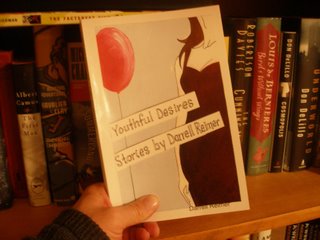
I was, quite honestly, blown away by the overall quality. I've been in the habit of buying from small publishers, and what I got today not only met but exceeded my expectations. Technology is indeed a wonderful thing.
Right now the red marker is out, and I'm scrawling up a storm.
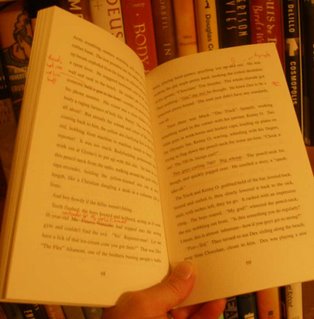
We'll let Remembrance Day take its course. Then Youthful Desires shall have its way.

I was, quite honestly, blown away by the overall quality. I've been in the habit of buying from small publishers, and what I got today not only met but exceeded my expectations. Technology is indeed a wonderful thing.
Right now the red marker is out, and I'm scrawling up a storm.
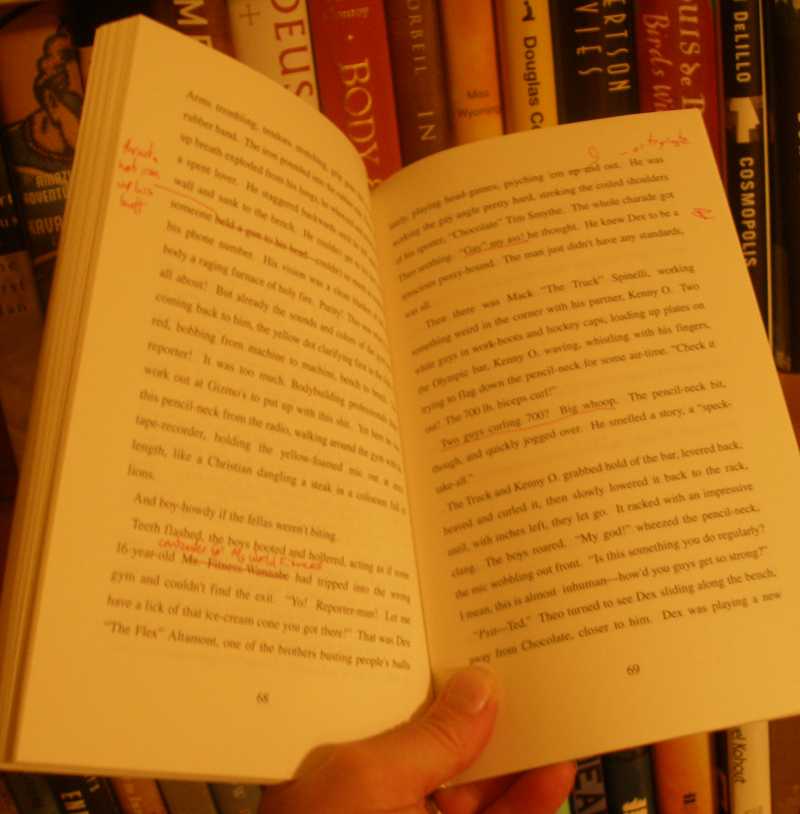
We'll let Remembrance Day take its course. Then Youthful Desires shall have its way.
Ebert's Best: 1970
1970
1. Five Easy Pieces
2. M*A*S*H
3. The Revolutionary
4. Patton
5. Woodstock
6. My Night at Maud's
7. Adalen 31
8. The Passion of Anna
9. The Wild Child
10. Fellini Satyricon
Five Easy Pieces -- a cringe-inducing movie, but not a "bad" movie. The way Nicholson's character tries to take everyone down a peg can be simultaneously grating and entertaining, the classic example being his request for toast from an embittered old waitress who doesn't have it on her menu. He's too clever to be doing what he does, and he's too stupid to adopt a little compassion. Playing piano in a traffic jam is indicative of his mindset: pent-up frustration is the only impetus that gets him to explore wiggle-room. I like the film, but I dislike its ripple effect. I've heard the diner scene described as "the triumph of an Everyman". It's certainly an emotionally rewarding scene, but I consider it anything but a moral triumph. I'd say if the Fast & Furious movies are indirectly responsible for an increase in deaths from reckless driving, Five Easy Pieces is indirectly responsible for college kids mouthing off to weary waitresses at the IHOP. Another ripple: a risible Coke commercial that ripped off FEP's traffic scene and ended on a triumphant note with everyone drinking high-fructose corn syrup.
M*A*S*H -- an early example of Altman's ability to sell cynicism and cruelty as the weapons of choice for the secular saint. I first saw it when I was 18, and even at an age when testosterone and hormones overrode any instinct toward political correctness (a term that hadn't yet been coined) the shower-room exposure of Hot Lips struck me as unforgivable. But that's Altman for you. He neither excuses nor apologizes for his characters' behavior. Twenty years later he got Huey Lewis to piss on a woman's corpse. A real subtle "message" there, for you moviegoers who weren't happy with Raymond Carver's brand of understatement.
Patton -- I'd like to see this on the big screen. On any size of TV screen, it feels as if it should be an Off-Broadway one-man monologue. I'd like to see that, too.
Woodstock -- a terrific movie that fully captivates the first time around. But I defy anyone to give it a second viewing and not hit the "next scene" button.
Fellini Satyricon -- saw it, but I don't remember it. So maybe I didn't see it.
1. Five Easy Pieces
2. M*A*S*H
3. The Revolutionary
4. Patton
5. Woodstock
6. My Night at Maud's
7. Adalen 31
8. The Passion of Anna
9. The Wild Child
10. Fellini Satyricon
Five Easy Pieces -- a cringe-inducing movie, but not a "bad" movie. The way Nicholson's character tries to take everyone down a peg can be simultaneously grating and entertaining, the classic example being his request for toast from an embittered old waitress who doesn't have it on her menu. He's too clever to be doing what he does, and he's too stupid to adopt a little compassion. Playing piano in a traffic jam is indicative of his mindset: pent-up frustration is the only impetus that gets him to explore wiggle-room. I like the film, but I dislike its ripple effect. I've heard the diner scene described as "the triumph of an Everyman". It's certainly an emotionally rewarding scene, but I consider it anything but a moral triumph. I'd say if the Fast & Furious movies are indirectly responsible for an increase in deaths from reckless driving, Five Easy Pieces is indirectly responsible for college kids mouthing off to weary waitresses at the IHOP. Another ripple: a risible Coke commercial that ripped off FEP's traffic scene and ended on a triumphant note with everyone drinking high-fructose corn syrup.
M*A*S*H -- an early example of Altman's ability to sell cynicism and cruelty as the weapons of choice for the secular saint. I first saw it when I was 18, and even at an age when testosterone and hormones overrode any instinct toward political correctness (a term that hadn't yet been coined) the shower-room exposure of Hot Lips struck me as unforgivable. But that's Altman for you. He neither excuses nor apologizes for his characters' behavior. Twenty years later he got Huey Lewis to piss on a woman's corpse. A real subtle "message" there, for you moviegoers who weren't happy with Raymond Carver's brand of understatement.
Patton -- I'd like to see this on the big screen. On any size of TV screen, it feels as if it should be an Off-Broadway one-man monologue. I'd like to see that, too.
Woodstock -- a terrific movie that fully captivates the first time around. But I defy anyone to give it a second viewing and not hit the "next scene" button.
Fellini Satyricon -- saw it, but I don't remember it. So maybe I didn't see it.
Monday, November 06, 2006
Christian Punk
“Drew," said Wil, "where are we dropping you off?”
“Uh, Carol's parents. San Jacinto. You need a bed, or are you heading for home?”
Wil sighed. “Home.” Home to Lisa. Home to Rodney, their dough-faced sprat with the toxic diapers. Dear God—sometimes he couldn't believe the boy was his. Wil could stare and stare into those beady eyes, trying to find some sign of...
Oh, who was he trying to kid? It was physically impossible to stare into Rodney's eyes: right from the moment the whelp left the womb Rodney had the attention span of a chimp on speed. Wil couldn't stare into those eyes if he'd gone A Clockwork Orange on the brat and strapped him to a chair. Rodney's sole purpose in life was to bookend Wil's misery with careful consideration of what to destroy next. Rodney wrapped his chubby mitts and gums around food, records, books, stray lyric sheets and guitar picks—anything physical that had emotional ties to Wil's soul, including, especially, Lisa. Lisa, once a curvy, nervy, undeniable piece of the Lord's handiwork, now a depressed, misshapen lump who ate ice cream straight from the bucket. Who got lost in thought three minutes into intercourse. Who smelled like she'd just lost a talcum fight with herself...
“Home to the wife and kid,” said Drew. He clucked his tongue. “You lucky dog. Sure wish I was spending the night with my Carol.”
I'll bet you do, thought Wil. He shoved his hip against the amp until the dull ache increased to a sharp pain. He stopped, threw his head back against the kit, and gave up. His hip and head throbbed, feeling worse than ever.
And the truth was, Wil wished he was spending the night with Drew's Carol, too.
“Uh, Carol's parents. San Jacinto. You need a bed, or are you heading for home?”
Wil sighed. “Home.” Home to Lisa. Home to Rodney, their dough-faced sprat with the toxic diapers. Dear God—sometimes he couldn't believe the boy was his. Wil could stare and stare into those beady eyes, trying to find some sign of...
Oh, who was he trying to kid? It was physically impossible to stare into Rodney's eyes: right from the moment the whelp left the womb Rodney had the attention span of a chimp on speed. Wil couldn't stare into those eyes if he'd gone A Clockwork Orange on the brat and strapped him to a chair. Rodney's sole purpose in life was to bookend Wil's misery with careful consideration of what to destroy next. Rodney wrapped his chubby mitts and gums around food, records, books, stray lyric sheets and guitar picks—anything physical that had emotional ties to Wil's soul, including, especially, Lisa. Lisa, once a curvy, nervy, undeniable piece of the Lord's handiwork, now a depressed, misshapen lump who ate ice cream straight from the bucket. Who got lost in thought three minutes into intercourse. Who smelled like she'd just lost a talcum fight with herself...
“Home to the wife and kid,” said Drew. He clucked his tongue. “You lucky dog. Sure wish I was spending the night with my Carol.”
I'll bet you do, thought Wil. He shoved his hip against the amp until the dull ache increased to a sharp pain. He stopped, threw his head back against the kit, and gave up. His hip and head throbbed, feeling worse than ever.
And the truth was, Wil wished he was spending the night with Drew's Carol, too.
Ebert's Best: 1968 & 1969
1968
1. The Battle of Algiers
2. 2001: A Space Odyssey
3. Falstaff
4. Faces
5. The Two of Us
6. The Producers
7. Oliver!
8. The Fifth Horseman Is Fear
9. Rachel, Rachel
10. Romeo and Juliet
It shames me to admit I've seen neither Zefferelli's Romeo and Juliet or The Battle of Algiers. It seemed after 9/11 you couldn't read any of the wags without getting at least one reference to TBOA before segueing into "Should we torture?" And Oliver! was one of those Saturday afternoon movies on our old b&w TV set. I can't comment on it, except to say that ever since, it takes very little prompting (from my children -- my wife stopped long ago) to get me to raise a knee and jig down the street.
Man, does Ebert ever love The Producers. This movie must qualify as one of those "You had to be there" moments, because I've seen it a couple of times, and it just doesn't soar until Springtime For Hitler finally takes to the stage. And while I understand some people's hestitance to have a laugh at the Nazis, I think there's a qualitative difference between this and Hogan's Heroes. Mind you, I think Werner Klemperer pulling in a paycheque for doing Hogan's Heroes is rather fitting. Where does this end? In any case, this flick launched the career of Brooks, and the world is a happier place for it.
You can't beat seeing 2001 on the big screen. Anything smaller, though, is snooze-inducing. Lots of terrific scenes inspiring lots of terrific send ups.
Moving along...
1969
1. Z
2. Medium Cool
3. Weekend
4. if...
5. Last Summer
6. The Wild Bunch
7. Easy Rider
8. True Grit
9. Downhill Racer
10. War and Peace
What a year. I've contended that, in this post-Wild Bunch day and age, it nearly amounts to a moral outrage when filmmakers mount another Western. Still, I'm glad True Grit was released in TWB's bloody wake. Wayne's Oscar comment -- ""If I'd known this was all it would take, I'd have put that eyepatch on 40 years ago" -- is satisfyingly self-depracating, but a little off the mark. The Duke's Rooster Cogburn reminds me of my father-in-law, an association I don't make with any of Wayne's other roles.
Easy Rider is a bit of a kick to see. I can't think about it now, though, without remembering my wife's reaction to On The Road. This was early in our marriage and we were, in fact, on the road. I was reading the book to her, and for the first hundred pages or so everything was fine. But at some point, these guys entice one of their brethren away from his wife and crying baby, and my wife said, "What a pack of bums!" I couldn't agree more.
Ebert's defense of Easy Rider as a Great Movie can be read here.
1. The Battle of Algiers
2. 2001: A Space Odyssey
3. Falstaff
4. Faces
5. The Two of Us
6. The Producers
7. Oliver!
8. The Fifth Horseman Is Fear
9. Rachel, Rachel
10. Romeo and Juliet
It shames me to admit I've seen neither Zefferelli's Romeo and Juliet or The Battle of Algiers. It seemed after 9/11 you couldn't read any of the wags without getting at least one reference to TBOA before segueing into "Should we torture?" And Oliver! was one of those Saturday afternoon movies on our old b&w TV set. I can't comment on it, except to say that ever since, it takes very little prompting (from my children -- my wife stopped long ago) to get me to raise a knee and jig down the street.
Man, does Ebert ever love The Producers. This movie must qualify as one of those "You had to be there" moments, because I've seen it a couple of times, and it just doesn't soar until Springtime For Hitler finally takes to the stage. And while I understand some people's hestitance to have a laugh at the Nazis, I think there's a qualitative difference between this and Hogan's Heroes. Mind you, I think Werner Klemperer pulling in a paycheque for doing Hogan's Heroes is rather fitting. Where does this end? In any case, this flick launched the career of Brooks, and the world is a happier place for it.
You can't beat seeing 2001 on the big screen. Anything smaller, though, is snooze-inducing. Lots of terrific scenes inspiring lots of terrific send ups.
Moving along...
1969
1. Z
2. Medium Cool
3. Weekend
4. if...
5. Last Summer
6. The Wild Bunch
7. Easy Rider
8. True Grit
9. Downhill Racer
10. War and Peace
What a year. I've contended that, in this post-Wild Bunch day and age, it nearly amounts to a moral outrage when filmmakers mount another Western. Still, I'm glad True Grit was released in TWB's bloody wake. Wayne's Oscar comment -- ""If I'd known this was all it would take, I'd have put that eyepatch on 40 years ago" -- is satisfyingly self-depracating, but a little off the mark. The Duke's Rooster Cogburn reminds me of my father-in-law, an association I don't make with any of Wayne's other roles.
Easy Rider is a bit of a kick to see. I can't think about it now, though, without remembering my wife's reaction to On The Road. This was early in our marriage and we were, in fact, on the road. I was reading the book to her, and for the first hundred pages or so everything was fine. But at some point, these guys entice one of their brethren away from his wife and crying baby, and my wife said, "What a pack of bums!" I couldn't agree more.
Ebert's defense of Easy Rider as a Great Movie can be read here.
Saturday, November 04, 2006
Ebert's Best: 1967
Yahmdallah has taken on the entire 33 years of Roger Ebert's Ten Best Movies Of The Year (here) and weighed in on each of the films he's seen. Go on and click on the link: it's not as intimidating a prospect to read as you might think, given how several movies (including Magnolia -- one of my favourites) don't rate much more than a "meh". Responding to it, on the other hand, is a little more daunting. But I'm up for it, so long as I go through it year by year.
1967
Ah, how well do I remember the turbulence of that year! I was in Philadelphia at the time. The zeitgeist blew with such strength, there was no denying the emotions that frayed as the individual strove desperately against the totalitarian boot of authority, the whipsaw of confusion that came with instant gratification or denial of same, the gentle touch of warm flannel on my bare buttocks before I soiled my nappy yet again (to my mother's everlasting frustration)....
These were the movies so cruelly denied to my two-year-old self (bold print connoting the ones I caught up with some 20 years later):
1. Bonnie & Clyde
2. Ulysses
3. Blow-up
4. The Graduate
5. A Man for All Seasons
6. The War Game
7. Reflections in a Golden Eye
8. Cool Hand Luke
9. Elvira Madigan
10. In the Heat of the Night
I've seen Bonnie & Clyde a couple of times. It's engaging enough to merit re-visiting, but overall it doesn't have nearly the effect on me it apparently had on Roger Ebert or Pauline Kael or any of the other opinion pedlars of the day. Neither Beatty nor Dunaway have ever appealed to me as actors, so a large part of the charm equation is missing right from the get go. Ebert and Kael viewed the movie as ground-breaking stuff, and I'll give them that. But my interest in these lost youths who would be dapper scoundrels isn't strong enough to generate that feeling of violation that seems to come with the movie's violent conclusion.
There's probably no better time for me to confess that I viewed most of these movies many years after I'd internalized (and often memorized) their send-ups in the pages of my uncle's MAD magazines. Ah, Balmy & Clod -- does humour in a bellicose vein get any better than that? Sigh!
The Graduate -- Ebert's later analysis of this flick is right on the money: Mrs. Robinson is the one character who keeps this movie interesting 30 years later. Thank you, Anne Bancroft.
A Man For All Seasons -- I'm a little surprised to see it here, but I suspect it's still a staple for high schoolers who can't be bothered to read the play. Orson Welles has a brief bit where he does his patented "I'd rather look at another wall than at another actor" shtick.
In The Heat Of The Night -- had to read the book in grade nine. When I finally saw Norman Jewison's movie adaptation of it, I was disappointed in the maudlin "bonding moment" between Tibbs (Poitier) and the Chief (Steiger). The book is better (but that's almost always the case).
Next: 1968 ... or as I shall forever remember it, The Year of the Toilet.
1967
Ah, how well do I remember the turbulence of that year! I was in Philadelphia at the time. The zeitgeist blew with such strength, there was no denying the emotions that frayed as the individual strove desperately against the totalitarian boot of authority, the whipsaw of confusion that came with instant gratification or denial of same, the gentle touch of warm flannel on my bare buttocks before I soiled my nappy yet again (to my mother's everlasting frustration)....
These were the movies so cruelly denied to my two-year-old self (bold print connoting the ones I caught up with some 20 years later):
1. Bonnie & Clyde
2. Ulysses
3. Blow-up
4. The Graduate
5. A Man for All Seasons
6. The War Game
7. Reflections in a Golden Eye
8. Cool Hand Luke
9. Elvira Madigan
10. In the Heat of the Night
I've seen Bonnie & Clyde a couple of times. It's engaging enough to merit re-visiting, but overall it doesn't have nearly the effect on me it apparently had on Roger Ebert or Pauline Kael or any of the other opinion pedlars of the day. Neither Beatty nor Dunaway have ever appealed to me as actors, so a large part of the charm equation is missing right from the get go. Ebert and Kael viewed the movie as ground-breaking stuff, and I'll give them that. But my interest in these lost youths who would be dapper scoundrels isn't strong enough to generate that feeling of violation that seems to come with the movie's violent conclusion.
There's probably no better time for me to confess that I viewed most of these movies many years after I'd internalized (and often memorized) their send-ups in the pages of my uncle's MAD magazines. Ah, Balmy & Clod -- does humour in a bellicose vein get any better than that? Sigh!
The Graduate -- Ebert's later analysis of this flick is right on the money: Mrs. Robinson is the one character who keeps this movie interesting 30 years later. Thank you, Anne Bancroft.
A Man For All Seasons -- I'm a little surprised to see it here, but I suspect it's still a staple for high schoolers who can't be bothered to read the play. Orson Welles has a brief bit where he does his patented "I'd rather look at another wall than at another actor" shtick.
In The Heat Of The Night -- had to read the book in grade nine. When I finally saw Norman Jewison's movie adaptation of it, I was disappointed in the maudlin "bonding moment" between Tibbs (Poitier) and the Chief (Steiger). The book is better (but that's almost always the case).
Next: 1968 ... or as I shall forever remember it, The Year of the Toilet.
Subscribe to:
Posts (Atom)