Saturday, July 22, 2006
Any comments? Anyone? Bueller?
Darko has already lamented the absence of Jim Jarmusch from my Fifteen Favourite Films. Who else did I overlook?
Film Fave #1: SAVE THE TIGER
The call woke me up early Satuday morning. Things had been going badly between my friend and his wife. Now he was phoning from a downtown hotel.
I cabbed over. It was a predictably sad business – I was fond of them both, and they were good parents to their kids. But the trajectory their marriage was on had been obvious for some time. There weren't any real surprises, except for the astonishing depth of heartbreak.
When I got to the hotel room, I took a chair while he tidied up a bit. We talked. I asked a few questions, and mostly listened. Room service came with a Thermos of coffee and some breakfast. The conversation had run its course, so we ate in silence. My friend turned on the TV, and flipped through the channels. One of the movie stations was showing an old Jack Lemmon picture. We stayed put, and watched a few minutes.
Those minutes stretched into the full two hours. When it was over, our mutual silence seemed to have reached a greater depth.
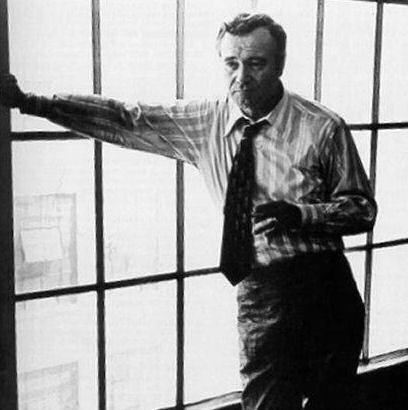
I don't think Save The Tiger sits on any of the “official” Great Movie lists, but today it tops mine. It isn't perfect – Harry Stoner is easily Lemmon's best performance, but he still has moments when he's projecting to the cheap seats; some of the plot contrivances are a little rough around the edges – but even the imperfections bring character to the overall work. It's an unselfconscious time capsule of the early 70s, an era when movie makers didn't mind following a person to work. In Stoner's fashion mill, ironically named after an Italian respite where he recovered from war wounds, Stoner's character is peeled back and exposed to us one layer at a time. He may slouch through most of the movie, but at work his inner steel surfaces, and we see the cunning and ferocity that kept him alive when he was a soldier.
From time to time, he mentions lost ideals, but the only nostalgia that plays convincingly is his nostalgia for big band music and baseball. Stoner isn't trying to negotiate with ideals so much as he's trying to reconnect with his pre-war state of innocence. It is an intensely lonely struggle – Stoner can't invite others to help him with it, because when he does it only magnifies the gap between two solitudes.
The film is bracketed with casualty reports, from Viet Nam, at the beginning, to the injured firemen at film's end. The film makers are sympathetic to Harry's plight, and convincingly communicate why so many business people become antagonistic toward government – it's just one more predator out there, contributing not just to their frustrations, but their demise. “Creative solutions” are a soft-headed indulgence. People are going to get hurt.
This movie is unlikely to stay my number one pick for much longer, but it still belongs there for now. Every life inflicts casualties of its own, and any story, song or movie that takes care to shine a light on the survivor's soul is a welcome work of art. Save The Tiger does, and is, exactly that.
Friday, July 21, 2006
Film Fave #2: THIS IS SPINAL TAP
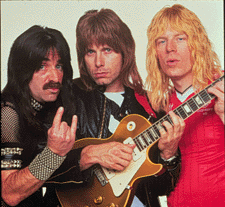
Good grief -- where do I even start? For one thing, This Is Spinal Tap miraculously prolongs one's appreciation of Heavy Metal as an artform. I first saw it -- January 1984, with a Bible School buddy -- in a tiny movie-plex theatre, filled with lads wearing Iron Maiden shirts and Pink Floyd caps. Everyone was laughing and cheering. Spinal Tap wasn't deflating Rock & Roll Mythology -- it was contributing to it.
Christopher Guest has done some incredibly funny movies since then, but Waiting For Guffman doesn't inspire me to join the community theatre, and Best In Show hasn't prompted me to go out and buy a dog. But this "Rockumentary" is different: even as these used-up geezers slip further into a well-deserved obscurity ("Puppet Show! And Spinal Tap"), the urge to actually start a band and take it on the road becomes nearly irresistable. To be so singularly confused and earnest and self-indulgent has to be fun!
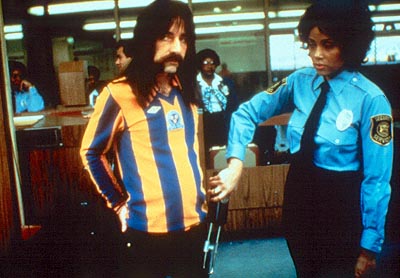
Until now, I've avoided talking about DVD bonuses -- I usually equate "extras" with "extra waste of my time" -- but this disc has been packed to the ribs with incredibly entertaining goodies. For one thing, the "audio commentary" is provided by the three surviving Tap members, who take the opportunity to set viewers straight on director Marti DeBergi's "hatchet job". There are also deleted scenes and videos for "Gimme Some Money" "(Listen To The) Flower Children" "Hell Hole" and "Big Bottom" -- all very funny stuff.
I was never one to memorize Monty Python sketches and recite them for the assumed amusement of friends and family, but this movie has brought me as close to that brink as anything done by the Flying Circus. Fortunately, I can resort to timely short-hand: "Take it to eleven!" ("when we need that extra push over the cliff") or "That's just nitpicking, isn't it?" (in response to withering criticism), etc. The surest sign of a replayable movie is its infiltration into the viewer's daily goings-on. And with its ability to straddle that fine line between clever and stupid, This Is Spinal Tap invades with aplomb.
Film Fave #3: RAISING ARIZONA
Number three is a particularly difficult choice for me – I could do a top ten Coen Brothers Films list (hmm – note to self...). In a list like that, I'm not sure which would come out on top. Since I have room for only one Coen Brothers title, I'll go with the first movie of theirs that I saw on the big screen: Raising Arizona.
Nicholas Cage's performance as loveable sad-sack H.I. McDunnough (a convenience store hold-up artist who locks his keys in the car) is a comic tour de force. Newcomer Holly Hunter's face switches in an instant from withering scorn, to unshakeable despair. The entire cast is blessed with a script that delivers funny lines to everyone who shows up on set.
And in a film concerned with family and giving birth, the Coens crack their knuckles and roll out one cinematic pun after another. How nasty is it when two brothers deliver themselves from the muddy ground, like demon-spawn? And how pathetic is it when they chose to return on their own accord? And you just know the baddest guy is the biker who carries his own bronzed baby-shoes, and sports a tattoo that reads, “Momma didn't love me.”
It's a funny, dopey movie, and yet when the McDunnoughs finally return the baby to Nathan Arizona and he delivers his cornball consolation speech ("I sure hate to think of Florence leaving me. I do love her so.") I always get choked up. Of course, then he asks the couple to leave the way they came in: by the window.
I was going to include a few juicy quotes that always get me giggling, but there are too many. You can read a few here, or just resign yourself: get the movie off the shelf, drop it in the player, and enjoy.

Film Fave #4: KIKI'S DELIVERY SERVICE
When a young witch turns 13, it is customary for her to hop aboard her broom, leave home and set herself up in a strange city. On a sunny day, while lying in the tall grass and listening to her transister radio, Kiki decides tonight is the night.
So begins my favourite Hayao Miyazaki movie, Kiki's Delivery Service. Thirteen might seem a little young for a girl to strike out on her own, but as with any Miyazaki movie, there is an innate sense to the proceedings that coheres quite naturally for the viewer. It helps that the world Kiki inhabits has none of the dire threats ours does. And it helps that she's a witch.
It's a little unclear just what a witch's powers amount to, other than broom-flying. Kiki's mother runs a sort of apothecary, and the first snooty witch Kiki encounters claims to be a fortune-teller, before brushing off Kiki and her cat Jiji like so much dandruff. Kiki's chief challenges, it seems, will be social.
Miyazaki's Kiki is the embodiment of youthful energy. Watching her, I reconnect with all the joyous uncertainty that came with leaving my home town. The trick to negotiating these changes is in maintaining confidence in your spirit, and Kiki is one of those blessed youths who doesn't have too many doubts in this regard.
The inevitable does eventually occur: through a series of events, Kiki loses touch with her magic, and her source of confidence. Her spirit seems to reside under a wet blanket; she no longer flies through her life, but walks through it, one miserable step at a time. How she gets back in touch with her magic is a scene that is more momentous and exciting than any of the cliffhanger conclusions we've seen in the last 20 years, because it is deeply emotional and stirringly personal.
I love Miyazaki's work. As with most Japanese anime, Kiki's world is a melange of visual influences. Miyazaki distills a European storybook aesthetic that is at once recognizable and strange. Ivy covers the walls of tall, gabled stone houses, the streets are narrow, trains cut through the countryside and a zeppelin flight is heralded as a big event. All wonderful, but the charm of these images resides in Miyazaki's attention to detail – how many animated movies open with the wind blowing through long grass?
But Miyazaki's originality also lies in his ability to observe and identify so closely with his heroines. I can think of no other living film-maker who cares as deeply about his girl protagonists. Novelist Shusaku Endo has said the Japanese revere their mothers because they exist in sharp counterpoint to their fathers, who are expected to be stern and emotionally distant. Miyazaki seems to follow his muse most closely when he paints the emotional development and dawning maturity of young girls.
Now that I think of it, Miyazaki's characters are almost always in the business of nurturing, though not always in the manner that one expects. But if emotional development comes through encounters with the strange in Castle In The Sky and Spirit World, with Kiki's Delivery Service it comes through finally recognizing what has been there all along.
 Film Fave #3
Thursday, July 20, 2006
Film Fave #5: THE LIMEY
There are some directors I’d like to hate, but don’t. Steven Spielberg, for instance – the guy reaches for sentiment whenever an honest conflict of emotion proves too difficult for him to frame. He panders to the crowd, but I usually leave the theatre (or return the DVD) feeling like I got my money’s worth with him. Hey – at least he pandered to me.
Then there are directors I’d love to love, but have trouble doing so. Steven Soderbergh, for instance. The way he takes chances – let’s do a three-hour drama about the drug problem in North America; that book by Stanislaw Lem that Tarkovsky kinda-sorta filmed … any reason why that couldn’t be a smart summer blockbuster?; etc. – is the sort of behavior I naturally tip my hat to. And yet I usually finish a movie feeling as if my patience got tested once too often.
Out of Sight is a good example. Critics were generally impressed with it, and it seemed to signify Soderbergh’s newfound willingness to work with sexy actors and a tight script to deliver a straightforward thriller that should be a hit with audiences. The script was based on an Elmore Leonard novel, and Leonard’s “hip” quotient was growing among Gen X – Soderbergh’s (and my) demographic. So I took my seat and looked forward to a smart guy delivering the sort of smart film that Hollywood habitually dumbed down.
When it was over, I felt residually satisfied, but mostly let down. The story was smart enough, but by the end my interest in its characters had waned. I blamed the actors: George Clooney was still too slick to be taken seriously as a bumbling charmer, and J-Lo was J-Lo (always will be, I'm sure). The gorgeous jaw-dropper falls hard for the gorgeous jaw. Zzzzz.
But, man, did I ever love that opening scene when Clooney storms out of the office, yanks off his necktie and is caught in a mid-throw freeze-frame. That scene had an infectious energy to it, but the freeze-frame was the capper – a quick wink at the audience, to let us know there’d be just enough self-consciousness present to keep this show fun. I sure could stand to see a movie that maintained that stylistic panache right to the film’s conclusion.

The Limey is that movie. Seen laid out on paper, the movie looks like it should be a director’s bloated indulgence: Soderbergh assembles a cast of 60s actors who have since slipped out of the mainstream (Terence Stamp, Peter Fonda, Lesley Ann Warren, Barry Newman, Joe Dallesandro), gets them to sink their teeth into every 60s cliché and hangover you could name, puts them through their paces in a revenge thriller, then skips off to the editing room where he playfully splices up its perspective in a 60s art film style.
Well, it is an indulgence, but it’s one of the leanest and most tightly controlled indulgences I can think of. Take Soderbergh's “art film” splicing: it's a little jarring at first, but it quickly becomes a reliable tone-setter for successive scenes. The first time I saw the film, I thought Soderbergh's narrative play was less intrusive and considerably more effective than Tarantino's had been in Pulp Fiction. With successive viewings each little fragment gains significance, but never in an earth-shaking “So that's what he meant!” way.
As for the acting, it's some of the best you'll see from these veterans of stage and screen. I suspect Soderbergh is an “actor's director”, a guy who gives a few scant instructions, but is mostly inclined to stay out of the way. That would explain why Julia Roberts in a Steven Soderbergh movie is such bad, bad news: she will take over a film, just as surely as Barabara Streisand would. With the exception of Peter Fonda, who was experiencing a bit of a big-screen resurgence at the time, The Limey is cast with actors whose brightest moments have come and gone. They aren't trying to keep their star in the ether; they're trying to do good work. They approach their characters with attention to detail, and project with care.
There is some incredibly satisfying violence, but this is not a graphic film. The script is peppered with snarky asides that reduce me to fits of giggles every time I watch it, but it is surprisingly serious film. The veteran actors all play off roles they became famous for, yet none of it plays self-consciously.
I want to keep gassing on like this, but the plainest truth about this film is its revelations are finally gentle ones – the sort that keep me coming back again and again, because they do not rely so singularly on astonishment and brutal surprise for their impact.
It's a fabulous film that has earned Steven Soderbergh a great deal of cache with me – enough for me to really want to enjoy myself with his next film (if only it weren't Oceans 13!)
Wednesday, July 19, 2006
Film Fave #6: HEAT
Sure, it's high concept. Sure the dialogue can get a bit stilted, particularly between the sexes. And as with most Michael Mann films, the finale has zero emotional punch because it was set in stone in the first act, and heralded with trumpets throughout the rest. But Michael Mann directing Al Pacino and Robert De Niro is a match made in testosterone heaven, and I can watch this movie again and again because despite it all, Mann proves himself capable of genuine emotional depth.
Mann, never one to settle for a ten when he can take it to eleven, frames these two raging bulls with several football teams worth of nostril-flaring masculinity -- as if Pacino and De Niro weren't enough, we get secondary and character actors like Tom Sizemore, John Voight, Dennis Haysbert, Danny Trejo, Wes Studi and even tattooed motor-mouth Henry Rollins filling up the screen with their own brand of violent innuendo. And yes, Val Kilmer is in there, too, supplying a little adolescent surliness. Happily, he gets beat up pretty badly by film's end.
One of the film's pleasures is that just about everyone who comes on-screen gets theirs by film's end. It's a suburban morality play that's writ larger than Gidget: when Pacino finally connects with De Niro (and let's face it: their characters' names don't matter. This is the WWE, here: we paid admission to watch these two guys face off against each other) Pacino's cop asks De Niro's criminal, "So you never wanted a regular type life?" De Niro fires back, "What the fuck is that? Barbecues and ballgames?"
Yes, exactly. And when things finally explode, the first casualty to get blown to bits by machine-gun fire is a line of barbecues on display outside a grocery store. Boys, boys, boys -- you wanna play, you gonna pay. In fact, these men all do claim to want something akin to barbecues and ballgames. But their scenes with women play falsely: the couples laugh at shallow jokes, or they hug and sway together on the dance floor, or they even make love and whisper "Do you love me"-type lines, but it feels too deliberate. It's stagey, people are acting. It's only when the men hold up a bank that this feeling of artifice disappears. These boys enjoy the heat too much to give it up, so they get burned.
The strangest element in this morality play is Natalie Portman's character, an adolescent step-daughter to Pacino's cop. I think Portman's presence brings more emotional power than Mann quite knows how to handle. The other women in these guys' lives are all old enough to know better, so the viewer (and Mann) can keep them at emotional arms' length. But Portman's suicidal character sits on the other side of this morality play as the only true victim among all these firing guns. Her presence threatens to turn the morality play into a tragedy, and the way I see it, the film's emotional climax occurs when Pacino leaves the hospital vigil to finish his pursuit of De Niro.
 I'm so glad she's there. Without her, the entire enterprise would be no more memorable than a particularly grim James Bond movie -- a heist gets pulled, shots are exchanged, people die. Heat could have been that sort of movie -- in fact Collateral was that sort of movie, and I certainly enjoyed that. But Heat is the more compelling and rewarding movie, thanks to its emotional core: a messed-up adolescent girl who flits in and out of all this flexing and posturing and shooting, serving as a spectral reminder of what's really being sacrificed in the spectacle, the noise and the heat.
Film Fave #5
Mann, never one to settle for a ten when he can take it to eleven, frames these two raging bulls with several football teams worth of nostril-flaring masculinity -- as if Pacino and De Niro weren't enough, we get secondary and character actors like Tom Sizemore, John Voight, Dennis Haysbert, Danny Trejo, Wes Studi and even tattooed motor-mouth Henry Rollins filling up the screen with their own brand of violent innuendo. And yes, Val Kilmer is in there, too, supplying a little adolescent surliness. Happily, he gets beat up pretty badly by film's end.
One of the film's pleasures is that just about everyone who comes on-screen gets theirs by film's end. It's a suburban morality play that's writ larger than Gidget: when Pacino finally connects with De Niro (and let's face it: their characters' names don't matter. This is the WWE, here: we paid admission to watch these two guys face off against each other) Pacino's cop asks De Niro's criminal, "So you never wanted a regular type life?" De Niro fires back, "What the fuck is that? Barbecues and ballgames?"
Yes, exactly. And when things finally explode, the first casualty to get blown to bits by machine-gun fire is a line of barbecues on display outside a grocery store. Boys, boys, boys -- you wanna play, you gonna pay. In fact, these men all do claim to want something akin to barbecues and ballgames. But their scenes with women play falsely: the couples laugh at shallow jokes, or they hug and sway together on the dance floor, or they even make love and whisper "Do you love me"-type lines, but it feels too deliberate. It's stagey, people are acting. It's only when the men hold up a bank that this feeling of artifice disappears. These boys enjoy the heat too much to give it up, so they get burned.
The strangest element in this morality play is Natalie Portman's character, an adolescent step-daughter to Pacino's cop. I think Portman's presence brings more emotional power than Mann quite knows how to handle. The other women in these guys' lives are all old enough to know better, so the viewer (and Mann) can keep them at emotional arms' length. But Portman's suicidal character sits on the other side of this morality play as the only true victim among all these firing guns. Her presence threatens to turn the morality play into a tragedy, and the way I see it, the film's emotional climax occurs when Pacino leaves the hospital vigil to finish his pursuit of De Niro.

Film Fave #5
Subscribe to:
Posts (Atom)