Friday, March 24, 2006

Notes on Transcendance

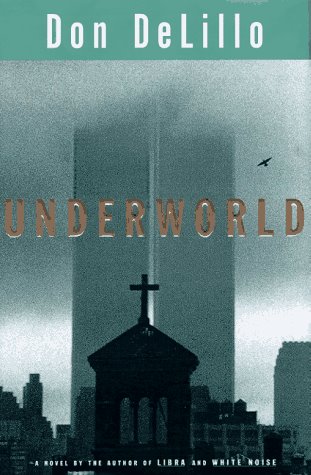
My wife is, at this moment, in Malawi faithfully doing good deeds. The three of us who remain behind consider ourselves honored to be a part of it -- or rather, we do when we make the effort to be mindful of our circumstances. We are terrifically proud of her. But we are also not a little lonely. The two urchins get regular doses of their grandparents (my gratitude to all four of you -- thank you very much). As for me, I get regular calls from Blue Sky, Bright Son who is steadily working his way through Don DeLillo's Underworld.

It's probably been six or seven years since I last read that book, but when my friend calls it never takes long for my memory to warm up into a welcome glow that is able to resuscitate so many of my favourite passages. He and I consider aspects of the overall narrative, suss out connections and dismiss our personal agendas, and for a long stretch of time after I've hung up the phone, my existence is comforted by the presence of An Other.

Today, while perusing Terry Teachout's blog, I stumbled across this quote from C.S. Lewis's An Experiment in Criticism:

Literary experience heals the wound, without undermining the privilege, of individuality. There are mass emotions which heal the wound; but they destroy the privilege. In them our separate selves are pooled and we sink back into sub-individuality. But in reading great literature I become a thousand men and yet remain myself. Like a night sky in the Greek poem, I see with a myriad eyes, but it is still I who see. Here, as in worship, in love, in moral action, and in knowing, I transcend myself; and am never more myself than when I do.


My God, that's exactly right! Thank you Terry Teachout, and Clive Staples. And thank you Bright Son for the transcendance.

Ah, spring: when the man in mid-life turns from thoughts of...

...well, actually his thoughts don't turn at all; they just stay fixated on mid-lifey things. How nice for me that Donald Fagen has developed the habit of updating the mid-life man's soundtrack this time of year! Fagen approaches our mortal condition with his signature cheerful perversity. And the groove he's laid down for the title track is altogether infectious. Fans like us who watch the skies / We know it's Morph the Cat!


"This is my death album," Donald Fagen said in his office on the Upper East Side of Manhattan. "It's about the death of culture, the death of politics, the beginning of the end of my life." Then he mock-sobbed, "Boo hoo hoo." More on Morph here and (thank you DV) here.

Also: john r. williamson did me the honour of reading (and commenting on) my musings on T Bone Burnett. Now, I've got a number of musician friends. I know these people all put their pants on one leg at a time. But I still believe the ones who have a passion for what they do slip into a plain where they serve the music. And this cat definitely serves the music. Be good to yourself, and check his music out here.

Thursday, March 23, 2006

What sort of "pacifist" am I?

I am a confused, or muddled pacifist. But before (sigh) FOX does it on behalf of people like me, I will come out on record and say that I appreciate and even enjoy the irony of the Christian Peacemakers being rescued by a military operation. I also enjoy the irony that (so far as we know) no shots were fired and no harm was inflicted on someone else in aid of rescuing these guys -- but I'd be asking for trouble were I to make a bigger deal of that fact than it merits. For those of my readers who aren't pacifist, the fact remains: your guys rescued our guys. It sounds to me like our team is, indeed, genuinely grateful for your services -- quite properly, I would say. Thank you very much.

You may now commence with your crowing, while I splash about in some shallow soul-searching.

I won't bother trying to defend pacifism: better people than I have done a better job than I could ever hope to. I was raised in a Mennonite family in a Mennonite community, and my internalizing of certain values -- including pacifism and a host of other issues I've attempted to refute -- is too deep to try to root out and remove. Annotated Prajer Paraphrasal: Dietrich Bonnhoeffer -- people who hear Jesus' Sermon on the Mount either take it (and him) seriously, or start with the "yes, buts" that effectively write him off as a well-intentioned loon. Gandhi -- don't bother with pacifism unless you've completely given up on violent means.

On with the muddle: while I appreciate the spirit that informs the actions of the Christian Peacemakers Teams, I continue to feel conflicted when I consider their wisdom. Either side of this debate can throw a bundle of Bible verses at me -- please don't, because I've heard and read them all. Chances are I've also given your particular interpretive lenses some careful consideration. But like just about any other issue you care to name, the Bible does not provide irrefutable clarity on this. That's just one reason why I'm muddled.

Invading Iraq: I was against it. I still think it was a terrible mistake, born not out of pragmatic consideration but of either immeasurable hubris or a stunningly blinkered optimism, and I hope and pray it doesn't mount to a globally catastrophic mistake. I don't think my reasoning on this issue is particularly unique or unheard, so I'll move directly on to...

The Occupation of Iraq: hmm -- I'm muddled again. Bearing top of mind that I am not the one experiencing occupation, I can't help but wonder if this occupation, as incredibly fucked-up as it is, isn't a smidge better than yanking out altogether and leaving the natives to their own devices. If I am granted that (and that is a huge "if"), the question is, "What changes need to be made to make this a better occupation?" Ask a question like that, and you have to consider the parameters of...

Exporting Democracy: Way back in the early 1980s, a friend of mine went to East Berlin on a project (the organization will remain nameless) that placed him with dissident student groups hoping to plant the seeds of democracy in East Germany. Every couple of months I'd get one of those group-letters that spoke of the "enjoyable challenges", the "exciting opportunities", the "difficult, but immensely rewarding struggles" he partook in. He returned a year or two after the Wall came down. When I finally got the chance to ask him about his experiences, he said, "I doubt I'll ever again face anything in my life so frustrating as that. Everyone says they want democracy, but they change their mind when they see the work involved." As we talked, he hesitantly confessed he wasn't at all confident that humanity was "wired" for democracy. Churchill: it's the worst form of government there is, except for all the others.

Work, work, work. I've got no answers for you, just a proposal: either join me in the Assholes on Parade, or shut off the computer, step outside, and talk to your neighbor. Hmm. Maybe the parade can wait...

Wednesday, March 22, 2006

Broccoli: Good for Bond, Too


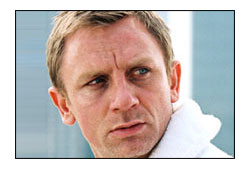
Eef - talk about the madness of crowds: what's so awful about bringing in Daniel Craig as the new James Bond? And what, exactly, was so great about Pierce Brosnan's Bond? Watching Brosnan, I could never quite shake the feeling that he was still searching for the right note to play. I remember enjoying Goldeneye, chiefly because the final fight sequence had a measured weight to it, unlike so many of the other cartoony sequences the franchise resorts to. After that, the Brosnan-Bonds blur together. I've seen them all, and yet when I'm told the total number of Brosnan-Bond films is four, I'm surprised: I would have said three. I guess dozing off during the last 30 minutes of Die Another Day must have erased the film from memory.

It's not that I think Brosnan is a bad actor. Far from it: his Andy Osnard in The Tailor of Panama is the pitch-perfect Brosnan vehicle. He plays off his eternally good looks, has charm, demonstrates ruthlessness, but oozes with an outright sleaziness that says this man should in no way be trusted. And while I've not yet seen it, I'm guessing his turn in The Matador is similarly excellent.

But his Bond didn't seem quite capable of taking anything personally, even torture at the hands of North Korea and (gasp! no, anything but this!) a theme-song by Madonna. His Bond is the video-game Bond, who manages to outrun machine-gun fire and deliver Bugs Bunny one-liners with a badly-animated wink.

As for Craig, I couldn't make heads or tails out of L4YER CAKE, but when he finally made up his mind to do something nasty, I believed it. Now we're being told this Bond is an "art haus" Bond. I'm all for it. In fact, for the first time since I was old enough to go to movies by myself, I'm actually excited at the prospect of a new Bond.

Tuesday, March 21, 2006

Centerfolds & Life

Whither the centerfold?


And why should I care? Chalk it down to the perturbed musings of Pete Townshend and T-Bone Burnett. Or to a bizarre glitch in kismet that seems to land Hugh Hefner in the papers every second month -- the most recent example being Joan Acocella's critical gaze at Playboy. Reviewing Taschen's The Playmate Book: Six Decades of Centerfolds for The New Yorker, she can muster little more than a disdainful sniff for the enterprise. When I first read it, I thought, "Well, give a brainy woman a book of centerfolds and ask her what she thinks, and this is what you'll get." I also thought she was right.

Playboy was never much of a habit for me -- I was enough of a moralist to make it a habit not to make it a habit, a practise that generally kept me out of trouble until I considered myself old enough to manage it. To borrow a phrase from Raising Arizona, I released myself on my own recognizance after a summer of industrial delivery. The wallpaper on most delivery bays was courtesy of Hef and his co-conspirators: the overall effect was less than arousing, and the stray issues I obtained amounted to a flat experience. The last issue I bought was over 15 years ago. I don't recall the cover, the pictorial spreads or the centerfold, but I do recall the literary content: an extended travelogue of India, by Spalding Grey. It would be disingenuous of me to say I bought it for the article, but that's finally what I took away from it.

In contrast, I have no trouble recollecting the first centerfold I was exposed to. But then, I was a callow lad prone to the sort of typical callow lad obsessions that John Irving has plumbed with such depth of perception. A 12-year-old boy looks at those faintly orange pictures and finds it hard to believe the day will ever arrive when he is given license to explore the undiscovered country.

As erotica, I think prepubescent inexperience is the only condition in which Playboy works. Experience pretty much overwhelms and kills it, which leads me to wonder when might be the last time Hef found his own product arousing. More likely, Hef reached a saturation point where arousal was no longer the intention. In his waning years, Hef has devoted a great deal of energy to selling himself as the final product. Playboy, like Martha Stewart, is finally an extended brochure promoting one person's very particular lifestyle -- in this case, Hugh Hefner's. You'd be a fool to think your own lifestyle could ever approach that of Hef's (it's a zero-sum game, and Hef got there first), but maybe if you subscribe for a year or two, a little Playboy (or InStyle, or Muscle & Fitness) pixie-dust will float your way.

I'm reluctant to concede such points. I dislike being the square, the moralistic killjoy. Were I pressed to express an official line on the subject of centerfolds, it would be akin to my friend's sentiments: "I like looking over a beautiful girl as much as the next straight guy. But, you gotta know ... that's all kidstuff,"

Indeed. It would be nice if such insular pleasures as considering the erotic plane would inspire the viewer to step outside and properly engage, but the human inclination seems to be quite the opposite. From my lofty perspective outside Hef's glass mansion, I can't help thinking the man's life is a tad impoverished. My father-in-law, four years Hef's junior and in many ways the embodiment of Hef's darkest nightmares, has led twice the life. He's married people, buried people, witnessed life come into the world and leave it. He's got a million hilarious stories, quite a few of them related to funerals, and at least one involving a cross-eyed undertaker who accidentally tumbled into his customer's grave. He's been around the world and led numerous choirs, some of them too glorious for words, others too disastrous to be believed. A lusty, gusty man, he's never made a secret of his appetites -- he's just made a point of indulging them within the confines and security of his marriage.

For better or worse, he's often like a big kid. But better that, I suppose, than an old, embittered grump. To one degree or another it's all kidstuff. And if you can keep the kid alive in something as grown-up as marriage, then I think you've got something worth calling a lifestyle.
Friday, March 17, 2006

Rock Island Line by David Rhodes - A Quick Book-Blurb

This post will not do this wonderful and hard-to-find book justice, because my physical condition (a consciousness spread thin by strep-infection, antibiotics and pain killers) made for a less than ideal reading environment. But such are the vagaries imposed on a person subject to inter-library loans and a rare spate of poor health.

A marvelous book. Using a fantastic-realist style not dissimilar to Marquez's in The General In His Labyrinth, Rhodes gives us a lush history of an Iowa family, in a timeline that extends from the turn of the last Century to the late-60s. Rhodes' characters engage their lives to the absolute limit, exerting their will in and against a world that is both recognizable and fabulous. I'm tempted to compare Rhodes' powers of observation to those of Philip Roth in his senior years -- the same recognition of the daily environment and its enchanting effect on the people who live there (think of Roth's intimate and loving evocation of the glove industry(!) in American Pastoral). That Rhodes, still alive and writing, can have such a chimerical and inviting ability with words yet slip into near obscurity seems incredibly tragic.

More anon, when my own copy of this book arrives.

Thursday, March 16, 2006

L'étagère scandaleuse de livre

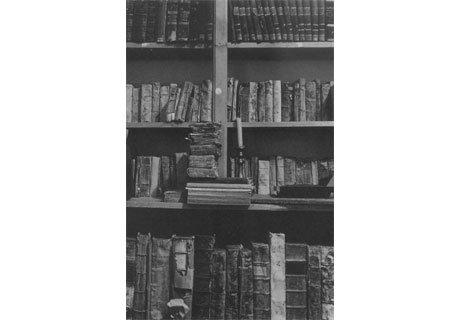
WP's Tenets of Parenting, subheading: The Scandalous Bookshelf. If you, as a parent, don't have a bookshelf devoted to titles that will surely mortify your teenage children, you aren't doing your job.

I think on this score I may perhaps be a bit overzealous. There are at least a dozen religious books that spring to mind -- if you cleared the words from the covers, the graphics alone would be cringe-inducing. Then there's daddy's sci-fi shelf. And Batman comics? What's that all about? Oooh, look: Lou Reed's Collected Lyrics & Verse -- "Hey, I'm still, like, edgy -- y'know?"

I can't resist. The urge to collect and display books that will embarrass my kids -- if not now, then later -- is just too strong. It was this very principle that explicity informed my recent purchase of Michel Houllebecq's Elementary Particles (well, that and its remaindered price of $2.99). It's right there on The Scandalous Bookshelf, just waiting for the day when one or the other child will say, "Eww -- what's this doing here?" And if I don't hear those words by the time the youngest turns 15, it disappears.

(Re: Houllebecq, when all is said and done and read, I have to admit I agree with this guy -- link from ALD. And if you want more photographs like the one above, go to the source: Diane Asséo Griliches. Link from BookLust.)