Woke up to hear the radio play The Ballad of John & Yoko. I was gratified, not just for this welcome departure from the overplayed Imagine, but because the song so ably embodies the charms of 60s pop music -- or the Boomer soundtrack, if you must.
Here's what I like -- no, love -- about 60s music: I love how nearly every artist on the air took nearly every bit of personal whimsy that occurred to them, then inflated it to mythic proportions. The common criticism is this was an indication of just how grotesquely seriously this generation took itself, but at least it made for interesting songs. So here we have John Lennon, a man who has grown irreparably rich and famous off the music he made with his mates, hopping from country to country with this bird he's taken up, and holding press conferences from their hotel bed. The press responds with the expected head-scratching and contempt -- say, this is perfect material for a song! Keep the melody light, don't clutter it up, but make sure it builds to the expected peak and thumb your nose at The Establishment.
I think the 60s songwriting mode -- for male artists, if not their long-suffering female counterparts -- is to take everything personally, but nothing seriously. The Beatles and Dylan worked in tandem on this school of music, but the apex of this mode is best exemplified by Steely Dan. Fans of the Dan twist their own pretzel logic, trying to locate the sense of their disjointed lyrics, but Fagan & Becker have a fairly stringent approach to their hallucinogenic show-tunes: find a grotesque subject, and see if you can't shine a whimsical light on it.
That's the sort of thing I ate up in my 20s. I could dig the music of my own time -- The Clash, The Cure, The The and finally Nirvana (the cure to The Cure) -- but only if their grim smugness was offset by the giddy smugness of their hippie progenitors. The hippie scene was sure to end badly, but the merry foolishness had genuine charm to it. Occasionally it's fun to re-visit, and that's where you'll find me today.
Thursday, December 08, 2005
Wednesday, December 07, 2005
Getting Iced
My fourth-grade teacher was a passionate, kind-hearted woman who regaled my class with many a story about her difficult and (to our ears) strange childhood. She was, she told us, a fiery kid and a natural athlete -- traits we had no trouble believing. Consequently, she was usually one of her classroom's "captains": one of two kids responsible for picking team-members from half the class.
She did this in the usual manner: if she won the coin-toss, she selected the most gifted athlete available. Her nemesis then took the next most gifted, and my teacher would move one rung lower on the ladder of natural talent, until the class had been evenly divided into teams of nearly equal ability.
Her father, however, threw her a spiritual spanner-wrench one morning. He took her aside and said, "Could you do something for me? Could you choose the poorest player first today? No, scratch that -- first is too obvious. But how about third? It would be such a gift to his soul!" This she did, and now, standing before us as an adult, she reported that not only had the little chap in question been touched, he'd also played his best game yet.
Yes, and the morning she told us this heart-warming story was the morning the athletic kid in our class chose me third for his soccer team. I'll admit I was "touched", but confess too that my game that day was hardly stellar. Being too self-aware by half was a significant part of my problem, but the simple fact is I sucked at soccer.
I still suck at soccer, but if there was a local effort to gather and play the game, say, twice a week, you could count me in (and choose me last, thank you). I might be lousy, but I see soccer (or "football", as it is properly referred to by the rest of the world) as the most enjoyable way to get into shape. As a player you are in near-constant motion, but in a measured way that keeps you from courting cardiac arrest.
Alas, the men of rural Ontario are not yet ready to embrace the soccer field. They are far more likely to tie on the skates and play some hockey. What attention they pay to safety will depend entirely on the level of physical contact they agree to. In other words, if you're 40 years old, brace yourself for serious debilitating injury.
Or worse. In a Globe & Mail piece (which G&M is too cheap to post on-line) James Christie reports that "each year, 12 to 15 of the estimated 10,000 Canadian men who play recreational and pickup hockey for fun, die with their skates on." Christie talks to a 49-year-old who strapped on a heart-monitor. "'I did a normal warm-up, and I went from a resting heart rate of 70 beats perminute to 90. Then I played a shift and looked at the monitor and it said 188.' According to rule-of-thumb guidelines for safe exercise, [this man's] target zone should have been around 120 to 130 beats per minute. His maximum heart rate should have been no more than 171. Yet shift after shift, he climbed out on a limb."
I'd say the real surprise is why there aren't more fatalities.
The last time I played hockey, I was 21. A bunch of us got the Saturday midnight slot at a local arena, and played for 45 minutes. After that we sped to the local bar for a quick beer at last call, then shook hands, and retired to our beds.
Although I'd played hockey like this every winter since my adolescence, I lay awake for hours. My heart simply would not slow down. To make things worse, thanks to all the cold air I'd inhaled, I couldn't stop coughing. I managed to doze for three hours, but when the sun rose, I got up. My heart had not yet found its resting rate.
I took it as a sign of age, and concluded I'd best keep my hockey game restricted to the shinny league. If that's the sort of game you're inviting me to, I'm in. Otherwise, I'll keep holding out for soccer. I won't even complain if I get picked third.
She did this in the usual manner: if she won the coin-toss, she selected the most gifted athlete available. Her nemesis then took the next most gifted, and my teacher would move one rung lower on the ladder of natural talent, until the class had been evenly divided into teams of nearly equal ability.
Her father, however, threw her a spiritual spanner-wrench one morning. He took her aside and said, "Could you do something for me? Could you choose the poorest player first today? No, scratch that -- first is too obvious. But how about third? It would be such a gift to his soul!" This she did, and now, standing before us as an adult, she reported that not only had the little chap in question been touched, he'd also played his best game yet.
Yes, and the morning she told us this heart-warming story was the morning the athletic kid in our class chose me third for his soccer team. I'll admit I was "touched", but confess too that my game that day was hardly stellar. Being too self-aware by half was a significant part of my problem, but the simple fact is I sucked at soccer.
I still suck at soccer, but if there was a local effort to gather and play the game, say, twice a week, you could count me in (and choose me last, thank you). I might be lousy, but I see soccer (or "football", as it is properly referred to by the rest of the world) as the most enjoyable way to get into shape. As a player you are in near-constant motion, but in a measured way that keeps you from courting cardiac arrest.
Alas, the men of rural Ontario are not yet ready to embrace the soccer field. They are far more likely to tie on the skates and play some hockey. What attention they pay to safety will depend entirely on the level of physical contact they agree to. In other words, if you're 40 years old, brace yourself for serious debilitating injury.
Or worse. In a Globe & Mail piece (which G&M is too cheap to post on-line) James Christie reports that "each year, 12 to 15 of the estimated 10,000 Canadian men who play recreational and pickup hockey for fun, die with their skates on." Christie talks to a 49-year-old who strapped on a heart-monitor. "'I did a normal warm-up, and I went from a resting heart rate of 70 beats perminute to 90. Then I played a shift and looked at the monitor and it said 188.' According to rule-of-thumb guidelines for safe exercise, [this man's] target zone should have been around 120 to 130 beats per minute. His maximum heart rate should have been no more than 171. Yet shift after shift, he climbed out on a limb."
I'd say the real surprise is why there aren't more fatalities.
The last time I played hockey, I was 21. A bunch of us got the Saturday midnight slot at a local arena, and played for 45 minutes. After that we sped to the local bar for a quick beer at last call, then shook hands, and retired to our beds.
Although I'd played hockey like this every winter since my adolescence, I lay awake for hours. My heart simply would not slow down. To make things worse, thanks to all the cold air I'd inhaled, I couldn't stop coughing. I managed to doze for three hours, but when the sun rose, I got up. My heart had not yet found its resting rate.
I took it as a sign of age, and concluded I'd best keep my hockey game restricted to the shinny league. If that's the sort of game you're inviting me to, I'm in. Otherwise, I'll keep holding out for soccer. I won't even complain if I get picked third.
Tuesday, December 06, 2005
Prajer Political Punditry
Despite the reverberating silence in my "comments" bin, I know full well why readers return to this page again and again -- for my incisive commentary on Canadian politics! (Pause for laughter.)
I'll keep this brief: my hunch is we could see a Tory minority government. To anyone attuned to the chattering classes, this scenario will seem far-fetched, but I don't think it is. The public perception of Prime Minister Paul Martin is of a shifty weasel who takes hold of the limelight and glad-hands one minute, then privately heads back to the public purse and ties the strings a little tighter. In the meantime, Tory Stephen Harper's media coaching is paying off dividends. He's transformed himself (somewhat) from a shifty-eyed, hunched-over number cruncher to a relaxed and confident figure with a plan that seems tangible to the public (how's reducing the GST sound, folks?).
NDP leader Jack Layton, on the other hand, has made no changes to his person or strategy whatsoever. He still projects a supercilious air of unshakeable rectitude: "I know what you think, but you're wrong, and I'm not listening. You need to listen to me." Used to be the Liberals could depend on Harper mirroring the same attitude from the far right, to scare the voters into the Liberal fold. That has changed, and we are likely to see Tory in-roads in Ontario and British Columbia. Quebec, of course, not so much. Moderate Quebecois voters will get behind the Bloc Quebecois, thinking the BQ will keep the province's generous social programs intact and not make too many frightening separatist waves.
Much of this depends on the different candidates' abilities to avoid foot-in-mouth disease. So long as the BQ doesn't say anything too baldly racist, and the Conservatives don't say anything too baldly homophobic, the Liberals are almost certain to lose seats. The Conservatives only need 17 more to get a minority -- a goal entirely within reach.
Feel free to enter the fray anytime. A friend who engages with me in this sort of speculation suggests a worthy caveat: our projections are completely open to change the morning after the debates.
I'll keep this brief: my hunch is we could see a Tory minority government. To anyone attuned to the chattering classes, this scenario will seem far-fetched, but I don't think it is. The public perception of Prime Minister Paul Martin is of a shifty weasel who takes hold of the limelight and glad-hands one minute, then privately heads back to the public purse and ties the strings a little tighter. In the meantime, Tory Stephen Harper's media coaching is paying off dividends. He's transformed himself (somewhat) from a shifty-eyed, hunched-over number cruncher to a relaxed and confident figure with a plan that seems tangible to the public (how's reducing the GST sound, folks?).
NDP leader Jack Layton, on the other hand, has made no changes to his person or strategy whatsoever. He still projects a supercilious air of unshakeable rectitude: "I know what you think, but you're wrong, and I'm not listening. You need to listen to me." Used to be the Liberals could depend on Harper mirroring the same attitude from the far right, to scare the voters into the Liberal fold. That has changed, and we are likely to see Tory in-roads in Ontario and British Columbia. Quebec, of course, not so much. Moderate Quebecois voters will get behind the Bloc Quebecois, thinking the BQ will keep the province's generous social programs intact and not make too many frightening separatist waves.
Much of this depends on the different candidates' abilities to avoid foot-in-mouth disease. So long as the BQ doesn't say anything too baldly racist, and the Conservatives don't say anything too baldly homophobic, the Liberals are almost certain to lose seats. The Conservatives only need 17 more to get a minority -- a goal entirely within reach.
Feel free to enter the fray anytime. A friend who engages with me in this sort of speculation suggests a worthy caveat: our projections are completely open to change the morning after the debates.
Monday, December 05, 2005
The Final Decorating Touch: A Major Award
My wife does a fine job of decorating for Christmas -- she sticks to classic styles and small white lights. Very elegant, but we're still missing something: a major award.
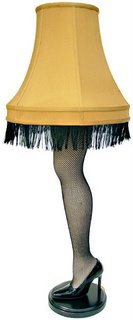
You can get yours here. Also noticed: A Charlie Brown Christmas Tree, courtesy of Urban Outfitters. And if you think Schulz is spinning in his grave right now, think again: nobody was better at capitalizing on Peanuts than he was.
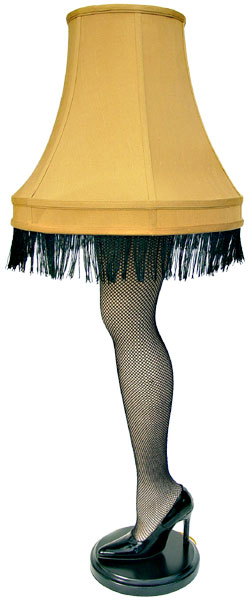
You can get yours here. Also noticed: A Charlie Brown Christmas Tree, courtesy of Urban Outfitters. And if you think Schulz is spinning in his grave right now, think again: nobody was better at capitalizing on Peanuts than he was.
A "Great Fiction Crash"? Sounds Good To Me!
"Sept. 11 has changed the cultural climate. People can't read fiction in the last few years. They're disillusioned. It's a death of the imagination, perhaps." So says Penguin Canada senior editor Barbara Berson, in a Globe & Mail article by Michael Posner called The Great Fiction Crash of 2005. So much for "Canadian understatement".
Looking over my list of books read in the last four years, I don't see any dramatic shift in reading preferences. I still choose fiction over non-fiction, and though my taste in both is registering some change, I'd be more inclined to attribute this shift to growing older than I would to terrorist attacks. Those hate-mongers are so keen to be the attributable source of our every woe, they'd take credit for the common cold if they could -- why give them credit for flagging fiction sales?
Here's my theory: we don't need any help being unhappy, and yet our fiction writers would beg to differ. And we let 'em. Say what you will about the shoddy prose of The DaVinci Code, at least it invests the world -- and Western history -- with some meaning. And perhaps The DaVinci Code is this generation's Pollyana, against which our fiction writers are levelling their own "terrible honesty" the way Dashiell Hammett (his dictum, by the way) and Dorothy Parker did in their day. But there's a terrible honesty, and then there's a terrible tedium. A writer of the grotesque, like Dickens, could deliver the former with flair and panache, while the latter seems to be the call of the day.
Myself, I'm happiest reading a book that gives me someone half-decent (but not too decent) to root for. Maybe I'm just weird that way.
Looking over my list of books read in the last four years, I don't see any dramatic shift in reading preferences. I still choose fiction over non-fiction, and though my taste in both is registering some change, I'd be more inclined to attribute this shift to growing older than I would to terrorist attacks. Those hate-mongers are so keen to be the attributable source of our every woe, they'd take credit for the common cold if they could -- why give them credit for flagging fiction sales?
Here's my theory: we don't need any help being unhappy, and yet our fiction writers would beg to differ. And we let 'em. Say what you will about the shoddy prose of The DaVinci Code, at least it invests the world -- and Western history -- with some meaning. And perhaps The DaVinci Code is this generation's Pollyana, against which our fiction writers are levelling their own "terrible honesty" the way Dashiell Hammett (his dictum, by the way) and Dorothy Parker did in their day. But there's a terrible honesty, and then there's a terrible tedium. A writer of the grotesque, like Dickens, could deliver the former with flair and panache, while the latter seems to be the call of the day.
Myself, I'm happiest reading a book that gives me someone half-decent (but not too decent) to root for. Maybe I'm just weird that way.
Friday, December 02, 2005
The Bookstore Lady
Fran Pishker is the woman who inspired this remembrance. It's now four years since I wrote this and I'm not sure why I was reticent about her name; when I began blogging I erred on the side of caution when it came to privacy issues. But Fran was the real deal, and should be remembered as such -- "WP"/DPR, 2009
I complained to my father that the local library -- a windowless concrete box, bricked up with decorative flagstone -- didn't have enough science fiction in its collection. He said a used bookstore had just opened up nearby. What say we hop in the car and pay a visit? I was a young teen in the habit of re-reading anything half-entertaining, but I consulted my collection for possible trade-in value, selected a few titles, and off we went.
At first blush, this bookstore was only a modest improvement on the library. It was very small. The linoleum floor was dusty, the entire place made all the moreso by the proprietor's ever-present cigarette smoke. She was, indeed, a little old lady. While my father and I perused the different shelves (so many of them all but empty), she pulled books from boxes and scurried about finding spots for them. The SF section was small, but the selection was more to my liking than the library's, and I found a few items to take with me. She accepted our books, took down our names, then explained the trade-in policy. "Make sure you come back in a week or two," she said. "I'll have more books for you."
This was mid-winter, and the possibility of my return was dependent on my dad's readiness to drive me. I didn't get back to the store until late spring, when I could ride my bicycle. I pulled a few more SF goodies off the shelves (the selection was now quite impressive), then presented them to the lady with a few items for trade. She smiled at me and said, "You're ____, aren't you?"
I said business must be slow, if she could remember my name from several months back. She laughed, and said that was about right. In fact, that was not at all the case. Business was good, and she soon moved to a larger facility. And I came to realize over the years that her ability to remember and connect with nearly every single customer was what made her a stand-out success.
Our verbal exchanges began with the usual bookstore chat. She saw me pick up Dune, and recommended Julian Mays. Another time, I traded in a near-pornographic pulp-rendition of the Arthurian legend; she thought I might like Mary Stewart's approach. Was I reading Louis L'amour? "Take my copy of Hombre, and tell me what you think. Personally, I think Elmore Leonard was a better writer when he wrote westerns." When I returned Hombre, she pointed me to Cormac McCarthy.
But books were just the starting point of our conversation. After I returned from a year of Bible school, she could see I was in aimless drifting mode. Hers is the only encouragement I can remember from those days. "If you were a young man in Tibet, you would spend two years walking the streets with a rice bowl before you embarked on anything substantial, like a formal education or a profession. I honestly think there's something to recommend that sort of 'just observing' time."
She regaled me with stories of the 70s. She had lived in New York, and was recovering from an operation when the Watergate hearings were being conducted. She said the remarkable thing was how everyone was watching those hearings -- there was no aspect of the public that wasn't fully engrossed and engaged. People were intent on being intimately aware of the history being made -- their history.
When the movie came to Winnipeg, I asked her if she'd seen 84 Charing Cross Road. She gave me a pained look, and admitted that she'd gone under duress. "It's not the sort of movie I'd choose to see, but everyone was telling me I simply had to, so I finally did. What a stupid movie! That final scene where Anne Bancroft stands in this empty store, grinning like a fool after her friend has died and the business has folded -- my God, I just wanted to slap that girl!
"I'll tell you what I liked about it, though -- the scene where the old guy and his wife are dining on a patio, then suddenly stand up and join the conga line! That's exactly the sort of silly thing we did in those days! So wonderful!"
Her attention to nuance and detail was formidably precise. Witnessing it in action, though, quietly encouraged my own small efforts at compassion. That woman could converse with anyone. I overheard her talking to a balding middle-aged lout who'd taken a taxi across town to complete his collection of Mack Bolan:The Executioner books. She was delighted. In one of my last conversations with her, she told me about a nine-year-old boy who came in and read her electricians manuals and scientific dossiers. "He doesn't understand fiction!" she laughed. "He thinks it's all a complete waste of time!"
I couldn't understand her laughter. Just hearing about this kid, I wanted to thump some sense into him. She laughed, but I couldn't muster anything more convincing than a shaky grin.
The fall when she finally died of the expected cancer, the store was sold to a young guy fresh out of community college. He introduced comic books to the mix, a move that kept me as a customer but probably lost a few older ones. After we got to know each other a bit, I said, "You must have had some tricky encounters when you took over the store."
"You've no idea," he said. "One older woman came in with a pie, and asked me where her friend was. When I told her she'd passed away, this woman just collapsed and wept. It was over an hour before she could get it together enough to leave." He shook his head. "Man, they don't prepare you for nothing like that in college."
No, they certainly don't. They might, if you're lucky, encourage you to pay attention to detail. And if you're especially attentive, and especially fortunate, you might just learn the knack of taking delight in other people's perspectives -- particularly those foreign to your own.

I complained to my father that the local library -- a windowless concrete box, bricked up with decorative flagstone -- didn't have enough science fiction in its collection. He said a used bookstore had just opened up nearby. What say we hop in the car and pay a visit? I was a young teen in the habit of re-reading anything half-entertaining, but I consulted my collection for possible trade-in value, selected a few titles, and off we went.
At first blush, this bookstore was only a modest improvement on the library. It was very small. The linoleum floor was dusty, the entire place made all the moreso by the proprietor's ever-present cigarette smoke. She was, indeed, a little old lady. While my father and I perused the different shelves (so many of them all but empty), she pulled books from boxes and scurried about finding spots for them. The SF section was small, but the selection was more to my liking than the library's, and I found a few items to take with me. She accepted our books, took down our names, then explained the trade-in policy. "Make sure you come back in a week or two," she said. "I'll have more books for you."
This was mid-winter, and the possibility of my return was dependent on my dad's readiness to drive me. I didn't get back to the store until late spring, when I could ride my bicycle. I pulled a few more SF goodies off the shelves (the selection was now quite impressive), then presented them to the lady with a few items for trade. She smiled at me and said, "You're ____, aren't you?"
I said business must be slow, if she could remember my name from several months back. She laughed, and said that was about right. In fact, that was not at all the case. Business was good, and she soon moved to a larger facility. And I came to realize over the years that her ability to remember and connect with nearly every single customer was what made her a stand-out success.
Our verbal exchanges began with the usual bookstore chat. She saw me pick up Dune, and recommended Julian Mays. Another time, I traded in a near-pornographic pulp-rendition of the Arthurian legend; she thought I might like Mary Stewart's approach. Was I reading Louis L'amour? "Take my copy of Hombre, and tell me what you think. Personally, I think Elmore Leonard was a better writer when he wrote westerns." When I returned Hombre, she pointed me to Cormac McCarthy.
But books were just the starting point of our conversation. After I returned from a year of Bible school, she could see I was in aimless drifting mode. Hers is the only encouragement I can remember from those days. "If you were a young man in Tibet, you would spend two years walking the streets with a rice bowl before you embarked on anything substantial, like a formal education or a profession. I honestly think there's something to recommend that sort of 'just observing' time."
She regaled me with stories of the 70s. She had lived in New York, and was recovering from an operation when the Watergate hearings were being conducted. She said the remarkable thing was how everyone was watching those hearings -- there was no aspect of the public that wasn't fully engrossed and engaged. People were intent on being intimately aware of the history being made -- their history.
When the movie came to Winnipeg, I asked her if she'd seen 84 Charing Cross Road. She gave me a pained look, and admitted that she'd gone under duress. "It's not the sort of movie I'd choose to see, but everyone was telling me I simply had to, so I finally did. What a stupid movie! That final scene where Anne Bancroft stands in this empty store, grinning like a fool after her friend has died and the business has folded -- my God, I just wanted to slap that girl!
"I'll tell you what I liked about it, though -- the scene where the old guy and his wife are dining on a patio, then suddenly stand up and join the conga line! That's exactly the sort of silly thing we did in those days! So wonderful!"
Her attention to nuance and detail was formidably precise. Witnessing it in action, though, quietly encouraged my own small efforts at compassion. That woman could converse with anyone. I overheard her talking to a balding middle-aged lout who'd taken a taxi across town to complete his collection of Mack Bolan:The Executioner books. She was delighted. In one of my last conversations with her, she told me about a nine-year-old boy who came in and read her electricians manuals and scientific dossiers. "He doesn't understand fiction!" she laughed. "He thinks it's all a complete waste of time!"
I couldn't understand her laughter. Just hearing about this kid, I wanted to thump some sense into him. She laughed, but I couldn't muster anything more convincing than a shaky grin.
The fall when she finally died of the expected cancer, the store was sold to a young guy fresh out of community college. He introduced comic books to the mix, a move that kept me as a customer but probably lost a few older ones. After we got to know each other a bit, I said, "You must have had some tricky encounters when you took over the store."
"You've no idea," he said. "One older woman came in with a pie, and asked me where her friend was. When I told her she'd passed away, this woman just collapsed and wept. It was over an hour before she could get it together enough to leave." He shook his head. "Man, they don't prepare you for nothing like that in college."
No, they certainly don't. They might, if you're lucky, encourage you to pay attention to detail. And if you're especially attentive, and especially fortunate, you might just learn the knack of taking delight in other people's perspectives -- particularly those foreign to your own.

Monday, November 28, 2005
The Lost Art of Gaging the Public Mood
They call it "polling" these days. I mostly ignore them. At best, they're inaccurate; at worst, they're a distraction from genuine political discussion, and I loathe their contribution to "horse race" news coverage.
Poll-reports were a joke during the last Canadian election, and I don't expect any improvement this time around. The best public analysis I heard came the day before the election, from a friend of mine who is in politics. A friend of his had been canvassing hard for his Conservative candidate, knocking on a lot of doors and shaking a lot of hands. He told my friend there was no way the Conservatives were going to win this one. My friend asked why, and the explanation went something like this:
"I've been in politics since as long as I've been conscious. I canvassed with my father on his first campaign, and I've canvassed ever since. In the last 20 years, I've developed a pretty good sense of what people's unspoken inclinations are. Usually when they tell you they haven't yet decided who they'll vote for, they're just bluffing to get you off their porch. This time around, the people telling me they were undecided were genuinely undecided. They had no idea how they were going to cast their vote. And when you are truly unsure of who you're voting for, the one thing you will almost never do is take a chance on that vote. We're in for another Liberal government."
I'm not so sure that's the way the vote will "swing" this time around. If I were to prognosticate, I'd say: another minority government, quite possibly Conservative (no majority in their cards, though: Quebec will never vote Conservative, and Ontario is still Conservative-shy after being gutted by Mike Harris). Also this: the lowest voter turn-out, ever.
Poll-reports were a joke during the last Canadian election, and I don't expect any improvement this time around. The best public analysis I heard came the day before the election, from a friend of mine who is in politics. A friend of his had been canvassing hard for his Conservative candidate, knocking on a lot of doors and shaking a lot of hands. He told my friend there was no way the Conservatives were going to win this one. My friend asked why, and the explanation went something like this:
"I've been in politics since as long as I've been conscious. I canvassed with my father on his first campaign, and I've canvassed ever since. In the last 20 years, I've developed a pretty good sense of what people's unspoken inclinations are. Usually when they tell you they haven't yet decided who they'll vote for, they're just bluffing to get you off their porch. This time around, the people telling me they were undecided were genuinely undecided. They had no idea how they were going to cast their vote. And when you are truly unsure of who you're voting for, the one thing you will almost never do is take a chance on that vote. We're in for another Liberal government."
I'm not so sure that's the way the vote will "swing" this time around. If I were to prognosticate, I'd say: another minority government, quite possibly Conservative (no majority in their cards, though: Quebec will never vote Conservative, and Ontario is still Conservative-shy after being gutted by Mike Harris). Also this: the lowest voter turn-out, ever.
Subscribe to:
Posts (Atom)