Showing posts with label rattling in my brain pan. Show all posts

Friday, October 21, 2011

May I Taxi You To Your Next Link?


Gulp -- another Friday! I'm in constant taxi-mode, with one daughter getting schooled 20 minutes away from my computer terminal, and the other neck-deep in rehearsals for a community theatre musical located 20 minutes off in the other direction. Is there some way to blog and drive at the same time? I don't mean in the way that Jim blogs -- that's fine enough, but he got there first, and I need some way to capture the thoughts that fizz over the surface of my consciousness the way hydrogen-peroxide fizzes over the surface of a wound.

Achievement in anything requires discipline in all things, of course, and I am not quite the embodiment of that precious trait. I do have "computer time," but rather than devote that time to composition, I prefer to scour the webs for thoughts to keep the fizz bubbling. Besides, it's easier to read than to write. So, as a stand-in for my own words, here are others you might dig just as much as I did:

There is a heap of God-verbiage to be had on the web, most of it ugly as sin, minus any trace of sin's surface appeal. I've been meaning to add to it, under the dubious conviction that if we leave it all to the pros who are certain of their convictions, then we might as well write the epitaph for our species (in which case I'll settle for this one.) One Old Pro whose name keeps coming up in these free-for-alls is Reinhold Niebuhr. It doesn't seem to matter what shade of the conviction spectrum a person falls on, Niebuhr has written something to affirm the arguer's point of view. What's up with that? Jordan Smith gives a short, and possibly too tidy, answer to that question.

In response to some nameless televangelist's cash-grab, Bono famously snarked, "The God I believe in isn't short of cash, mister." The evidence for such a God was probably to be found in Bono's own wallet, the contents of which will be increased by multiple reissues of Achtung Baby, which celebrates its 20th anniversary this year. Today listening to that band throws me into Jerry Lewis conniptions, but 20 years ago I was very much into Achtung Baby and its near-immediate follow-up, Zooropa. Those albums, and the band's live shows, seemed to channel the excitement and anxieties that attended the collapse of the Iron Curtain and the rise of global media, better than any other act on the scene. But does that necessarily mean Achtung Baby deserves the Nevermind treatment?


It is all but given that the last two publishers in the world will be Amazon and Google. Should writers wring their hands, or celebrate?

And speaking of celebrating writers, Cowtown Patty celebrates James Lee Burke's Feast Of Fools as Burke's Magnum Opus. I'm a big fan of Burke, particularly his Hackberry Holland novels. This is a Feast I can't wait to tuck into.

Finally, Terry Teachout's laudatory review of "The Agony & Ecstasy of Steve Jobs" struck several nerve centers for me. First of all, Mike Daisey's dramatic monologue exposes and flays with some mighty thorny truths about everybody's (including, especially, the evangelical church's) favorite product and brand. But secondly and not incidentally, Daisey's mode has pointed similarities to that of the late Spalding Gray, whose Swimming To Cambodia really should have placed in my Fifteen Film Faves. Gray is experiencing another, possibly final, resurgence in public attention thanks to the publication of his journals, to which Daphne Merkin applies her own particular zest of candid articulation here.

All of which leads me to think, what better, more pertinent tribute to Spalding Gray could there be than a proper Swimming treatment of Daisey's controversial performance?


Friday, August 26, 2011

"Arrr, matey!" Just What Is The Groom Supposed To Wear?

Last summer we attended a wedding where the bride, dressed in traditional white, was taken captive by pirates — dressed in traditional bandannas, cutlasses, eye-patches, baggy boots, etc. When the groom/buccaneer attempted rescue, he too was taken captive and forced at sword-point to plead for the life of his betrothed. Under this duress, he took a shaky breath, then broke into song and . . . you get the picture.

We knew the groom, and this contribution to the party was him to a “T”: young, dramatic, vigorously expressive, impatient with staid tradition. We'd only just met the bride, and liked what we saw. She and her maids were not only gorgeous, they were also genuinely good-humored, and sweetly indulgent toward the dudes galloping about the other side of the altar. Eventually the wedding proceeded as weddings are expected to. We took it all as a good sign for the couple in question.

The people we sat with at the reception dinner, however, had this to say: “He’s going to regret what he wore.”


Hm. Really? I mean, any more than other grooms do, when the blessed event is a distant memory and the kids are pulling out the pictures for giggles? No doubt there are Flickr accounts devoted solely to bridal gown disasters, but let’s be honest: the groom standing next to the gal wearing the fashion apocalypse is making her look like Coco Chanel. She may, in fact, resemble the Bride of Frankenstein, but he is still, in fact, Frankenstein. No groom escapes that fate.

The second most important question regarding the groom’s attire is, Is he comfortable? If so, than he’s as happy as he’s likely to get during the event. Is he having fun? Bonus! Are they both having fun? Well . . . that’s just magic.

Hey, here’s me in 1994, defying the odds with a bolo tie and ponytail! Timeless — when propped beside my good-humored, sweetly indulgent and drop-dead gorgeous wife.

Wednesday, August 03, 2011

Whither Life? Ivan Illich & Mark Edmundson Report From The Trenches

This link, via ALD, arrives at a remarkable juncture. Last month a friend of ours — a contemporary — died of cancer. He claimed he was ready, and certainly embodied that trait. When I mull over his final days and compare them with my present, I suspect there have been times when I was more “ready” than I am now. If I were to qualify my current existence I might say I am maintaining an uneasy stasis — an illusion masquerading as perspective, of course, but the necessary steps beyond it are not altogether obvious to me.

Not long ago I listened to an old CBC interview with Ivan Illich, who provoked an audience of theologians by opening his lecture with, “To Hell with Life!” Illich was responding in large part to the emerging Gaia movement. Gaia and its offshoots foster an inchoate pantheism, which, perhaps to my peril, I don't find nearly as dismaying as Illich seems to. I haven't read any Illich, so I only have this rudimentary sense of where he's going with his assertion, but I suspect he and Mark Edmundson share a similar concern.

“People now pursue a means — staying alive — as though it were an end in itself. Epic measures of energy invest a rank banality, for in truth there is no sustaining meaning to be had, no triumph to be achieved, simply in the maintenance of biological life.” I keenly await Edmundson's book, Self & Soul: The Human Dilemma. As for Illich, the interview can still be obtained here. Scroll down to Listener's Choice > “Listener's Choice - May 13, 2011 - Ideas - Life as Idol.”


Thursday, April 07, 2011

Steeping, Composting, What-Have-You

I've been scrambling after loose threads lately, hoping to pull them together for one of my rare Unified Field Theory posts. One thread that keeps showing up is movie-biz guru Robert McKee, whose reiterations of Aristotle's Poetics continue to surface in some of the most unexpected venues. This surprises me, because I wondered if Charlie Kaufman hadn't pulled a George Lucas with the popular lecture-man. When someone takes hold of a teacher so boldly (and, one could argue in both cases, so badly) as Lucas did with Joseph Campbell and Kaufman did with McKee, other disciples of the ubiquitous lecture-man suddenly go into hiding, and claim other influences. At the moment, however, McKee remains very much in the various iterations of the written word.

Here's a link to an interesting mull-over the art and business of story telling, which touches on McKee, by the once-prolific Michael Blowhard. Philip Lopate eruditely tackles the thorny issue of adaptation here. Reading Lopate's thoughts, it struck me that such a subtle cross-pollination has been occurring, not just between the genres of novels and movies, but between many other platforms as well, including . . . video games. Here is some excellent pondering by Michael Mirasol (one of Ebert's "far-flung correspondents") on the worthy influence of video game artistry.

And, finally, author Steven Pressfield is an outspoken fan of McKee. The two have reciprocated blurbage -- McKee wrote the forward for Pressfield's War Of Art, a book which underwhelmed me five years ago, but has stuck in my craw discomfitingly enough to force me to rethink my original opinion. I still have difficulties with reading it, but Sunni Brown's visual summaries of the book cut through a heap of that. They're well worth a closer look -- go here, and give it some thought of your own. If you feel like posting your reactions, hit the "comments" below.

Thursday, January 27, 2011

“Everybody Hates A Tourist”: Can Ayahuasca Really Save Western Consciousness?

One of the stranger curiosities to take hold of the contemporary imagination is the ayahuasca experience. What was once a fringe psychedelic trip encountered occasionally in the more obscure writings of William Burroughs or early Wade Davis now sits prominently in North American pop culture awareness. The millions who sat through Avatar have enjoyed a bit of armchair proselytizing on behalf of ayahuasca. And the internet is awash with ayahuasca testimony, of course. But even the stiffs at the BBC, the NYT and The Atlantic have been flying down to the Amazon to imbibe the Divine Vegetal.

I have difficulty knowing just what to make of it all. Claims of ayahuasca efficacy can be quite extreme. Ostensibly the experience, under the guidance of experienced shamens in their natural environment, can cure loneliness, depression and even drug addiction, while engendering a globally communal consciousness. Even if these claims are taken with a grain of salt, the romantic possibility of resolving of one's competing mythologies — “Ten years of psychotherapy in a single night,” according to one initiate — has distinct appeal. But when I encounter an appeal like this, I don't know whether to laugh or cry. If ayahuasca has the power to save us all, why couldn't it inspire James Cameron to make a better movie?

Burning off the last of our fossil fuels to get people down to South America in an effort to save our species from extinction seems a tad counterproductive. And while vegetal evangelism seems to be making some modest gains outside its geographical and anthropological boundaries (despite its contraband status), if Western curiosity continues to grow I have to wonder if and when demand mightn't outstrip if not endanger the natural supply.

“Only connect” — Forster's maxim to the citizen artist — comes to mind as I mull this over. As the comments following this plea make clear, connection remains a challenge, even for those who do take that trip in the Amazon.

UPDATE: Jeff Warren has a terrific piece covering some of the complexities of the ayahuasca experience in the current issue of Maisonneuve. It's not available on-line, but it's well worth seeking out at the newsstand.

Wednesday, February 10, 2010

Literary Journals: "What Is The Future? Death?"

What is the future of the literary journal? This piece by Carolyn Kellogg tentatively posits McSweeney's as a successful model for literary journals. Confession: even though I am a regular purchaser and reader of The Believer I have yet to find anything compelling about McSweeney's. I'm also ambivalent toward the fiction issues of The New Yorker and The Atlantic. n+1, on the other hand? Big fan. I think n+1 pretty much embodies Ted Genoways' plea for "an outward glance onto a wrecked and lovely world worthy and in need of the attention of intelligent, sensitive writers."

Genoways and his fellow ranters, however, lose me with their elitist strategies. "For Christ's sake, write something we might want to read," is a punchy ending. But it elicits different responses from different readers. I happen to miss the sort of fiction that GQ and Esquire used to publish: "Guy Fic", if you will. (Seek out "Until Gwen" by Dennis Lehane (originally published in The Atlantic(!)) for the most recent example I can think of.)

Thursday, February 04, 2010

Indie Music, RIP

A provocative question, posed (and tentatively answered) by Rachael Maddux of Paste: Is Indie Dead?

My take? There's no such thing as "indie" music; there never was. The closest you'll get to independent music is me, strumming my guitar in the bedroom with the door closed. Performers, whether they're stand-up comedians, musicians, fiction writers, etc., depend on their audience. When an artist messes with that relationship, they becomes "independent" -- and obscure, if not irrelevant.

Sunday, January 10, 2010

The Temptation To Tweet

As I survey the new year and reconsider mon vie on-line ("en ligne"? Really?) I'm wondering if Twitter mightn't clear out some of the scragglier brush that the year inevitably acquires.

I can identify two chief purposes to this blog: (1) self-publishing bits and essays that would have had a tough time finding their way to the printed page due to unorthodoxy of subject matter or format; (2) personal smoke signal -- a small sign that all was comparatively well for yours truly, that I was at the very least mulling over something, albeit something fairly trivial. That second function became the bulk of my blogging, I'd say, shortly after I turned 40.

Acknowledging trivial content in no way invalidates the larger purpose it serves. I've come to realize this as I've watched once-prolific bloggers slow their output to a trickle, and/or come to a complete halt. Over the last six years I have followed and interacted with bloggers I've come to think of as friends. Prior to the blogosphere I was reliant on fickle pen-pals. With the advent of these very public diaries, the daily walk to my post-office was no longer so emotionally freighted with terrible potential: my friends let me know of their condition by posting.

There are formerly vibrant voices that I miss. I get a kick out of Michael Blowhard's Facebook updates, but they don't provide the same grist for the mill that his best posts did. Searchie has gone private, which I respect. But I still try her site from time to time, scratching at the gatepost to see if she's opened the courtyard again. I'm assuming Bearded is reserving all his bile for the small-time contractors intent on improving his abode. Etc, etc.

The fifth-year anniversary seems to be the blogosphere's equivalent of the seven-year itch. Five years of unsupervised play clears out most people's carburetor dung, apparently. This morning when I surveyed the posts of this past (sixth) year I figured there were roughly a half-dozen I still had some respect for. Most of the others could have been reduced to a tweet without much damage -- some might have even been improved by the exercise.

I still value this platform as a place to post the longer pieces, which I assure you are still brewing on the back burner. But I'm wondering -- and at this point the question is open -- if the platform mightn't be better served if I sent the "smoke-signals" via Twitter?

If you have any thoughts or suggestions -- particularly if you have done/are on Twitter -- you know where to leave 'em.

Monday, November 09, 2009

"Wall? What Wall?"

As my wife and I pointedly reminisce about the events of 20 years ago, our children look at us with expressions of dim comprehension. My 12-year-old can no more envision a modern city divided by a wall than I, as a 12-year-old, could envision that wall ever coming down. The temptation is to impart all sorts of "lessons" during this moment, but where does one even begin?

So far the only summary we can muster is, the world is in a constant state of flux, often moving in ways we can't even begin to predict. So many changes are violent and lamentable, but there are also momentous changes that are welcome, and to be celebrated. Here's hoping our children live to see -- and generate -- more of the latter.

Thursday, June 25, 2009

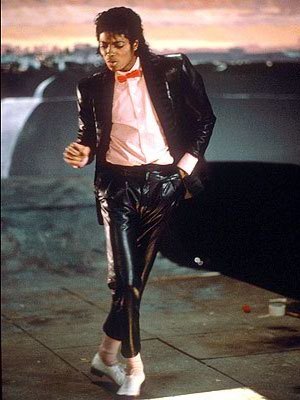
Michael Jackson & My Roommate

Dedicated to Raymond Taavel, who was there, and (of course) my roommate John Hough, aka, "The Huffer"! 

Michael Jackson
died today. I think the last time I listened to an entire song by Jackson was the day I said goodbye to my Bible College roommate. It was his tape, his stereo. He hadn't even begun to pack for home, and I was done. I shook his hand. Then we hugged.

“Sorry it was so difficult.”

“Yeah. Me too.”

The first day of Bible College, he handed me the cassette I was going to learn to loathe and said, “If you ever want to see blubber move, just slap this puppy in the deck.”


He was a very, very big boy. Managing his body odor was a constant challenge, which he never mastered in my year with him. He snored terribly. And even his “cool” music, what little there was of it, set my teeth on edge.

The blunders happened early, and they happened often. Just one example: my tape of Moving Pictures by RUSH (which I valued as deeply as he did Thriller) had a five second segment in the middle of “Tom Sawyer” where my roommate could be heard talking to someone else, because he had accidentally hit “Record” instead of “Eject.”

He knew I was anything but "thrilled" about any of it. Not a week went by when I didn't lobby to get bunked with someone else. My efforts were futile. I finally managed to book a few minutes with the Dean of Students. When I plaintively explained my situation, he templed his fingers and regarded me for a moment, then said, “Did you ever think this might be the will of God?”

In one sense, it was indeed a fortuitous time. I was too young, too naïve, too pious and too insecure to take matters into my own hands. In another year or two, had someone posed the same theological quandary, I'd have smiled, stood up, and asked for my money back: God doesn't work in such mysterious ways when you start speaking the language of finance. But I was just a pup, desperate to stay in Toronto, and not quite desperate enough to escape our tiny, foul-smelling room.

Thriller was bad, but he also listened to The Haven Of Rest Quartet, who made Jackson sound like Led Zeppelin in comparison. He played flute. He sang tenor. He hung out with the cattiest girls in the school  —  who were, coincidentally, also the most attractive, but seemed to have nothing but an amused contempt for Yours Truly. He loved to laugh, and they brought it out in him. Even when he was with them, however, I never heard him say anything snarky in return.

I absorbed all this, yet never, ever figured him for gay until I read his obituary this April.

John insisted there be no funeral: he asked instead for some “celebration” of his life, which, so far as I could see, consisted of singing beautifully, performing in various choirs and orchestras, playing beach volleyball (believe it) and canoeing. And being nice to absolutely everyone.

When did he come out? What was the process that took him from the guy who stenciled Bible verses on enormous sheets of poster-board, to the guy who finally joined the gay men's volleyball team? The on-line eulogies don't say. “He was never mean.” “He sang like an angel.” “He never said a bad word about anybody.” His inner-life remained, like his beloved performer's, incredibly private.

I don't know what he saw in Michael Jackson, or heard in his music. But this is my old roommate's Pride Weekend, and I have resolved not to kvetch when "Billy Jean" is played, yet again. Because nothing got blubber moving like that song.

Sunday, April 26, 2009

Whither "Regional Identity"?

If there's a region of Canada which might be likened to a geographical satellite dish, it's Southern Ontario. Traditionally both the centre of Canada and one of the most densely populated and media-saturated regions on the continent, Southern Ontario therefore embodies one of those paradoxes that may well define the English-Canadian experience. As a prominent media centre, it tends to set the agenda for national identity, yet as a prominent media receptacle has precious little identity of its own. Case in point: Southern Ontario may be the only part of Canada that never speaks of having a "regional identity." When the regions are thus referred to, it means anywhere but the area roughly contained between Ottawa and Windsor (G).

Geoff Pevere and Greig Dymond, musing about Canadian regional identity (and Jim Carrey) in Mondo Canuck: A Canadian Pop Culture Odyssey (A).

Wednesday, October 01, 2008

Rattling In My Brain Pan

The weekend edition is usually the only paper I bother with, and of my immediate choices I usually go with Toronto's national newspaper The Globe & Mail. This weekend their headlines were no different from any other paper, but there were a few oddities tucked into the margins that are still rattling in my brain pan. To wit:

An epistolary exchange between Ian Brown (journalist) and Jean Vanier (founder of L'Arche community). Vanier is one of those rarities: when he speaks of matters of faith, people don't usually try to drown him out with objections and ridicule. This doesn't prevent Brown from frank disclosure of his doubts and frustrations, however. With the whole world just itching to descend on Wall Street with torches and pitchforks, this is a very welcome conversation to attend.

Just over a year ago I tried to read and wrap my head around This Is My Country, What's Yours? A Literary Atlas Of Canada by Noah Richler (A). I couldn't do it. This was due in no small part to my impatience with any and all literary theory, particularly "big" theory. If I understand the early argument of Richler's book, it's that the novel is a technology that has transformed Western society and much of the world for better and for worse. Richler and his interviewees explore the different avenues through which this has occurred, and some of these proposals struck me as more likely than others. This is a moral argument, of course, and within the storm of this book is the quiet subtext of Richler himself, hoping for better literature and a society of attentive readers.

Perhaps I need to begin a dialog with Richler, because my faith in such matters is extremely weak. So many of the world's most accomplished novelists are insufferable assholes at best, cruel tormentors at worst. Their art is incapable of transforming the artist: what hope does it have of transforming the culture? In order for me to get any writing done I have to work very hard at setting aside such concerns and focusing instead on the art of transmission: this is how it feels for the character -- do you feel it too? It could be there is something mystical and even holy involved in the act of such focus, but I balk mightily at such claims. Chalk that down to a paucity of my own imagination, even a damnable lack of nerve. So it goes.

Anyhow, these thoughts return to me as Richler reviews John Ralston Saul's A Fair Country: Telling Truths About Canada (A) which he asks the country's electorate to read before voting. Saul's method of getting to the heart of the matter is similar to Richler's (Richler, however, does considerably more physical footwork), making Richler the ideal reviewer for his material. The curious should read this interview with Saul to get some idea of what his concerns are, then move on to Richler's review.