Twenty years ago I figured out how to strum the guitar. I was also introduced to travis picking, along with a smattering of classical finger-picking. It was all strictly campfire technique, but since I had no shortage of campfires to attend I had a lot of fun with it.
My daughters are of the age where they are learning the usual gamut of instrument play. Listening to their tentative steps into a larger technique, I was finally inspired to pick up my old "How To" books and teach myself some much-needed basics, including reading music. I'm finally of the age where I don't bristle at plinking out "Hot Cross Buns" on a single string!
This does not pass as music to my daughters' ears. Said my younger to my wife: "You'd think he'd know how to play that thing by now."
Tangential self-promotion: this Thanksgiving has been a huge improvement on last year.
Monday, October 13, 2008
Tuesday, October 07, 2008
Elsewhere
I have had trouble putting my finger on just why I find McCain's cynical, sinister choice of Palin so incredibly infuriating-slash-depressing. Fortunately there is no lack of articulate people to fill in my silence. Links via bookforum.
"I don’t like categories like religious and not religious. As soon as religion draws a line around itself it becomes falsified. It seems to me that anything that is written compassionately and perceptively probably satisfies every definition of religious whether a writer intends it to be religious or not." The Paris Review interviews Marilynne Robinson (via Maude Newton).
So now we're all on Wall Street catching the grey men when they dive from the 14th floor*, and I'm thinking, "Where's George Soros? It's not like an economist -- even a retired one -- to be silent in times like these!" Indeed not.
And last, but by no means least, 20 massive indicators that the video game industry is trapped and sinking in a Sargasso Sea of onerous cliché. Speaking of which, I am compelled to say that playing The Simpsons has been one of my greatest disappointments in gaming. The Simpsons Hit & Run used the Grand Theft Auto engine to brilliant, satirical effect and was a hoot to play. But this latest chapter is just a mess, particularly in its gameplay, and wouldn't pass muster as a badly-written episode. The Onion was right.
"I don’t like categories like religious and not religious. As soon as religion draws a line around itself it becomes falsified. It seems to me that anything that is written compassionately and perceptively probably satisfies every definition of religious whether a writer intends it to be religious or not." The Paris Review interviews Marilynne Robinson (via Maude Newton).
So now we're all on Wall Street catching the grey men when they dive from the 14th floor*, and I'm thinking, "Where's George Soros? It's not like an economist -- even a retired one -- to be silent in times like these!" Indeed not.
And last, but by no means least, 20 massive indicators that the video game industry is trapped and sinking in a Sargasso Sea of onerous cliché. Speaking of which, I am compelled to say that playing The Simpsons has been one of my greatest disappointments in gaming. The Simpsons Hit & Run used the Grand Theft Auto engine to brilliant, satirical effect and was a hoot to play. But this latest chapter is just a mess, particularly in its gameplay, and wouldn't pass muster as a badly-written episode. The Onion was right.
Sunday, October 05, 2008
The "Hug & Kiss" Novel
Yesterday while I was frying crepes at the cafe a young co-worker told me of a book she'd just read. She waxed on about the profound effect the novel had had on her. I finally said, “It sounds to me like this was a Hug & Kiss Novel.”
She asked what that was, and I told her of an incident I'd experienced in university. I was walking the halls to my next engagement when I encountered a friend who surprised me by giving me a long, warm hug and concluding that with a kiss. Prior to this embrace I hadn't thought of my friend in amorous terms, and I somehow had the impression she hadn't given me any reason to change my thinking. “What was that for?” I asked.
“Oh, I just finished reading the most incredible book!”
And so a group of us began the Hug & Kiss Book Club, which had some of the same rules as Fight Club (we never talked about it) but none of the unpleasantness. We were touchy-feely boho-types, and most of us lived downtown. The odds of finishing a wonderful book and immediately encountering a friend were pretty good, so we gave the first friend we encountered a Hug & Kiss.
Many of the authors were the usual suspects. The friend who started this off had just finished reading The Book Of Laughter And Forgetting by Milan Kundera (A). Herman Hesse frequently inspired the Hug & Kiss. So did Paul Auster's Moon Palace, I Served The King Of England by Bohumil Hrabl, Crowley's Little, Big and poetry by Jim Harrison. Two weeks after I finished Don DeLilo's Underworld, I found myself sitting on a downtown bench and clearing the tears from my eyes because of a deluge of connections I'd just made. I was in my 30s now, and my friends had all moved on: there was no-one I could trust with the Hug & Kiss.
“That's it exactly!” said my co-worker. Her novel was Fugitive Pieces by Anne Michaels — a gorgeous, frequently heartbreaking and finally life-and-love-affirming book. “I fell in love amid the clattering of spoons....” Shapely material indeed for the Hug & Kiss (A).
As she enthused, I silently wondered what had happened to my Hug & Kiss impulse. I've read some beautiful novels since Underworld, and more than a few have brought tears to my eyes. But the effect isn't the same as it was in my 20s and early 30s. My guess is when we were younger we read in fear that our lives were constricting in predictable and not always welcome ways. The world surrounding us conspired in this constriction. These books were a wild affirmation of sorts, and we were young and flaky enough to respond physically.
Some of the novelists we encountered when we were younger have aged as well. It's not uncommon to discover that their current material acknowledges limits the younger novelist did not see. They have changed; we have changed. Our response changes in kind.
I've also become too much the Mennonite as I grow older — puritanically chaste in my physical contact with others. In my aversion to emotional complication I too frequently eschew physicality altogether. My loss. Others' too, I suppose.
The world continues to conspire and constrict. Fortunately there remain books that encourage openness. The last such for me was Marilynne Robinson's Gilead (A). I slowed down a bit after reading that, and tried to listen to the people who make me impatient. Not exactly a Hug & Kiss, but if the people around me were to be honest this was probably the more welcome response. Hugs are swell, to be sure, and no-one should discourage their practice. But listening is the real trick.
If I ever get the secret to listening, I'll pass it along. In the meantime, I'll keep reading. And if properly nudged I may even return to the Hug & Kiss.
Endnotes: Here are my thoughts on Moon Palace. Here, Gilead.
She asked what that was, and I told her of an incident I'd experienced in university. I was walking the halls to my next engagement when I encountered a friend who surprised me by giving me a long, warm hug and concluding that with a kiss. Prior to this embrace I hadn't thought of my friend in amorous terms, and I somehow had the impression she hadn't given me any reason to change my thinking. “What was that for?” I asked.
“Oh, I just finished reading the most incredible book!”
And so a group of us began the Hug & Kiss Book Club, which had some of the same rules as Fight Club (we never talked about it) but none of the unpleasantness. We were touchy-feely boho-types, and most of us lived downtown. The odds of finishing a wonderful book and immediately encountering a friend were pretty good, so we gave the first friend we encountered a Hug & Kiss.
Many of the authors were the usual suspects. The friend who started this off had just finished reading The Book Of Laughter And Forgetting by Milan Kundera (A). Herman Hesse frequently inspired the Hug & Kiss. So did Paul Auster's Moon Palace, I Served The King Of England by Bohumil Hrabl, Crowley's Little, Big and poetry by Jim Harrison. Two weeks after I finished Don DeLilo's Underworld, I found myself sitting on a downtown bench and clearing the tears from my eyes because of a deluge of connections I'd just made. I was in my 30s now, and my friends had all moved on: there was no-one I could trust with the Hug & Kiss.
“That's it exactly!” said my co-worker. Her novel was Fugitive Pieces by Anne Michaels — a gorgeous, frequently heartbreaking and finally life-and-love-affirming book. “I fell in love amid the clattering of spoons....” Shapely material indeed for the Hug & Kiss (A).
As she enthused, I silently wondered what had happened to my Hug & Kiss impulse. I've read some beautiful novels since Underworld, and more than a few have brought tears to my eyes. But the effect isn't the same as it was in my 20s and early 30s. My guess is when we were younger we read in fear that our lives were constricting in predictable and not always welcome ways. The world surrounding us conspired in this constriction. These books were a wild affirmation of sorts, and we were young and flaky enough to respond physically.
Some of the novelists we encountered when we were younger have aged as well. It's not uncommon to discover that their current material acknowledges limits the younger novelist did not see. They have changed; we have changed. Our response changes in kind.
I've also become too much the Mennonite as I grow older — puritanically chaste in my physical contact with others. In my aversion to emotional complication I too frequently eschew physicality altogether. My loss. Others' too, I suppose.
The world continues to conspire and constrict. Fortunately there remain books that encourage openness. The last such for me was Marilynne Robinson's Gilead (A). I slowed down a bit after reading that, and tried to listen to the people who make me impatient. Not exactly a Hug & Kiss, but if the people around me were to be honest this was probably the more welcome response. Hugs are swell, to be sure, and no-one should discourage their practice. But listening is the real trick.
If I ever get the secret to listening, I'll pass it along. In the meantime, I'll keep reading. And if properly nudged I may even return to the Hug & Kiss.
Endnotes: Here are my thoughts on Moon Palace. Here, Gilead.
Thursday, October 02, 2008
My Favourite Newman Role
Reggie Dunlop, in Slap Shot (W).
 Yeah, we all throw accolades at Paul Newman for the humanity he brought to The Hustler, Hud and Cool Hand Luke. He deserves them. And while I have not seen every film Newman made, I doubt he ever played a more reprehensible character than Reggie Dunlop.
The movie's script, storyline and pacing are a complete hash -- the sort of scrambled-eggs-for-the-hangover project that would never get green lighted by today's studios, but was the standard for the 70s. Slap Shot is a choppy exercise at best, but oy! does it ever stick to the brain cells. It's lewd, crude, degenerate, unreflective and unrepentant, and at the center is Newman's Dunlop, who embodies all these traits to perfection. One gander at that picture reveals exactly what Newman brought to the set: a man whose body was too old to play decent hockey and whose personality was too locked-in by Type-A (for "Adolescent") cunning to be decent about anything.
Reggie Dunlop is an awful man (language warning!). And the fact that I didn't want to miss a single second of Newman's performance in this film is a tribute to his remarkable capacities as an actor.
 Yeah, we all throw accolades at Paul Newman for the humanity he brought to The Hustler, Hud and Cool Hand Luke. He deserves them. And while I have not seen every film Newman made, I doubt he ever played a more reprehensible character than Reggie Dunlop.
The movie's script, storyline and pacing are a complete hash -- the sort of scrambled-eggs-for-the-hangover project that would never get green lighted by today's studios, but was the standard for the 70s. Slap Shot is a choppy exercise at best, but oy! does it ever stick to the brain cells. It's lewd, crude, degenerate, unreflective and unrepentant, and at the center is Newman's Dunlop, who embodies all these traits to perfection. One gander at that picture reveals exactly what Newman brought to the set: a man whose body was too old to play decent hockey and whose personality was too locked-in by Type-A (for "Adolescent") cunning to be decent about anything.
Reggie Dunlop is an awful man (language warning!). And the fact that I didn't want to miss a single second of Newman's performance in this film is a tribute to his remarkable capacities as an actor.
Will Eisner's The Spirit
Drawn! links to these 12 fab splash pages illustrating (and explicating) some of the genius behind Will Eisner's The Spirit. Even though the posting is entitled 12 Splash Pages Will Convince You Frank Miller Shouldn't Adapt The Spirit, io9 graciously concludes, "The bar is set high, but it's always enjoyable to watch a confident director adapt deserving material." Comic book fans are usually the most hesitant when it comes to embracing silver-screen adaptations -- I have my own reservations about Miller -- but a property that is as nuanced as The Spirit poses particular challenges, as this person makes clear.


Johnny LaRue's Cure-All
The last few posts seem to find me sinking in a religious direction. As Johnny LaRue used to say, "The only way to cure a hangover is with more booze." Who am I to argue? Seeker-friendly BoingBoing provides 100-proof medicine:
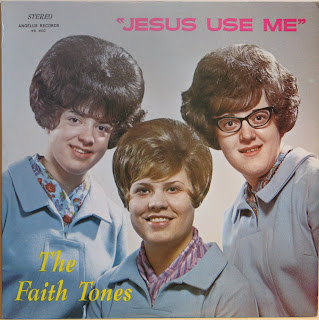
There doesn't seem to be any accompanying video featuring this trio, but I'd say this is a worthy substitute (warning: you WILL be humming this tune for the rest of the day):
Wow. Somehow, in my mis-spent youth, I never caught wind of these guys. Ah, but it's never too late to have a happy childhood.
Prairie Mary is also thinking about religion. As ever her approach is thoughtful and provocative -- but you probably won't be humming when you leave her blog.
And, of course, there is always The Ramones:

There doesn't seem to be any accompanying video featuring this trio, but I'd say this is a worthy substitute (warning: you WILL be humming this tune for the rest of the day):
Wow. Somehow, in my mis-spent youth, I never caught wind of these guys. Ah, but it's never too late to have a happy childhood.
Prairie Mary is also thinking about religion. As ever her approach is thoughtful and provocative -- but you probably won't be humming when you leave her blog.
And, of course, there is always The Ramones:
Wednesday, October 01, 2008
Rattling In My Brain Pan
The weekend edition is usually the only paper I bother with, and of my immediate choices I usually go with Toronto's national newspaper The Globe & Mail. This weekend their headlines were no different from any other paper, but there were a few oddities tucked into the margins that are still rattling in my brain pan. To wit:
An epistolary exchange between Ian Brown (journalist) and Jean Vanier (founder of L'Arche community). Vanier is one of those rarities: when he speaks of matters of faith, people don't usually try to drown him out with objections and ridicule. This doesn't prevent Brown from frank disclosure of his doubts and frustrations, however. With the whole world just itching to descend on Wall Street with torches and pitchforks, this is a very welcome conversation to attend.
Just over a year ago I tried to read and wrap my head around This Is My Country, What's Yours? A Literary Atlas Of Canada by Noah Richler (A). I couldn't do it. This was due in no small part to my impatience with any and all literary theory, particularly "big" theory. If I understand the early argument of Richler's book, it's that the novel is a technology that has transformed Western society and much of the world for better and for worse. Richler and his interviewees explore the different avenues through which this has occurred, and some of these proposals struck me as more likely than others. This is a moral argument, of course, and within the storm of this book is the quiet subtext of Richler himself, hoping for better literature and a society of attentive readers.
Perhaps I need to begin a dialog with Richler, because my faith in such matters is extremely weak. So many of the world's most accomplished novelists are insufferable assholes at best, cruel tormentors at worst. Their art is incapable of transforming the artist: what hope does it have of transforming the culture? In order for me to get any writing done I have to work very hard at setting aside such concerns and focusing instead on the art of transmission: this is how it feels for the character -- do you feel it too? It could be there is something mystical and even holy involved in the act of such focus, but I balk mightily at such claims. Chalk that down to a paucity of my own imagination, even a damnable lack of nerve. So it goes.
Anyhow, these thoughts return to me as Richler reviews John Ralston Saul's A Fair Country: Telling Truths About Canada (A) which he asks the country's electorate to read before voting. Saul's method of getting to the heart of the matter is similar to Richler's (Richler, however, does considerably more physical footwork), making Richler the ideal reviewer for his material. The curious should read this interview with Saul to get some idea of what his concerns are, then move on to Richler's review.
An epistolary exchange between Ian Brown (journalist) and Jean Vanier (founder of L'Arche community). Vanier is one of those rarities: when he speaks of matters of faith, people don't usually try to drown him out with objections and ridicule. This doesn't prevent Brown from frank disclosure of his doubts and frustrations, however. With the whole world just itching to descend on Wall Street with torches and pitchforks, this is a very welcome conversation to attend.
Just over a year ago I tried to read and wrap my head around This Is My Country, What's Yours? A Literary Atlas Of Canada by Noah Richler (A). I couldn't do it. This was due in no small part to my impatience with any and all literary theory, particularly "big" theory. If I understand the early argument of Richler's book, it's that the novel is a technology that has transformed Western society and much of the world for better and for worse. Richler and his interviewees explore the different avenues through which this has occurred, and some of these proposals struck me as more likely than others. This is a moral argument, of course, and within the storm of this book is the quiet subtext of Richler himself, hoping for better literature and a society of attentive readers.
Perhaps I need to begin a dialog with Richler, because my faith in such matters is extremely weak. So many of the world's most accomplished novelists are insufferable assholes at best, cruel tormentors at worst. Their art is incapable of transforming the artist: what hope does it have of transforming the culture? In order for me to get any writing done I have to work very hard at setting aside such concerns and focusing instead on the art of transmission: this is how it feels for the character -- do you feel it too? It could be there is something mystical and even holy involved in the act of such focus, but I balk mightily at such claims. Chalk that down to a paucity of my own imagination, even a damnable lack of nerve. So it goes.
Anyhow, these thoughts return to me as Richler reviews John Ralston Saul's A Fair Country: Telling Truths About Canada (A) which he asks the country's electorate to read before voting. Saul's method of getting to the heart of the matter is similar to Richler's (Richler, however, does considerably more physical footwork), making Richler the ideal reviewer for his material. The curious should read this interview with Saul to get some idea of what his concerns are, then move on to Richler's review.
Subscribe to:
Posts (Atom)