My reading of Footnote To A Bread Recipe, the first story from Youthful Desires, is available for your listening pleasure. You can download the mp3 here. You may also stream it here. File is 15 minutes long.
Regarding the mp3, it's free free free!! You'll notice the Creative Commons copyright sign. It's basically my written permission for you to have at it, so long as you're kind enough to attribute (and contact me, I might add) should you publish or mess with any of the content.
I'm hoping to get the other stories up in the next few weeks. And, as always, I'm open to recommendations and suggestions.
Thursday, January 31, 2008
Tuesday, January 29, 2008
The Economic Miracle From Hell
In 1975 my grade five science teacher explained the difference between a renewable resource, and a non-renewable resource. Oil fell in the latter category, he said. At that point in time, there appeared to be a great deal of it to be had for the taking, but the world's oil deposits were no different from the gas tanks in our family cars. Sooner or later, they would hit "empty," and that would be the end of that.
He also mentioned the Alberta "tar sands," which he treated as a footnote -- or "endnote," really. The cost of production involved in getting usable oil from the sands was so prohibitive, he said, that when we finally saw serious investment in this enterprise, we would know we were close to hitting the bottom of the tank.
Here we are, 33 years later.
Canada's premiers are attending a Council of the Federation conference in Vancouver this week. If their faces appear a tad haunted when they approach the cameras, there's a good reason for it. There has been some gentle talk about what's happening to the environment as a result of this "boom" in Alberta. One doesn't have to care about, or even believe in, climate change to simply acknowledge that expelling this much toxicity into our environment doesn't do anyone on the planet a damned bit of good. But at the end of the day, we're still talking about a bona fide economic boom. That slightly slack look on the faces of our premiers is the collective realization that we're all quite literally over a barrel now. We're letting the Oil Mercantilists have their way with us, because any slow down whatsoever will leave us in a vulnerable position we cannot improvise our way out of. Requesting such a belated use of condoms seems like a moot point when we're so clearly caught in flagrante.
For those who can handle it, here is some tar-sands ... excuse me: oil-sands porn: aerial photos by Edward Burtynsky.
Monday, January 28, 2008
Podcast Bounty
I'm hoping to post a few podcast performances of me reading my stories. I'm tempted to say meeting the technology challenge inherent to podcasting has been easier than formatting and publishing the book (which, so far, is the truth) but I will hold off on any grand claims until I've got something available for public consumption.
In the meantime, I've been taking advantage of the podcasts made available by the Canadian Broadcasting Corporation, here. My particular listening bent leans first to Mary Hynes' exploration of spiritual/religious concepts on Tapestry. This afternoon I listened to her 2004 interview with John O'Donohue (his Anam Cara was something of a surprise bestseller, back in the 90s); I see she's also spent an afternoon with Shalom Auslander (a favored author with my favorite BookSlut). But I also scrolled down to Words at Large and enjoyed the hijinx generated by Douglas Coupland's public reading in Vancouver (he claims he begins writing his novels at the Las Vegas IHOP facing the I-59).
But wait: there's more!! I'll happily put Ideas up against just about any product by The Teaching Company. Right now they're running a dynamite series, How To Think About Science (podcasts here). And down here there's a two-parter focusing on the commercialization of Ayahuasca that I'm looking forward to giving a spin ... erm, right-click, hopefully in the near-future.
Hey, citizens of the world: we Canadians are paying for this content with our hard-earned tax-dollars! Don't just pillage our oil-sands -- reap a harvest of our very own publicly-funded knowledge - slash - wisdom, too!
Thursday, January 24, 2008
A Soldier Of The Great War, by Mark Helprin
After I followed Terry Teachout's link to John Updike's six rules for book reviewing, then encountered a similarly impressed Wyatt Mason, I vowed I'd work harder at Rule #2. Here, then, is a bit from A Soldier Of The Great War, by Mark Helprin:
"He had gathered the boy in his arms, and he was bathed in his blood, but he held him the way you would hold a baby, and he cried, and he talked to him until he died.
"'I can't see,' the boy said. 'I can't see.' That was the only time that Father Michele quoted the Bible to him. He said, 'Like ... a swallow ... mine eyes fail with looking upward.' The soldier was dying quickly. His soul was halfway to another place.
"The priest said, 'Where you are going there is no fear and there is no dying. Your mother and your father will be there. They'll hold you like a baby. They'll stroke your head, and you'll sleep in their arms, in bliss.'
"'I wish it would be so,' the boy said.
"'It will be so,' Father Michele answered, and he repeated it again and again, 'It will be so, it will be so,' until the boy died.
"Afterward, when he was clean, I approached Father Michele and asked if he believed what he had said. 'No,' he told me, 'but I was praying to God to make it that way.'
"'Aren't you supposed to shut up and expect certain things -- blackness if you're an atheist; overwhelming light if you believe?'
"'I suppose one is,' he answered, 'but I took the risk of telling God to His face that He had faltered in the design, that the boy who died today was not in need of splendor, but only of his mother and father. Perhaps I'm a heretic, but I'll deal with that after the war.'"
Fantastical Writing
I am inordinately fond of John Crowley's Little, Big, a remarkable book in just about any way you'd care to measure it. It's not to everyone's taste, but for those of us who dig it, the book becomes a baptismal experience. Whether the reader plunges in, a la full immersion, or partakes via smaller touches of anointment, the experience of reading it is almost always heady. I went the latter route. I spent five years on my first reading of it. Even the smallest scenes have an ornate romanticism that I wanted to savor, rather than gobble. There are precious few books that can sustain a reader's attention for that length of time. I've developed the habit of purchasing every used copy I stumble across, so that I can take the book with me on trips and leave it behind in the guest-rooms I've stayed in.
Here is Michael Dirda's appraisal of Crowley's just completed Aegypt. I've picked up the first book in this series many times. I've never managed the trick of reading it, though: all those pages are so ... intimidating. Dirda's essay might just give me the courage I need to make a proper go of it. Link via ALD.
This also brings to mind David Langness' rave for Winter's Tale by Mark Helprin (also in the pages of PASTE 38, but not (yet?) available on-line, alas). Langness says, "Winter's Tale is Harry Potter for grown-ups, C.S. Lewis for agnostics, Tolkien for the matriculated, García Márquez for everyone." I tend to think Helprin is a powerful, if not always compelling writer. The first Helprin I read was A Soldier Of The Great War, which was something of a sensation when it was first published. My wife and I took turns reading it to each other during a cross-Canada road trip in our first year of marriage: the perfect conditions for just such an enterprise. The last 300 pages required some motivation on our part to crack open the book, take a deep breath and get into it, but once our inertia was overcome the joy of the experience quickly returned. The book left me with the impression that Helprin, like his titular hero and frequent narrator, was a man intent on expelling every breath in aid of asserting his meaningfulness. I picked up Winter's Tale, expecting to be similarly charmed.
It didn't happen. I've still got it on my shelf; every year or two, I'll pick it up again and give it another go. So far I haven't made it past page 50. I won't blame Helprin for my inability to get into it ... no, wait: on second thought, I believe I will. Helprin's narrative personality is incredibly charismatic; it is large (as in, "Larger than life," which usually means "Larger than your daily tedious chores") and it is forceful, and it is used to getting its way. With any charismatic personality, I can usually get quite a kick out of an evening or two in their presence. Push it beyond that, however, and I start to look at the time and think of the chores that require my attention. So it is with Helprin's charisma. This hardly qualifies as "criticism" on my part -- consider it a deficit of my own personality. Charisma, forcefulness and larger-than-life are qualities that have carried Dostoevsky's novels into a second century of renown; no reason why Helprin's work shouldn't carry over in a similar way.
As always, if you think I'm out to lunch on any of this, the comments are yours.
Tuesday, January 22, 2008
On The Platter
PASTE magazine's 38th issue caught my eye with this byline: "These six guys made THE BEST RECORD OF 2007 Do you know who they are?" I scrutinized the six shadowy (but easily discernible) figures, and, no, I did not know who they were. I flipped to page 69, read the article, and got the sense that the writer really, really liked these six guys. So far as I knew, I hadn't heard them play or sing a note, so technically speaking I still didn't know who they were. I thought I'd seen the album cover somewhere, though ... but where?
 Oh yes -- eMusic's list(s) of 2007's best: #5 by eMusic staff, and #2 by its "users." Noting that Neon Bible by Arcade Fire received raves from both groups, I held my nose and hit "download."
First impression: I like Boxer by The National better than AF's Neon Bible. Being a bona fide baritone-bass, I tend to cut a lot of slack for any rock act with a frontman who adamantly refuses to budge toward a middle C. Lyrically speaking, an album that takes "Fake Empire" as its starting point and swims deeper from there is well worth a listen. Musically speaking ... I'm still not sure I "get it." But I've got no objections to giving it another spin. Or several more after that. Zenyatta Mondatta was like that for me, back in the day, and I eventually came to regard it as one of The Greats. Definitely worth a further look, and a listen.
eMusic (and Paste) were also laudatory of Spoon's Ga Ga Ga Ga Ga, which I had an easier time getting into. Nuanced music/lyrics galore; though when it comes to what these nuances may be indicating, your guess is probably better than mine. Brains and rock, eh? When I was young and smart, I lamented the absence of intelligence in the reigning pop scene. Now that I'm older and a few million brain cells have withered away, I'm not so sure IQ is all that helpful to rock 'n' roll. But if the scene is bringing comfort to the kids, I'm all for it.
 Bruuuuce luvs Boxer, but my own inclinations hew closer to those of Little Steven. He digs Peachfuzz, and so do I. They're being pigeon-holed as a "garage band," but I just don't get it. I've always figured the garage sound to be jangly, rough around the edges and steered by a drummer who doesn't concern himself with staying in the pocket. Peachfuzz is none of that (well ... maybe live they are). The harmonies are tight, to the point of being nearly reminiscent of The Mamas & The Papas. The band rocks, the drummer makes giddy use of cymbals, but everybody in the band is a master of their chosen instrument. I get a big kick out of this group. If you're a newcomer, start with "Hero Of Nineteen-Eighty-Three" from Catch Your Snap. "Filles Des Murs Du Sud" is similarly infectious, as are "So Why Not Now," "Have You Always Known Me" and the title track to About A Bird. And finally, a personal aside: "Bevar Christiania" seems to confirm my long-held belief that the hardest rockers have almost always spent a few anxious Friday nights in a church basement, scarfing down cold pizza and flat pop while hearing "The Word."
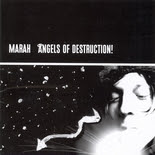
Speaking of which, I believe a contender for best rock album of 2008 has just been released: Angels Of Destruction by the Philly-born/Manhattan-based Marah scratches my aural itch in a most satisfactory way. I've always thought the most unnerving rock 'n' roll isn't the "heavy" stuff produced by shaggy louts who emerge from their suburban basements with "intense" songs that "come from a very dark place." No, the stuff that really shakes me up tends to have one eye on the eschaton, and one eye on the speed limit: the apocalypse set to an infectious beat, in other words, and Angels has it in spades. "Sure, it's the end of the world ... but is that any reason to keep us from having fun?" Any critic who compares this band with The Rolling Stones isn't paying attention. Marah has the decency to leave the question open-ended, making this album as spicy and discomfiting and as genuinely rock 'n' roll as any bowl of mushroom-laced five-alarm chili. Highly recommended.
 Oh yes -- eMusic's list(s) of 2007's best: #5 by eMusic staff, and #2 by its "users." Noting that Neon Bible by Arcade Fire received raves from both groups, I held my nose and hit "download."
First impression: I like Boxer by The National better than AF's Neon Bible. Being a bona fide baritone-bass, I tend to cut a lot of slack for any rock act with a frontman who adamantly refuses to budge toward a middle C. Lyrically speaking, an album that takes "Fake Empire" as its starting point and swims deeper from there is well worth a listen. Musically speaking ... I'm still not sure I "get it." But I've got no objections to giving it another spin. Or several more after that. Zenyatta Mondatta was like that for me, back in the day, and I eventually came to regard it as one of The Greats. Definitely worth a further look, and a listen.
eMusic (and Paste) were also laudatory of Spoon's Ga Ga Ga Ga Ga, which I had an easier time getting into. Nuanced music/lyrics galore; though when it comes to what these nuances may be indicating, your guess is probably better than mine. Brains and rock, eh? When I was young and smart, I lamented the absence of intelligence in the reigning pop scene. Now that I'm older and a few million brain cells have withered away, I'm not so sure IQ is all that helpful to rock 'n' roll. But if the scene is bringing comfort to the kids, I'm all for it.
 Bruuuuce luvs Boxer, but my own inclinations hew closer to those of Little Steven. He digs Peachfuzz, and so do I. They're being pigeon-holed as a "garage band," but I just don't get it. I've always figured the garage sound to be jangly, rough around the edges and steered by a drummer who doesn't concern himself with staying in the pocket. Peachfuzz is none of that (well ... maybe live they are). The harmonies are tight, to the point of being nearly reminiscent of The Mamas & The Papas. The band rocks, the drummer makes giddy use of cymbals, but everybody in the band is a master of their chosen instrument. I get a big kick out of this group. If you're a newcomer, start with "Hero Of Nineteen-Eighty-Three" from Catch Your Snap. "Filles Des Murs Du Sud" is similarly infectious, as are "So Why Not Now," "Have You Always Known Me" and the title track to About A Bird. And finally, a personal aside: "Bevar Christiania" seems to confirm my long-held belief that the hardest rockers have almost always spent a few anxious Friday nights in a church basement, scarfing down cold pizza and flat pop while hearing "The Word."
Speaking of which, I believe a contender for best rock album of 2008 has just been released: Angels Of Destruction by the Philly-born/Manhattan-based Marah scratches my aural itch in a most satisfactory way. I've always thought the most unnerving rock 'n' roll isn't the "heavy" stuff produced by shaggy louts who emerge from their suburban basements with "intense" songs that "come from a very dark place." No, the stuff that really shakes me up tends to have one eye on the eschaton, and one eye on the speed limit: the apocalypse set to an infectious beat, in other words, and Angels has it in spades. "Sure, it's the end of the world ... but is that any reason to keep us from having fun?" Any critic who compares this band with The Rolling Stones isn't paying attention. Marah has the decency to leave the question open-ended, making this album as spicy and discomfiting and as genuinely rock 'n' roll as any bowl of mushroom-laced five-alarm chili. Highly recommended.

Thursday, January 17, 2008
Publication, One Year Later
Inspired by Michael Allen's The Truth About Writing, here is my truth about self-publication:
I'M SOOOO BLOODY RICH, HA HA HAAAA! I OWN APARTMENT BUILDINGS AND SHOPPING CENTERS, HA HA HAAAAAAA!!!
I'll pour you the first dram if you can identify the origin of that quote.
I start with money, because that seems to be the bottom line for many people thinking about publishing, “professionally” or otherwise. If you are one of those people, here is the truth: I've done better than break even, but not so well that I should bother with a tax claim. In fact, the IRS would very much prefer I didn't, since they will have to pay me for the privilege of giving them a little extra work.
If you're hoping to become rich and famous by self-publishing your short stories, I would say on the basis of my limited experience: there ain't no way it's going to happen. But really, who expects that? I held out hope for a little beer and peanuts money; I got it, and for that I'm grateful. If you're someone who thinks sales figures are indicative of a writer's — or, God forbid, a person's — worth, give your head a shake and think again. You should see the portraits Modigliani drew in exchange for beer, never mind the peanuts. No, really — you should. People love him now, but patiently tolerated him at the time and in metaphysical currency you and I are worth every bit as much as he was.
Having said all that, I suspect there is a modestly lucrative shell-game to be had in the world of self-publishing — provided you have a few cooperative friends (including an adroit accountant) and the prerequisite energy. Basically what you do is this: dream up a catchy name for a publishing house; create, format and self-publish a half-dozen or so books for the market; get your accountant friend to seek out and exploit every possible tax loophole and apply for every available artist's fund and grant (there are still quite a few of those in Canada, particularly if you reside in Quebec). In other words, you become a small publisher. The potential upside to this is when strangers ask you who published your work, they will nod knowingly when you say, “Oh, I was picked up by Catchy Name Publishing House. They're kinda new to the market, but gosh: great group of people!” Additional bonus: you will almost certainly make more money than if you single-handedly publish a solitary collection of short stories.
The potential downside is you will likely be more taken with the business of publishing than with the act of writing.
A publisher's name seems to mean a great deal to a large number of people, and I have to admit I've wrestled a bit with some of the barbs directed toward my ego. “You resorted to a vanity press,” is one of the more common attempts at dismissal. I think there is a difference in kind worth pointing out: I actually formatted my own book, enlisted the talents of others in the cover artwork as well as the proofreading and editing. I can attest to the quality of time and labor that went into the final product. Then there is the business of generating interest and sales. That's why it's called “self-publishing,” and that's why, after I've witnessed the love and attention that others have given to “my” product, I'm prone to bristling at “vanity” accusations. So far as I know, the offer behind most vanity presses is you give them the words and a lump sum of money, and they will give you a box of books.
Vanity is, of course, one of the Seven Deadlies. I hate it when someone in the Church publicly speculates as to my motivations; you can just imagine how I feel when some Secular Fool stands up and with pious high dudgeon pulls the same boneheaded stunt. Taking a deep breath and attempting to give him the benefit of the doubt, I can only presume that the act of multiple submissions, and working what connections one has, and currying what favor one can, followed (not at all inevitably) by acceptance, professional editing, formatting, packaging and selling is a process that scourges all trace of vanity from a writer, thus purifying his soul for the public scrutiny to follow. I can presume, but not for very long.
Or perhaps I misunderstand. Perhaps it's not an accusation at all, but a sentiment informed by the wisdom of Qoheleth. Well then! Let me refill your glass, sir, and we shall lift a toast to our brotherhood of vanity!
There is another way of looking at this: the practical way. I think I'm as clever with words as most people in the business. But what professional publishers want, quite rightly, is a meal-ticket. They want someone who can publicly attract attention to their own product while maintaining a monastic work ethic. Consider some of the names you look for when you visit the big box bookstores. These people have to master the dog-and-pony show to get 90 seconds worth of coverage in magazines, newspapers or (better yet) local television — then they have to retreat to their room to write. And never mind the messy business of paying attention to lovers, spouses and children (while ignoring the critics). How anyone can come up with a book a year is beyond me. It's beyond me, because I very much doubt I have that capacity.
I'm guessing I have three more books of fiction in me, tops, and I am a very slow worker. Frankly, if there is a vice informing my publishing style, it's “sloth.” For better or worse I've come to think if I'm not having fun writing, people won't have any fun reading the end product. Fun takes time, and I hate to be rushed when I'm having fun.
I also loathe waste, and the current publishing industry produces little but. When will this be brought to bear? I think it could be quite soon. I can recall some of the punditry that came after the fall of Communism. “Reagan brought them to their knees!” claimed one. “Yes,” rejoined the other, “but how much of the fall was simply a result of the sheer dead weight of Communism?” I believe commercial publishing is collapsing beneath the sheer, dead weight of its own colossal waste. In contrast, Print On Demand gives you just as many books as are going to be read (or purchased). Call it “vanity publishing” if you are so inclined, but the way I see it, I'm part of the solution, not the problem. In fact, the more accurate sobriquet might be “humility publishing”: modest means attaining reasonable goals.
When it comes to meeting goals, I have to say the experience of self-publishing has been vastly more gratifying than I could ever have imagined. Family and friends have treated my work with more seriousness than I have any right to expect; my blog-friends have been stupendously generous in their encouragement and support; those who read the book but didn't find it to their taste have had the good manners to keep their reactions to themselves; and, wonder of wonders, complete strangers have sent me some of the most touching notes imaginable.
What, if anything, will I change the next time? Having worked with the POD model for a year, I think I'll probably make the next PDF free, and bring the price of the book closer to its actual cost of production. I believe in giving back: why shouldn't the customer buy her own beer and peanuts? Who knows: by the time I conclude my career in fiction, I may just make it a square deal and throw in dinner and a nightcap.
Subscribe to:
Posts (Atom)