Winnipeg is a decidedly quirky town, and it has dozens of such spots. But it has only one Bridge Drive-In.


The call woke me up early Satuday morning. Things had been going badly between my friend and his wife. Now he was phoning from a downtown hotel.
I cabbed over. It was a predictably sad business – I was fond of them both, and they were good parents to their kids. But the trajectory their marriage was on had been obvious for some time. There weren't any real surprises, except for the astonishing depth of heartbreak.
When I got to the hotel room, I took a chair while he tidied up a bit. We talked. I asked a few questions, and mostly listened. Room service came with a Thermos of coffee and some breakfast. The conversation had run its course, so we ate in silence. My friend turned on the TV, and flipped through the channels. One of the movie stations was showing an old Jack Lemmon picture. We stayed put, and watched a few minutes.
Those minutes stretched into the full two hours. When it was over, our mutual silence seemed to have reached a greater depth.
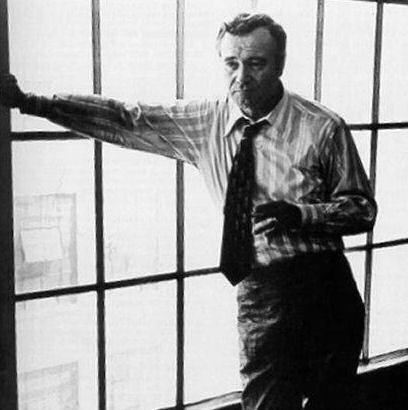
I don't think Save The Tiger sits on any of the “official” Great Movie lists, but today it tops mine. It isn't perfect – Harry Stoner is easily Lemmon's best performance, but he still has moments when he's projecting to the cheap seats; some of the plot contrivances are a little rough around the edges – but even the imperfections bring character to the overall work. It's an unselfconscious time capsule of the early 70s, an era when movie makers didn't mind following a person to work. In Stoner's fashion mill, ironically named after an Italian respite where he recovered from war wounds, Stoner's character is peeled back and exposed to us one layer at a time. He may slouch through most of the movie, but at work his inner steel surfaces, and we see the cunning and ferocity that kept him alive when he was a soldier.
From time to time, he mentions lost ideals, but the only nostalgia that plays convincingly is his nostalgia for big band music and baseball. Stoner isn't trying to negotiate with ideals so much as he's trying to reconnect with his pre-war state of innocence. It is an intensely lonely struggle – Stoner can't invite others to help him with it, because when he does it only magnifies the gap between two solitudes.
The film is bracketed with casualty reports, from Viet Nam, at the beginning, to the injured firemen at film's end. The film makers are sympathetic to Harry's plight, and convincingly communicate why so many business people become antagonistic toward government – it's just one more predator out there, contributing not just to their frustrations, but their demise. “Creative solutions” are a soft-headed indulgence. People are going to get hurt.
This movie is unlikely to stay my number one pick for much longer, but it still belongs there for now. Every life inflicts casualties of its own, and any story, song or movie that takes care to shine a light on the survivor's soul is a welcome work of art. Save The Tiger does, and is, exactly that.
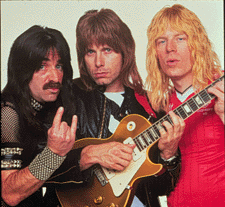
Good grief -- where do I even start? For one thing, This Is Spinal Tap miraculously prolongs one's appreciation of Heavy Metal as an artform. I first saw it -- January 1984, with a Bible School buddy -- in a tiny movie-plex theatre, filled with lads wearing Iron Maiden shirts and Pink Floyd caps. Everyone was laughing and cheering. Spinal Tap wasn't deflating Rock & Roll Mythology -- it was contributing to it.
Christopher Guest has done some incredibly funny movies since then, but Waiting For Guffman doesn't inspire me to join the community theatre, and Best In Show hasn't prompted me to go out and buy a dog. But this "Rockumentary" is different: even as these used-up geezers slip further into a well-deserved obscurity ("Puppet Show! And Spinal Tap"), the urge to actually start a band and take it on the road becomes nearly irresistable. To be so singularly confused and earnest and self-indulgent has to be fun!
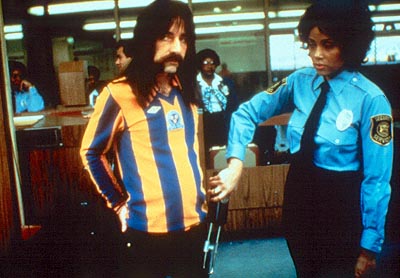
Until now, I've avoided talking about DVD bonuses -- I usually equate "extras" with "extra waste of my time" -- but this disc has been packed to the ribs with incredibly entertaining goodies. For one thing, the "audio commentary" is provided by the three surviving Tap members, who take the opportunity to set viewers straight on director Marti DeBergi's "hatchet job". There are also deleted scenes and videos for "Gimme Some Money" "(Listen To The) Flower Children" "Hell Hole" and "Big Bottom" -- all very funny stuff.
I was never one to memorize Monty Python sketches and recite them for the assumed amusement of friends and family, but this movie has brought me as close to that brink as anything done by the Flying Circus. Fortunately, I can resort to timely short-hand: "Take it to eleven!" ("when we need that extra push over the cliff") or "That's just nitpicking, isn't it?" (in response to withering criticism), etc. The surest sign of a replayable movie is its infiltration into the viewer's daily goings-on. And with its ability to straddle that fine line between clever and stupid, This Is Spinal Tap invades with aplomb.
Number three is a particularly difficult choice for me – I could do a top ten Coen Brothers Films list (hmm – note to self...). In a list like that, I'm not sure which would come out on top. Since I have room for only one Coen Brothers title, I'll go with the first movie of theirs that I saw on the big screen: Raising Arizona.
Nicholas Cage's performance as loveable sad-sack H.I. McDunnough (a convenience store hold-up artist who locks his keys in the car) is a comic tour de force. Newcomer Holly Hunter's face switches in an instant from withering scorn, to unshakeable despair. The entire cast is blessed with a script that delivers funny lines to everyone who shows up on set.
And in a film concerned with family and giving birth, the Coens crack their knuckles and roll out one cinematic pun after another. How nasty is it when two brothers deliver themselves from the muddy ground, like demon-spawn? And how pathetic is it when they chose to return on their own accord? And you just know the baddest guy is the biker who carries his own bronzed baby-shoes, and sports a tattoo that reads, “Momma didn't love me.”
It's a funny, dopey movie, and yet when the McDunnoughs finally return the baby to Nathan Arizona and he delivers his cornball consolation speech ("I sure hate to think of Florence leaving me. I do love her so.") I always get choked up. Of course, then he asks the couple to leave the way they came in: by the window.
I was going to include a few juicy quotes that always get me giggling, but there are too many. You can read a few here, or just resign yourself: get the movie off the shelf, drop it in the player, and enjoy.
